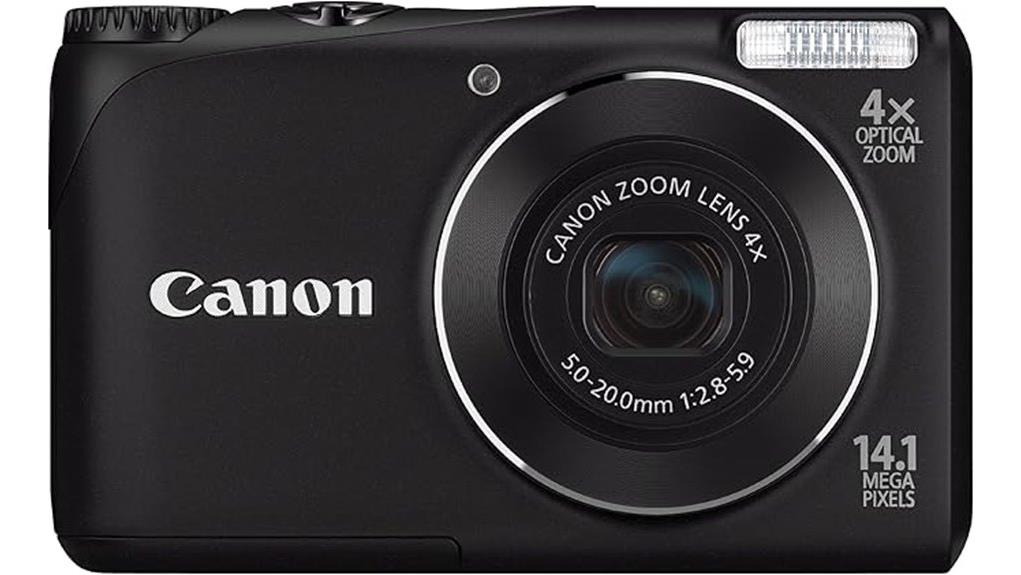
The Canon PowerShot A2200 is a simple, budget-friendly compact that’s great if you want pocketable, fuss-free snapshots and basic 720p clips. You’ll get pleasant, punchy JPEGs in good light, a 28–112mm equivalent 4x zoom, and easy controls, but don’t expect strong low‑light performance, fast autofocus, or wide dynamic range. Battery life is modest, so pack a spare for day trips. If you want a quick, affordable shooter, this fits—keep going to see full specs and buying tips.
Some Key Takeaways
- Budget-friendly compact offering 14.1MP (1/2.3″ CCD) for everyday snapshots and simple 720p video.
- 28–112mm equivalent 4x optical zoom with basic optical stabilization suits travel and family shots.
- Pleasant, punchy JPEGs in good light; limited dynamic range and visible noise in low-light conditions.
- TTL contrast-detection AF is reliable for static subjects but slow for fast action and tracking.
- Lightweight pocketable design with 2.7″ LCD, modest battery life, and low used-market price.
Quick Verdict: Is the Canon PowerShot A2200 Worth Buying?
Verdict: the Canon PowerShot A2200 is a basic, budget-friendly compact that’s worth buying only if you need a simple point-and-shoot for casual snapshots and 720p video. You’ll appreciate its straightforward controls, light weight, and pocketable feel when you want fuss-free shooting. As a budget compact, it won’t match modern smartphones or advanced compacts in low light, speed, or dynamic range, but it delivers reliable stills in good light and usable HD clips. If you value ease, low cost, and a bit of nostalgia appeal for simple photography, it’s an acceptable, deliberate compromise. It’s especially well-suited for those rediscovering joy in compact point-and-shoot photography.
What the A2200 Offers: Key Specs and Real‑World Implications
While it’s clearly aimed at casual shooters, the A2200 packs a handful of practical features you’ll notice in everyday use: a 14.1MP 1/2.3-inch CCD, a 28–112mm equivalent zoom, and a 2.7-inch LCD for framing and playback. You’ll appreciate compact handling, simple exposure modes, and modest battery life. Expect sensor aging to affect dynamic range over years, and firmware limitations to restrict advanced controls and updates. Accessory compatibility is decent for compact class—SD cards and basic mounts—but don’t expect extensive add-ons. Canon’s color science still favors pleasing tones, so images look good straight from camera. It’s a good fit for enthusiasts who prefer mirrorless camera gear and compact, easy-to-carry setups.
Image Quality, Low‑Light Performance, and RAW vs. JPEG
Because the A2200 uses a small 1/2.3-inch CCD and a modest lens, you’ll get pleasant, well-saturated JPEGs at base ISO but limited dynamic range and detail compared with larger-sensor cameras, especially once you zoom in or crop. In daylight you’ll appreciate color depth and punchy tones; HDR highlights and shadows remain constrained. In low light increased ISO introduces visible grain and the camera’s aggressive noise reduction softens textures, hurting detail preservation. Shooting RAW gives marginal recovery of exposure and white balance but the sensor’s limits mean RAW won’t magically match larger-sensor performance — it just gives more editing headroom. For those wanting precise exposure control and consistent readings, consider learning to use a dedicated light meter for tricky lighting situations.
Lens, Zoom, and Autofocus: How It Performs for Everyday Shooting
Reach for the A2200’s 4x optical zoom when you need a simple, walk-around lens that covers wide 28mm to a short tele 112mm equivalent without fuss. You’ll appreciate the modest zoom range for travel and family shots; framing is straightforward. Optical stabilization is basic but helps steady longer focal lengths and slower shutter speeds. Autofocus speed is adequate for casual scenes, though continuous tracking isn’t strong. Focus accuracy in good light is reliable thanks to TTL contrast detection and a single AF point; in dimmer conditions the AF assist beam helps. Overall, it’s practical for everyday snapshots. For those pairing cameras with support gear, a lightweight compact tripod can improve steadiness and composition during travel.
Handling, Display, Battery Life, and Ergonomics in Daily Use
After framing shots with the modest zoom and reliable AF, you’ll notice how the A2200’s compact body and controls affect real-world handling. You’ll appreciate grip comfort for short outings—its lightweight shell feels secure but offers limited purchase for long sessions. The 2.7-inch fixed LCD is sharp enough for composition; menu responsiveness is acceptable though navigation can feel sluggish compared with modern cameras. Battery life will handle a few hundred shots per charge if you limit playback and flash, but carry a spare for day trips. Overall ergonomics favor casual shooters who want portability over extended handling comfort. Consider pairing the camera with a lightweight tripod for improved stability and composition during travel, especially when shooting low-light scenes with slower shutter speeds and portable support.
Best Use Cases: Who Should Buy the A2200 and Who Should Skip It
While it won’t satisfy pros chasing high ISO performance or fast continuous shooting, the A2200 makes sense if you want an inexpensive, pocketable camera for everyday snapshots, travel, and casual product or family photography. You’ll appreciate its light weight, simple controls, and Smart Auto for travel photography and family snapshots when ease matters more than edge-to-edge sharpness. Skip it if you need low-light prowess, fast autofocus, or high frame rates for action or professional work. It’s a fit for beginner photographers, tourists, and anyone wanting a no-frills point-and-shoot, but not for demanding enthusiasts. Consider pairing it with a suitable camera bag for easy transport and protection, especially a compact camera bag designed for point-and-shoots.
Buying Advice: Price Expectations, Alternatives, and Final Recommendation
If you’re shopping for the Canon PowerShot A2200, expect it to be a budget-minded, entry-level compact that sells for a low price used or as an inexpensive new clearance unit — don’t pay near what modern smartphones or enthusiast compacts command. You’ll get basic 14.1MP stills, 720p video, and simple automatic shooting, so aim for under-market rates. Consider budget alternatives like recent used point-and-shoots or refurbished compacts with better low-light performance and Wi‑Fi. Be realistic about long term support—firmware and repairs are limited. Buy only if cost and simplicity trump image quality and longevity. Many DSLR enthusiasts supplement such compacts with essential accessories like tripods and straps to improve handling and versatility.
Some Questions Answered
Can the A2200 Shoot in Burst Mode With RAW Capture?
No, it can’t shoot burst RAW. You can use continuous shooting at about 0.9 fps, but burst limitations mean RAW capture isn’t supported in that mode. You’ll have to shoot single-frame RAW or use JPEG bursts, then manage a slower raw workflow if you convert RAW files individually. If you need true RAW burst performance, you’ll want a camera with higher continuous rates and explicit RAW+burst support for efficient raw workflow.
Is the Battery Proprietary or Replaceable With Third‑Party Cells?
The battery is proprietary, but you can replace it with third‑party cells that match the camera’s specifications and connector. You’ll want to verify voltage, capacity, and physical fit to avoid damage or poor performance. Third‑party batteries are often cheaper and convenient, yet they may offer inconsistent quality and shorter lifespan. If you rely on the camera heavily, consider buying a reputable third‑party brand or an official replacement to guarantee reliability.
Does the Camera Support External Microphones for Video?
No, it doesn’t support an external microphone for video. You won’t find a mic jack or compatible audio adapters on this model, so you’re limited to the built‑in microphone and its onboard audio quality. If clearer sound is essential, you’ll need an external recorder or a different camera with mic input; using separate audio requires syncing in post. Overall, this camera’s audio options are basic and not suited for serious microphone-based recording.
Can the A2200 Be Charged via USB While in Use?
No — you can’t reliably use USB charging for Live shooting on the A2200. USB charging isn’t supported as a continuous power source during camera operation, so you’ll risk power interruption or limited functionality if you try. For uninterrupted Live shooting, use the dedicated battery and external AC adapter or a proper dummy battery kit designed for continuous power. That’ll keep recording stable and protect the camera’s electronics.
Is There Built‑In Image Stabilization in the Lens or Body?
No, there’s no built‑in lens stabilization or body stabilization on this model. You’ll rely on fast shutter speeds, steady hands, or a tripod for sharp shots, especially in low light. The camera may use basic electronic stabilization for movie mode, but that won’t match optical lens stabilization. If you need strong shake reduction for stills or video, consider a model with true lens stabilization or an external stabilizing rig.