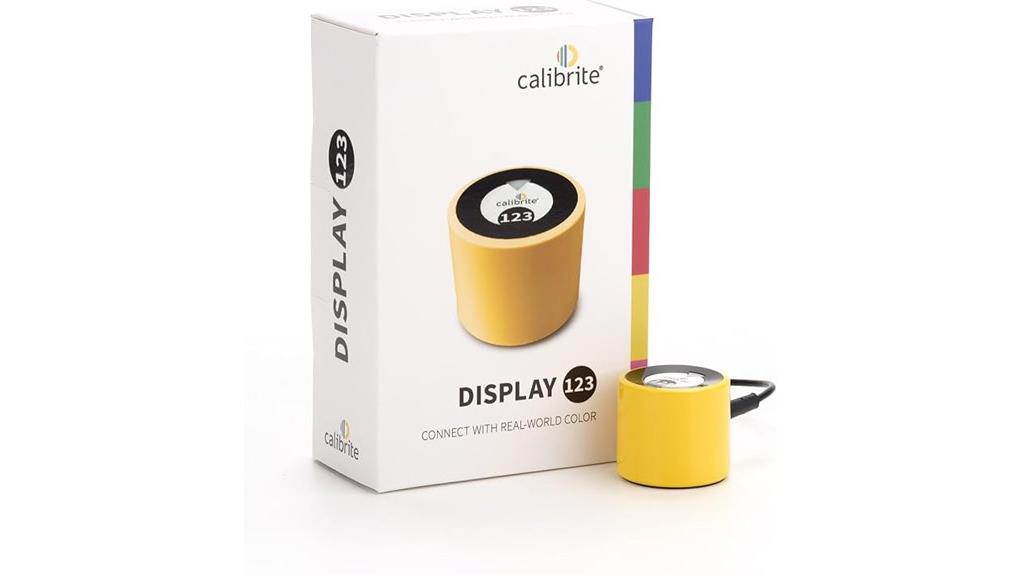
You’ll like the Calibrite Display 123 if you want a compact, USB‑C colorimeter that makes fast, repeatable monitor calibration simple. It walks you through an easy 1‑2‑3 software workflow, corrects color shifts, stabilizes contrast, and saves Native and Photo targets. The aluminum puck feels solid, the adjustable counterweight and magnets aid secure placement, and results show improved skin tones and neutral grays across sessions. Keep going to see setup steps, troubleshooting tips, and real‑world before/after examples.
Some Key Takeaways
- Compact USB‑C colorimeter ideal for photographers, retouchers, and video creators needing quick, repeatable monitor calibration.
- Simple 1‑2‑3 Calibrite software workflow guides brightness, white balance, and profile creation in minutes.
- Solid aluminum puck with adjustable counterweight and magnets ensures stable, repeatable placement on thin bezels.
- Produces improved skin tones, neutral grays, and more accurate midtones with consistent cross‑display matching.
- Reliable device recognition and fast runs; troubleshoot by reseating the USB‑C cable or using another port.
Primary Search Intent and Best Format: Quick Product Review + How-To Setup Guide
If you’re hunting for a straightforward review plus setup guide, focus on concise facts and step-by-step actions: the Calibrite Display 123 (CCDIS123) is a compact USB‑C colorimeter that’s built for quick, guided calibration of up to two displays using a 1‑2‑3 software workflow, adjustable counterweight for secure screen placement, and brightness targets including Native or Photo—so your priority content should answer “what it does,” “how to set it up,” and “what to expect” in short, actionable sections. You’ll get clear notes on color accuracy, measured improvements, and expected consistency. Offer a brief setup checklist, timing estimates, and verification steps to validate workflow speed and results. The site also provides tips and product bundles tailored for passionate photographers looking to achieve perfect color across their displays.
What the Calibrite Display 123 Is and Who Should Buy It
Following the quick review and setup guide, here’s what the Calibrite Display 123 actually is and who stands to benefit most. You’re getting a compact monitor calibration colorimeter (CCDIS123) that connects via USB-C and guides you through an easy 1 2 3 workflow. It corrects color shifts, stabilizes contrast, and stores targets like Native or Photo for repeatable results. Buy it if you need reliable, frequent display calibration—photographer workflows that demand color consistency, retouchers, and video creators prepping footage for multiple screens. Its small size and two-display support suit pros and serious enthusiasts who value precise, efficient color control. The tool is ideal for maintaining true-to-life color across devices.
Unboxing, Hardware Overview, and How the Adjustable Counterweight Works
When you open the compact box, you’ll find the Display 123 snugly packed with a USB‑C cable, quick‑start guide, and a small puck that feels solid for its size; the aluminum sensor body (about 34mm tall, 37mm across) houses the color sensor and attaches to the adjustable counterweight so you can position the device securely on different screens. You’ll notice neat magnet placement on the puck’s rim that helps the counterweight cling to thin bezels. The counterbalance adjustment slides smoothly, locking via a detent. Build quality is good, weight distribution reliable, and setup feels intentionally simple and repeatable. This makes it a convenient choice for photographers and videographers looking to enhance their workflow with external camera monitors.
Step-By-Step Calibration Workflow With the Display 123 (Usb‑C Setup, Targets, and Tips)
Now that the hardware’s in place, plug the Display 123 into your computer via the included USB‑C cable and launch Calibrite’s 1‑2‑3 software; the app walks you through selecting the display to calibrate and choosing a brightness target (Native or Photo) in a few clear screens. You’ll position the compact colorimeter, let the software run automated patches, and accept the measured profile. If the device isn’t recognized, follow USB C troubleshooting steps: try another port, check cable seating, or reboot. Watch Ambient light prompts and use the room‑light reading to decide timed calibrations; save the profile and repeat for a second display. For even more consistent results across sessions, consider using a white balance card for reference when evaluating ambient light and target appearance.
Real-World Color Results, Consistency Across Sessions, and Before/After Comparisons
Usually you’ll notice the most immediate benefit in skin tones, foliage, and neutral grays: the Display 123 tightens hue shifts and restores more natural saturation so edits read the way you intended. You’ll see improved midtone accuracy and crisper contrast in portraits and landscapes; reds stop bleeding, greens gain fidelity, and grays sit neutral. Session repeatability is strong—recalibrations deliver near-identical profiles across days, minimizing color drift between shoots. The built-in before/after comparison makes verification quick: you’ll confirm target luminance and gamut adjustments without guesswork. Overall, the Display 123 gives predictable, usable corrections for real-world editing. Consistent use alongside color checker cards helps ensure your capture and editing workflows align for reliable final output.
Some Questions Answered
Does It Work With macOS Sonoma and Windows 11/10 Drivers?
Yes — it supports macOS compatibility (including recent macOS Sonoma) and provides Windows drivers for Windows 11 and 10. You’ll install the Display 1‑2‑3 software via USB‑C; macOS uses native compatibility while Windows requires the included drivers. Expect straightforward setup, two‑display support, and regular firmware/software updates. If you run into issues, check Calibrite’s support pages for driver downloads and compatibility notes to make certain your OS build is fully supported.
Can the Display 123 Calibrate Laptops and External Monitors Simultaneously?
Yes — you can perform dual calibration of a laptop and an external monitor, but not literally at the same instant; the software supports creating simultaneous profiles for two displays by guiding you through each target sequentially. You’ll connect the colorimeter to each screen in turn, follow the 1-2-3 workflow, and the app saves distinct profiles. This gives consistent color matching and reliable cross-display results for your editing work.
Is a Separate Power Adapter Required or Is Usb‑C Bus Powered?
No separate power adapter’s required — the device’s USB‑C is bus powered. You’ll depend on host battery life when calibrating a laptop, so plan accordingly for longer sessions. The supplied USB‑C cable length is compact, so check reach to your screen; you can use a longer quality cable without affecting power. Overall, bus power keeps setup simple, but manage cable length and laptop battery life for uninterrupted calibrations.
Does It Support Advanced Color Profiles Like P3 and Rec.709?
Yes — you can target wide gamut spaces like P3 and video standards such as Rec.709. You’ll get HDR support options and brightness/contrast control to align with those profiles. The software lets you choose targets and performs profile embedding so your display reports accurate color. It’s compact, USB‑C bus powered, and offers mobile compatibility for calibrating compatible laptops or tablets, making it practical for on-the-go work.
What Is the Recommended Recalibration Interval for Professional Use?
You should recalibrate monthly for professional work, with annual recalibration by service for instrument drift verification. Keep a calibration logbook recording date, target (e.g., P3, Rec.709), brightness, ambient conditions, and before/after delta values. That lets you track trends, spot failing displays, and justify color-critical decisions. If workflows are less demanding, biweekly or quarterly checks may suffice, but monthly plus annual recalibration provides reliable, auditable consistency.