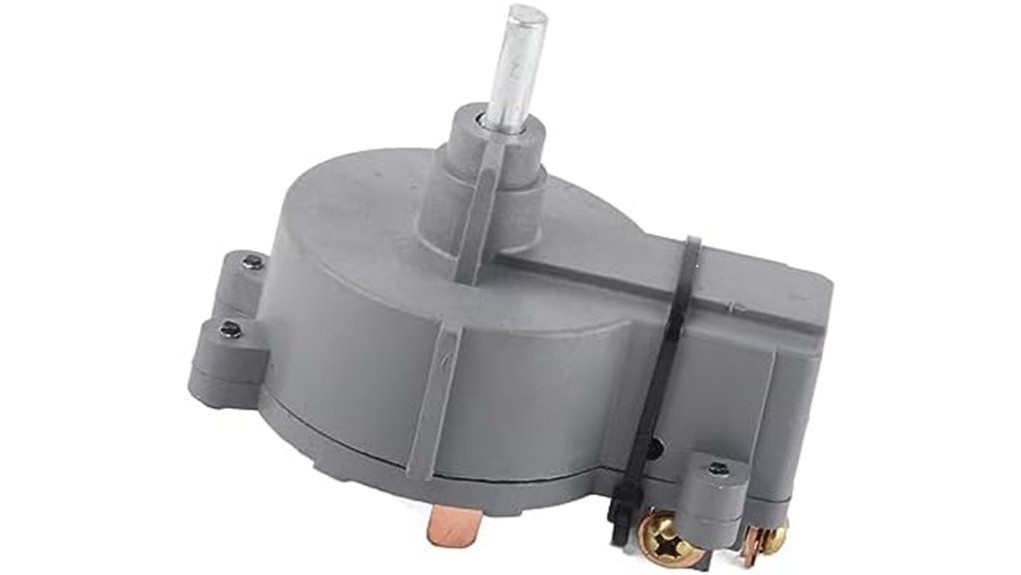
You’ll get a compact, OEM-dimension five-speed replacement that gives repeatable, low-lag current control for trolling motors. You’ll pick from five discrete torque/RPM settings for fine trolling or full thrust, with mechanical detents and engineered contact overlap to smooth shifts. It mounts without special tools and uses copper contacts and high-current parts, but the plastic housing risks faster corrosion in saltwater. It’s practical and affordable; keep going to see installation tips, failure modes, and alternatives.
Some Key Takeaways
- Affordable direct-replacement 5-speed switch offering five discrete thrust/current settings for precise trolling and maneuvering.
- Compact plastic housing with copper contacts supports high current but has limited long-term saltwater corrosion resistance.
- Mechanical detents provide short-response, repeatable control; engineered overlap reduces surges and smooths transitions.
- Install without special tools; align bosses, hand-start screws, use corrosion-resistant terminals and a neoprene gasket if exposed.
- Inspect for salt corrosion and heat; clean contacts, apply dielectric grease, and replace at pitting or intermittent contact signs.
What the Alomejor 5-Speed Trolling Motor Switch Is and Who It’s For
Although it looks simple, the Alomejor 5-speed trolling motor switch is a direct-replacement electrical control designed to let anglers and boaters precisely manage an electric trolling motor’s speed; you’ll use it to select five discrete thrust settings in freshwater or saltwater applications. You’ll find this Alomejor trolling motor switch aimed at an angler audience and pragmatic boaters who need reliable, serviceable controls. It’s a compact, high-current plastic-and-copper assembly built to original-spec dimensions for straightforward motor compatibility. You’ll install it without special tools, swap it into inboard-outboard accessory panels, and expect consistent electrical performance as a long-term replacement. Power pole accessories and compatible gear are commonly sought by kayak and small-boat enthusiasts, making this switch a practical option for paddlers and fishers who use power poles.
Five-Speed Performance: How the Switch Controls Speed and Response
Now that you know what the Alomejor switch is and where it fits, let’s look at how its five positions affect motor output and responsiveness. You’ll shift through discrete contacts that select incremental current levels; each click changes torque and RPM predictably. Lower positions limit current for subtle maneuvering, higher positions supply full current for thrust. Response time stays short because contacts directly route power, though mechanical detents introduce minimal lag. Power smoothing comes from engineered contact overlap and internal resistances, which reduce abrupt surges when you step between speeds. You’ll get consistent, repeatable control useful for trolling and precise boat handling. This control is especially valuable for kayak safety and other outdoor boating adventures.
Build, Materials, and Fit: Installation Tips and Compatibility Notes
When you handle the Alomejor 5-speed switch you’ll notice a plastic housing reinforced with copper contacts and high-current, high-temperature components designed for repeated cycling and marine environments. You’ll align the switch using simple mounting alignment: match the boss locations, hand-start screws, then torque evenly to avoid distortion. Check the connector pins for burrs and secure wiring with corrosion-resistant terminals. If your panel exposes the unit, use gasket sealing to prevent moisture ingress—thin neoprene works well. The part fits as a direct replacement for many trolling motors; verify model match (Alomejoreat5u2b0m1) before installation. This unit is a practical addition to any paddler’s kit, especially when used alongside essential deck-mount gear like deck-mount pumps.
Real-World Durability: Corrosion, Heat, and Long-Term Use Observations
Because you’ll be using this switch in wet, salty, and high-current environments, expect corrosion and heat to the main long-term failure modes and plan maintenance accordingly. You should inspect contacts and terminals for early saltwater corrosion, clean with appropriate contact cleaner, and apply dielectric grease. Monitor temperature rise during prolonged runs; plastic and copper parts tolerate typical loads but prolonged thermal cycling accelerates wear. Mounting should allow airflow and avoid heat traps. Perform periodic resistance checks and torque on terminals. Replace the switch at first signs of pitting, intermittent contact, or deformation to avoid sudden failure while underway. For paddlers and anglers using kayaks and other watercraft, consider keeping extra parts and rugged tape on hand for quick emergency repairs.
Should You Buy It? Pros, Cons, Price Value, and Alternatives
Given the corrosion and heat modes described above, you should weigh the Alomejor 5-speed trolling motor switch‘s practicality against its cost and alternatives. You’ll get an affordable, easy-to-install OEM-style replacement with high-current components suitable for anglers in freshwater; saltwater use risks faster corrosion. Pros: straightforward fit, clear speed detents, lower price than OEM. Cons: plastic housing, limited corrosion resistance, sparse warranty details. Do a cost analysis comparing total lifecycle costs versus OEM or stainless upgrades. Check user reviews for recurring failure modes before buying. If longevity matters, consider higher-grade aftermarket or OEM replacement switches instead. Also consider whether your kayak’s deck line and hardware use stainless components to better resist corrosion when used in marine environments.
Some Questions Answered
Does This Switch Include Wiring Harnesses or Connectors?
No, it doesn’t include wiring harnesses or connectors. You’ll need to provide your own wiring alternatives and match the connector types to your motor and boat. Use high-current, marine-grade cables and appropriate crimp or solder terminals rated for saltwater if needed. Verify wire gauge and connector polarity before installation. If you’re unsure, consult the seller or a marine electrician to guarantee compatibility and safe, durable connections for long-term use.
Is the Switch Waterproof or Rated Ip-Class?
No, it isn’t listed with an IP rating; you shouldn’t assume waterproof protection. The product description doesn’t mention ingress protection or formal waterproof testing, so you’ll need to add sealing or a protective cover for exposed connections. For reliable marine use, apply silicone boot seals, dielectric grease, and heat-shrinked terminals, or choose a switch explicitly rated with an IP code after verified waterproof testing to meet your durability needs.
What Is the Exact Amperage Rating of the Switch?
The manufacturer doesn’t publish an exact amperage rating, so you can’t verify the exact amperage or current capacity from official specs. Based on typical 5-speed trolling motor switches and the listed high-current components, you can expect a moderate to high current capacity suitable for common electric trolling motors, but you should contact Alomejor or measure under load to confirm safe operating amperage before use or replacement.
Are There Color-Matched Options Available?
No — there aren’t color matched finishes or custom faceplates listed for this switch. You’ll get the standard grey plastic housing; manufacturer specs mention material and high-current components but not alternate colors. If you need matching aesthetics, you can source aftermarket custom faceplates or paint compatible plastics with marine-grade coatings, but that may affect warranty. Contact the seller/manufacturer for any OEM color matched finishes or bespoke options before modifying the unit.
Does the Switch Come With a Warranty Card in the Package?
No — the package typically doesn’t include a physical warranty card. You should assume warranty duration and proof validity are handled through the seller or Amazon records and receipts. Keep your purchase confirmation and any order emails as proof of purchase. If you need explicit warranty documentation, contact the manufacturer or seller to request confirmation. They’ll advise on warranty duration, required proof validity, and any steps to register or claim coverage.