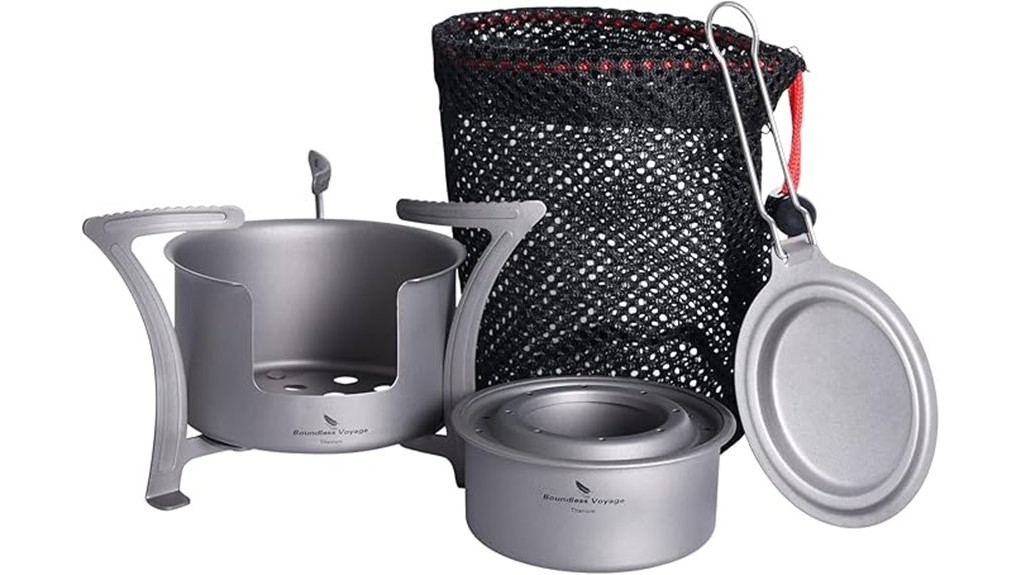
The iBasingo Mini Titanium Spirit Stove gives you an ultralight, durable micro-cooker that handles alcohol or foraged wood. You’ll get a 107 g kit with a double-layer, 24-micropore burner, folding flame regulator and compact stand that’s great for solo or fast-and-light trips. It lights cleanly, simmers precisely, and resists dents and corrosion, though it’s best for small pots and can struggle in wind. Keep reading to see detailed setup tips, fuel trade-offs, and real-world performance.
Some Key Takeaways
- Ultralight titanium alcohol stove kit (~107 g) ideal for thru-hikers and ultralight backpackers seeking minimal weight.
- Double-layer alcohol burner with 24-micropore crown delivers an even flame ring and reliable boil performance.
- Folding flame regulator enables precise simmering, quick shutoff, and reduces soot compared with single-wall cans.
- Titanium stand is durable, heat-resistant, and doubles as a compact wood-stove for dual-fuel flexibility.
- Best for solo/micro-cooking; limited pot stability and slower group boil times, and performance can suffer in high winds.
Product Overview and Specs: What the iBasingo Mini Titanium Spirit Stove Includes
When you unpackage the iBasingo Mini Titanium Spirit Stove (model Ti2013C, ASIN B0CN2TYVCP), you get a lightweight titanium alcohol heater, a folding flame regulator with a 75 mm handle, and a compact wood-stove stand plus a storage bag—totaling about 107 g. You’ll note the materials overview emphasizes titanium’s lightness, corrosion and heat resistance compared with steel or aluminum. Dimensions and weights are compact for backpacking. The double-layer alcohol burner, regulator and vented stand give versatile fuel options. Accessory compatibility is decent: the handle and stand fit small pots and common backpacking gear, though large cookware won’t be stable. Titanium’s combination of lightness and corrosion resistance makes it a popular choice for titanium cookware among backpackers.
Real-World Setup and First-Use Test: Lighting, Flame Control, and Cooking Performance
Although small, the iBasingo Mini Titanium stove lights and cooks like a proper micro-cooker: you fill the double-layer alcohol burner, set it in the vented stand, ignite the 24-micropore crown and use the folding regulator to trim the flame or shut it off. On first lighting you’ll notice a clean, even ring of flames; priming is minimal compared with single-wall cans. Flame control via the regulator is precise enough for simmering or rapid boil; heat distribution beats many tiny alcohol stoves. Smoke control is good—little soot if you use denatured alcohol and keep the regulator adjusted. Setup is quick and intuitive. This compact design makes it an excellent choice for lightweight backpacking trips.
Durability, Weight, and Portability: How the Titanium Design Performs for Backpacking
Built from lightweight titanium, the iBasingo Mini feels virtually indestructible in a pack—you’ll notice its resistance to dents, corrosion, and heat after a few trips. You carry about 107 g total, so it barely affects pack weight compared with steel alternatives. The titanium body gives superior corrosion resistance and excellent heat tolerance, so repeated boiling and exposure to elements won’t degrade performance. Folding parts stay precise; the stand doubles as a mini wood stove without adding bulk. For fast-and-light trips you’ll prefer this over heavier cans, and for gear longevity it outlasts cheaper alloys. Its low weight and compact size make it ideal for lightweight backpacking where every gram and cubic centimeter counts.
When to Pick Alcohol vs. Wood Fuel: Fuel Options, Burn Time, and Efficiency
You’ll often pick fuel based on trip length, weight priorities, and available resources: alcohol gives predictable, clean burns and faster boil times for short trips or when you want minimal fuss, while wood lets you forage fuel and extend time on the trail without carrying extra weight. You’ll choose alcohol when reliable boil times, low smoke output, and quick setup matter — pack fuel for planned trips. Pick wood if fuel sourcing is easy, you want longer stints off-grid, or prioritize weight savings. For emergency preparedness, carry a small alcohol canister even if you plan to rely on wood. Camping suppliers often stock essential accessories like fire starter sticks to make wood-based fires easier and more reliable, especially in damp conditions, and are a good thing to include in your kit with fire starter sticks.
Who Should Buy This Stove and Practical Pros & Cons for Campers
If you want a featherlight, versatile cooker that handles both alcohol and small wood fires, the iBasingo Mini Titanium is worth considering—especially for solo hikers, ultralight backpackers, and minimalist campers who value weight, corrosion resistance, and quick setup. You’ll get lightweight reliability and camping versatility: ~107 g total, double-layer alcohol burner, foldable regulator, and a compact wood-stand. Who should buy: solo trekkers, thru-hikers, survivalists, and anyone prioritizing pack weight and durability. Pros: tiny weight, corrosion-resistant titanium, dual-fuel options, fast setup. Cons: small pot capacity, limited boil speed for groups, fiddly in high winds. This stove is a practical match for users focused on ultralight tents and minimalist backpacking gear.
Some Questions Answered
Is Fuel (Alcohol) Included With the Stove Purchase?
No — fuel’s excluded; the stove and bag come only. You’ll need to source alcohol fuel separately, which is useful because you can choose denatured alcohol or legal substitutes depending on bottle legality where you travel. That flexibility beats bundled kits that force a specific fuel. You’ll want a small, approved fuel bottle that meets transport rules; compare local regulations for carrying liquids to avoid fines or confiscation.
Can This Stove Be Used Indoors or in Shelters Safely?
You shouldn’t use it indoors or in confined shelters unless you guarantee excellent indoor ventilation and carbon monoxide monitoring. Compared to propane or canister stoves, alcohol burners produce less soot but still emit CO and heat that can ignite shelter materials or flammable insulation. If you must, always open vents, keep stove on a stable noncombustible surface, maintain distance from fabric, and use a CO alarm; outdoor use is safer and recommended.
Are Replacement Parts or Spare Regulators Available?
Yes — you can get replacement parts like the spare regulator, but availability varies. Check the seller or iBasingo customer service first; they’re likeliest to supply regulators, stands, or repair pieces. If direct parts aren’t offered, compare third-party titanium spirit-stove parts that match dimensions (Ø74 mm regulator) and weight. You’ll want authentic parts for fit and safety, so prioritize official customer service over generic options.
What Cookware Sizes Are Compatible With the Stand Stability?
You’ll find the stand stable with small pots (100–500 ml) and medium pans; it’ll handle large kettles only if they’re low-profile and not overfilled. Compared to wider tripod stoves it’s less forgiving with tall, narrow kettles—those can tip when windy or uneven. Use low-center-of-gravity cookware, keep weight centered, and avoid oversized kettles for best stability. For heavier kettles, add a windscreen and level ground.
Does Titanium Impart Any Taste or Odor to Food?
No, titanium neutrality means you won’t get metallic taste or odor from the stove. You’ll notice less flavor impact compared with aluminum or iron because titanium’s low surface reactivity resists leaching. That said, burned food or residues on hot surfaces can still create odors, so you should keep cookware and stove clean. Overall, titanium’s inertness makes it a better choice when preserving food flavor outdoors.