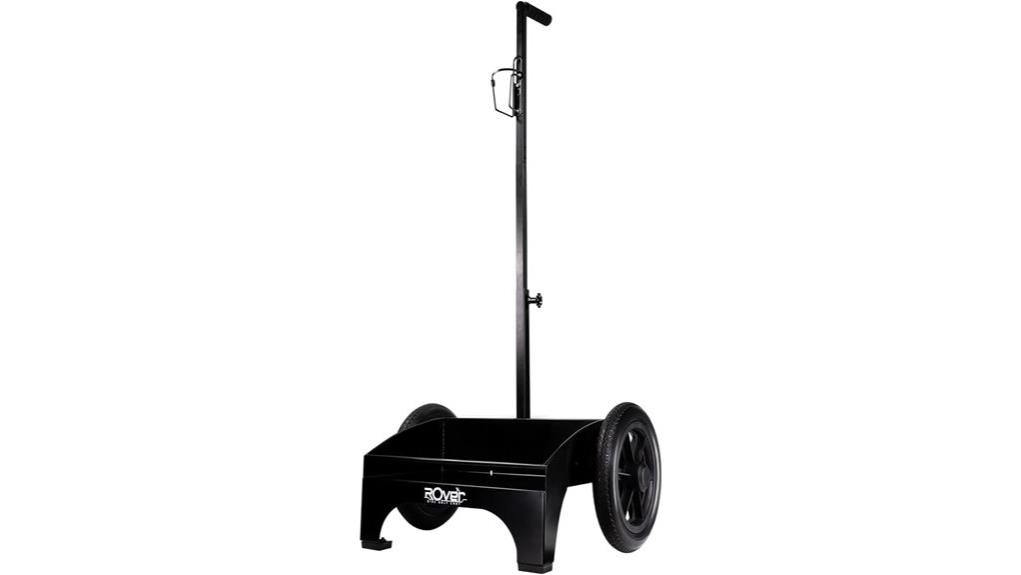
You’ll get a rugged, low-tech course cart that favors lightweight utility and proven steel construction over electric bells and whistles. It weighs under 14 lbs, uses a welded steel frame, adjustable handle, and no-flat polyurethane tires for low maintenance. Fixed-axle geometry gives precise tracking and a low center of gravity for stability. Fits Voyager-style bags up to 10.25 x 15.5 inches and collapses compactly. Keep going to see detailed fit, performance, and care notes.
Some Key Takeaways
- Lightweight steel-frame cart under 14 lbs prioritizes durability and easy transport without batteries or electric assist.
- Welded frame and reinforced joints deliver reliable long-term durability and predictable handling on-course.
- Optimized cradle fits Voyager-series bags (up to 10.25 x 15.5 in) and supports common accessory mounts.
- Polyurethane no-flat tires and fixed-axle geometry provide precise tracking and low maintenance performance.
- Collapses under one foot for storage, with a detachable adjustable handle and a manual foot brake for downhill control.
Quick Verdict : Is the MVP Rover Cart Worth Buying?
Wondering if the MVP Rover Cart is worth it? You’ll find it practical: under 14 lbs, no-flat polyurethane tires, and compact storage make course transit efficient. Battery integration isn’t applicable here, so you won’t pay for unnecessary electric features; that simplicity reduces maintenance and failure points. The cart optimizes Voyager-series bag fit and carries accessories without bulk, improving play endurance. Resale value should hold because of durable steel framing and broad compatibility, but expect modest depreciation typical of niche sports gear. Overall, you’re buying reliable, lightweight utility rather than high-tech bells and whistles. It’s a great option for golfers looking for a dedicated golf pull cart designed specifically for disc golf course use.
What the Rover Cart Is Made Of and How It’s Built
The Rover’s chassis uses a welded steel frame that prioritizes rigidity and long-term durability while keeping the total weight under 14 lbs, so you won’t compromise portability for strength. You’ll notice precise frame welding at load points, enhancing steel durability where the bag and axles meet. The adjustable handle locks securely at multiple heights and detaches for compact storage, folding the cart to under a foot for vehicle stowage. Polyurethane tires are no-flat, low-maintenance components mounted on robust hubs. Internal geometry and reinforced joints balance weight distribution between bag, frame, and wheels for predictable handling and longevity. Many golfers also equip their carts with essential accessories to improve convenience and performance on the course.
How It Performs on Course : Mobility, Stability, and Tire Behavior
Having covered the Rover’s build, let’s look at how that construction affects performance on course: the cart rolls responsively, stays rock-steady under load, and requires minimal upkeep. You’ll notice precise wheel tracking on straight pushes; the fixed-axle geometry and polyurethane tires minimize wander and resist punctures across fairways and light rough. Stability is excellent—low center of gravity and rigid steel frame prevent tipping when you lean or reach. Tire compliance is limited but predictable, so small bumps don’t unsettle throws. Brake performance is manual: set-and-hold foot brake arrests downhill roll reliably, though modulation is coarse compared with hydraulic systems. Top Gear for Golf offers a wide selection of push carts to help you choose the best fit for your game.
Bag Fit, Storage Dimensions, and Compatibility With Voyager Bags
Because MVP optimized the Rover around their Voyager series, you’ll find the bag sits securely with minimal shimming while still accommodating many third-party packs. You’ll notice the bag dimensions—up to 10.25 x 15.5 inches—match the frame footprint, so larger Voyager-style packs lock into the cradle without torque. Attachment points and the low-profile frame give predictable center-of-mass placement, improving roll balance. Accessory compatibility is solid: straps, umbrella mounts, and drink carriers attach to the frame or bag without interference. If you use non-Voyager bags, check pocket depth and base width against the stated bag dimensions before relying on a snug fit. This cart is designed to help golfers improve efficiency on the course by carrying gear more comfortably and reliably, boosting overall golf efficiency.
Who Should Buy the Rover Cart and Practical Storage/Maintenance Tips
If you regularly carry a full Voyager-style setup or more than a few discs, you’ll appreciate the Rover’s load-handling and stable cradle geometry. You should buy this cart if you’re a Beginner players shifting to heavier loads or a seasoned player planning Long trips; the <14 lb steel frame and adjustable handle balance capacity and compact storage. For Weather protection, stow bags under a cover and avoid prolonged exposure to sun and moisture to preserve powder coat and plastics. Maintenance: follow a simple Cleaning routine—wipe frame, rinse polyurethane wheels, lubricate quick-release points, and store collapsed under one foot tall to prevent distortion. Designed for golfers who travel with clubs and gear, this cart complements secure travel cases for those focused on travel cases and organized transport.
Some Questions Answered
Does the Rover Cart Come With a Warranty or Manufacturer Support?
Yes — you get manufacturer warranty details and customer support options, though specifics vary by seller and region. You’ll find limited warranty coverage for defects in materials and workmanship; it’s not an unlimited guarantee. Contact MVP Disc Sports’ customer support for claim procedures, required proof, and shipping instructions. Keep purchase receipts and photos of damage; they’ll shorten resolution time. Check retailer terms for additional coverage or extended protection plans.
Can Accessories (Cup Holders, Umbrellas) Be Added or Purchased Separately?
Yes — you can add accessories; a Cup Holder and Umbrella Adapter are available separately. You’ll mount them to the Rover’s frame using drilled or clamp fittings designed for tubular steel. They’ll fit within weight and clearance limits without compromising stability. Expect OEM or third‑party options; verify clamp diameter and fastener compatibility before buying. Installation is straightforward and reversible, keeping the cart compact and functional for varied course conditions.
Is Assembly Required, and Are Tools Included for Setup?
Yes — assembly required, but it’s minimal and technical. You’ll unbolt the frame, attach wheels, handle, and bag supports using basic hand tools. Tools included are typically limited to an Allen wrench or small spanner; expect to supply a screwdriver or adjustable wrench for faster setup. Instructions are concise, parts pre-drilled and labeled, and assembly takes about 15–30 minutes. Overall, it’s straightforward for anyone comfortable with basic hardware.
What Is the Cart’s Maximum Weight Capacity for Bags and Gear?
The cart’s maximum capacity is around 60–70 pounds, so you shouldn’t exceed that load limit for safe operation. You’ll feel confident hauling a full Voyager-style bag plus accessories; the durable steel frame and no-flat polyurethane tires handle uneven terrain well. Don’t overload it beyond the stated maximum capacity—doing so can strain the frame, affect handling, and void warranties. Stick to recommended limits for reliable performance and longevity.
Are Replacement Tires or Parts Available From MVP Disc Sports?
Yes — you can get replacement tires and spare axles from MVP Disc Sports. Contact their parts/support team or check the official site for no-flat polyurethane replacement tires and compatible spare axles specific to the Rover frame. You’ll want exact part numbers to guarantee fit; confirm wheel hub dimensions and axle length. Ordering OEM parts preserves durability and mobility across rough terrain and maintains the cart’s load and folding specifications.