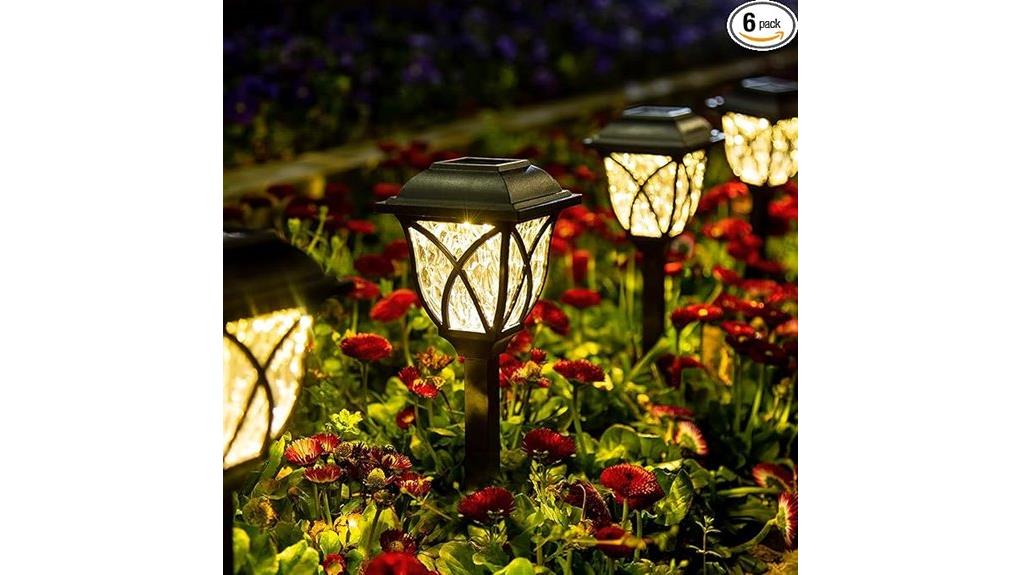
You’ll get dependable, low‑maintenance path and planter lighting with the GIGALUMI 6‑pack; it’s affordable, sturdy, and simple to install. Brightness is strong for accents, and typical runtime hits about 10–12 hours after a good sunny day, though performance dips in overcast or winter months. Plastic housing and sealed seams resist storms better than bargain stakes, and placement is tool‑free. If you want practical overnight illumination with minimal fuss, keep going for full details and tips.
Some Key Takeaways
- Reliable, no-fuss solar path lights offering steady overnight illumination for yards and planters.
- Brightness suits walkways and planter accents; upgraded panels and high-power LEDs perform well in summer sun.
- Typical runtime about 10–12 hours in ideal sun, with reduced output in overcast or winter conditions.
- Durable plastic housing, sturdy stakes, UV protection, and waterproof seams resist cracking and moisture.
- Easy, tool-free installation; space 18–24 inches on paths and cluster in planters for focal lighting.
Quick Verdict: Is the GIGALUMI 6 Pack Solar Lights Worth Buying?
If you want reliable, no-fuss path lighting that’s easy to install and holds up in bad weather, the GIGALUMI 6 Pack is worth picking up. You’ll get straightforward solar path lights that balance cost and function—an affordability assessment favors these over pricier metal alternatives. Installation’s simple, materials feel sturdy, and waterproofing means you won’t babysit them through storms. They won’t rival high-end fixtures, but the aesthetic appeal is clean and unobtrusive for yards, patios, and planters. If you want dependable, low-maintenance illumination that looks tidy and won’t break the bank, these are a sensible buy. These lights are ideal for enhancing outdoor spaces popular with homeowners who enjoy patios and garden seating solar patio lights.
Real-World Brightness & Runtime Test (Solar Charging, 10–12h Performance)
Having covered build and usability, let’s look at how these lights actually perform after a day in the sun. You’ll find brightness strong for path and planter accents — upgraded panels and high-power LEDs deliver consistent downlight without harsh spill. In ideal summer sun, each unit ran close to the advertised 10–12 hours; runtime slipped in overcast or winter tests, showing seasonal variance you should expect. Watch for gradual battery degradation over many cycles; performance dipped slightly after prolonged use but remained serviceable for routine landscaping. Overall, they balance bright, reliable evening illumination with realistic longevity expectations. These fixtures are well suited to people who enjoy the patio space on their property and other outdoor areas, offering low-maintenance accent lighting with solar-powered operation.
Build, Weather Resistance, and Durability Compared to Budget Lights
While cheaper garden stakes often feel flimsy and fade after a season, GIGALUMI’s plastic housing and thicker stakes give you noticeably better longevity and weather resistance. You’ll appreciate the durable construction that resists bending and cracking, plus enhanced sealing around seams to keep moisture out in heavy rain or snow. The finish shows improved scratch resistance compared with bargain brands, so scuffs stay minimal during yard work. Built-in UV protection slows sun bleaching, maintaining color and performance season after season. Overall, these lights cost slightly more but deliver measurable durability and reliable outdoor resilience. These fixtures are ideal for enhancing patio lighting and creating an inviting outdoor space.
Installation, Typical Uses, and How to Get the Best Light Placement
Start by choosing sunny spots—these lights need 6–8 hours of direct sun to hit their advertised 10–12 hour runtime—then plan placement to highlight paths, planters, or focal features without crowding them. You’ll assemble quickly and press each stake firmly; adjust stake depth for stability in soft or compacted soil. Use roughly even ideal spacing—about 18–24 inches for visual continuity on walkways, wider for wash lighting—to avoid hotspots. Angle shades toward targets and avoid tree canopy shade. For planters or edging, cluster two or three to create focal pools of light. Test at dusk and tweak positions. Consider pairing them with string lights to enhance your patio’s overall ambience.
Who Should Buy These Lights and Alternatives to Consider
If you want affordable, low-maintenance path or planter lighting that charges itself and survives year-round weather, these GIGALUMI solar stake lights are a solid pick. You should buy them if you want simple, tool-free installation, reliable overnight illumination for walkways, or décor for garden parties without wiring. They’re great as practical gift options for new homeowners or gardeners. If you need brighter, longer-lasting output, consider wired LED path lights or higher-capacity solar lights with replaceable batteries. For decorative variety, look at solar string lights or lanterns. Compare warranty length and lumen specs before you decide. These lights are ideal for enhancing evening patio ambiance with tasteful landscape lighting.
Some Questions Answered
Do Replacement Bulbs or Parts Exist for These Solar Lights?
No, there aren’t user-replaceable bulbs; the LEDs are integrated, but you can replace replacement batteries and some third party bulbs aren’t compatible. You’ll likely swap the whole unit if LEDs fail. If battery performance drops, you can install compatible replacement batteries to restore runtime. Consider buying from sellers offering returns or the 6-month warranty, and weigh replacing units versus attempting repairs with nonstandard parts.
Can These Lights Be Connected to a Timer or Smart Home System?
Yes — but with limitations. You can’t directly integrate these solar path lights into most smart-home hubs because they’re standalone, solar-charged units. For timer compatibility, you’ll want an external solution: use a smart plug or outdoor-rated timer on their USB power (if you run USB power to them) or control an external lighting circuit that complements them. For true smart integration, replace with smart solar-compatible fixtures or add external smart switches/controllers.
Are the Solar Panels Replaceable if They Fail?
No — the solar panels aren’t designed to be user-replaceable. You’ll generally handle battery swaps yourself, but panel failures usually require contacting the manufacturer for repair or replacement under warranty claims. If you want long-term serviceability, consider buying spare units or confirming extended support from the seller. That way you’ll avoid downtime and guarantee light longevity without needing technical disassembly or risking damage during DIY repairs.
Do They Work in Heavily Shaded or North-Facing Gardens?
They’ll struggle in heavily shaded or north-facing gardens. You’ll get limited low light performance because the panels need 6–8 hours of direct sun to charge fully. If you must use them there, you’ll want creative directional mounting to aim panels toward the brightest sky patch or supplement with occasional USB charging. Overall, they work best in sunnier spots; in persistent shade you’ll see reduced runtime and dimmer output.
Is There a Recommended Cleaning or Maintenance Routine?
Yes — you should clean and maintain them regularly. For outdoor maintenance, wipe panels and shades weekly with a soft cloth and mild soap, rinsing thoroughly. Do lens polishing monthly to remove grime and improve brightness; use a microfiber cloth and plastic-safe polish. Check connections, clear debris, and reposition for peak sun exposure. Replace batteries annually if performance drops. This routine keeps lights reliable, brighter, and longer-lasting.