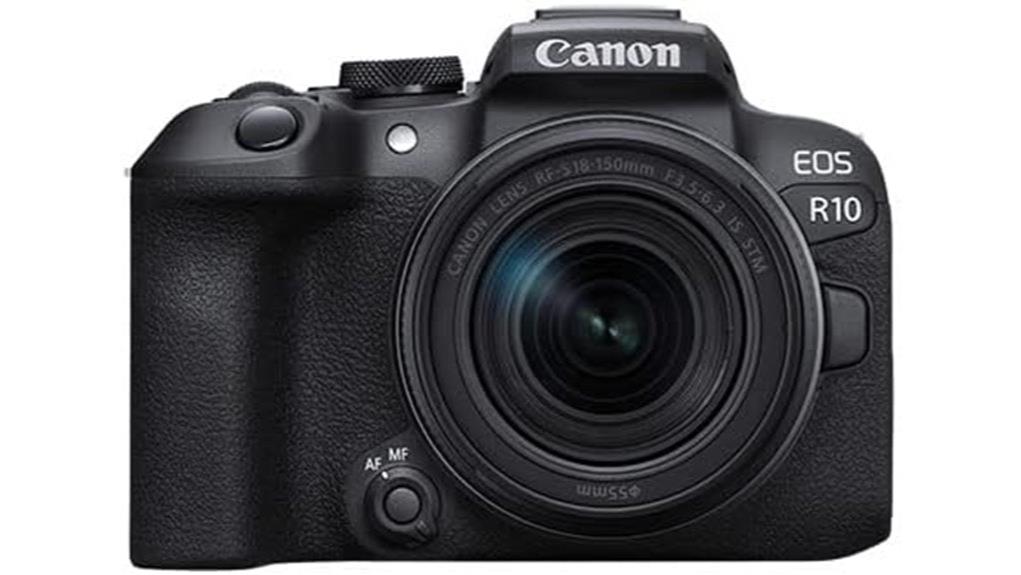
You’ll get a compact, travel‑ready APS‑C mirrorless kit that balances speed, autofocus, and versatility. The 24.2MP sensor with DIGIC X and Dual Pixel AF yields detailed stills and reliable subject tracking, while 4K (30/60p crop) and Movie Servo AF cover hybrid needs. The RF‑S 18–150mm is a flexible, stabilized zoom with good center sharpness; battery life and weather sealing are modest. Keep going and you’ll find hands‑on notes, test results, and buying advice.
Some Key Takeaways
- Compact, travel‑friendly APS‑C mirrorless kit delivering 24.2MP stills and reliable Dual Pixel AF for beginners and creators.
- Versatile RF‑S 18–150mm kit lens covers wide to telephoto with good center sharpness and effective image stabilization.
- 4K video up to 30p (and 60p with crop) with Movie Servo AF for smooth continuous autofocus in hybrid workflows.
- Fast performance: DIGIC X processor, 15 FPS continuous shooting, and solid autofocus tracking for people, animals, and vehicles.
- Tradeoffs include modest battery life, limited weather sealing, and a single SD card slot for pros needing redundancy.
Quick Verdict: Is the Canon EOS R10 + RF‑S 18‑150mm Kit Worth Buying?
Wondering if the Canon EOS R10 with the RF‑S 18‑150mm kit is worth it? You’ll get a compact, lightweight system that balances performance and versatility: 24.2MP APS‑C sensor with DIGIC X, reliable Dual Pixel AF, and 4K video. Assess battery life against your workload—it’s adequate for daytime shoots but expect shorter spans during heavy 4K use. Color science delivers pleasing tones straight from camera, while low‑light performance is solid for APS‑C but limited by kit lens aperture and higher ISO noise. Build quality is robust for travel and content creation, making this kit a practical, cost‑effective choice. It’s especially appealing for mirrorless camera enthusiasts who want essential gear that complements a lightweight, travel-friendly setup.
What’s in the Box and Who This Kit Is For
You’ll find a straightforward, travel-ready kit in the box: the Canon EOS R10 body, the RF‑S 18‑150mm F3.5‑6.3 IS STM lens mounted or boxed, a battery pack, charger, body and lens caps, a shoulder strap, and basic documentation — all aimed at getting you shooting right away. The unboxing experience is compact and efficient; the accessory checklist covers essentials so you won’t need extras for casual shoots. This kit emphasizes beginner suitability without infantilizing controls, and offers travel flexibility via a lightweight body and versatile zoom. It’s aimed at creators who want capable, grab-and-go performance. Consider pairing this kit with a dedicated camera bag to protect your gear and make travel easier.
Key Specs That Matter: Sensor, AF, Continuous Shooting, and Video
Having the kit unpacked and ready makes it easier to focus on the hardware that defines image-making: the EOS R10 pairs a 24.2 MP APS‑C CMOS sensor with Canon’s DIGIC X processor to deliver detailed stills and efficient data handling, while Dual Pixel CMOS AF provides responsive phase‑detect focusing with people, animal, and vehicle detection and Movie Servo AF for smooth continuous tracking in video. You’ll get solid dynamic range for mid‑to‑high contrast scenes and usable ISO up to expanded ranges for flexibility. Continuous shooting at 15 FPS supports rapid burst capture, and 4K video with Movie Servo AF aids reliable subject recognition during recording. The R10’s kit options include versatile zooms like the RF‑S 18‑150mm, making it a good fit for enthusiast photographers seeking an all-in-one solution.
Real-World Performance: Stills, Autofocus Tracking, Low‑Light, and Burst Speed
When you push the shutter, the R10 translates its 24.2MP APS‑C sensor and DIGIC X engine into punchy, detailed stills with minimal lag, and its Dual Pixel CMOS AF consistently nails focus across people, animals, and vehicles in most practical scenarios. You’ll appreciate autofocus fine tuning options for lens-specific micro adjustments and reliable subject retention during erratic motion. Low‑light performance holds usable detail to mid‑high ISOs with sensible noise reduction choices; color science comparison puts skin tones slightly warm but natural. Burst speed at 15 FPS is effective if you manage buffer management and choose high‑speed cards. Note: basic weather sealing aids field use. For accessories and support gear that complement mirrorless systems, consider essential items like camera bags to protect and organize your kit.
Video Workflow: 4K Capture, Movie Servo AF, Stabilization, and Audio
Start by setting the R10 to 4K/30p (or 4K/60p if you need slow‑motion and accept the crop) and pick an appropriate codec and bitrate to balance quality and file size—MP4 with high bitrate settings yields robust grading latitude while keeping workflow simple. Use Movie Servo AF for continuous subject tracking, monitor autofocus latency and adjust AF speed/sensitivity to avoid hunting. Combine lens optical stabilization with in‑body techniques for reliable 4K stabilization. Record clean on camera audio for reference, but route primary capture to a wireless mic or external recorder via the hotshoe/USB to guarantee dialog clarity and reduce handling noise. For efficient offloading and faster transfer times during busy shoots, consider using a dedicated memory card reader.
RF‑S 18‑150mm Lens Review: Sharpness, Zoom Versatility, and Handling
After locking exposure and focus workflows for 4K capture, it’s worth evaluating the RF‑S 18–150mm F3.5–6.3 IS STM that ships with the R10: this single lens aims to be a do‑everything performer for run‑and‑gun creators. You’ll find sharp center resolution from 18–100mm, with corner falloff at long focal lengths; microcontrast is good for APS‑C. Zoom versatility covers wide to telephoto without changing kits, stabilized effectively. Lens ergonomics on the R10 are balanced and intuitive. Focus breathing is minimal for video, aperture smoothness acceptable given variable F‑stop, and color rendition is neutral and easily graded. It pairs well with compact audio solutions for content creators who need reliable wireless microphone setups on the go.
Final Pros, Cons, and Purchase Recommendations by User Type
Although compact and lightweight, the EOS R10 delivers class‑leading autofocus, fast continuous shooting, and versatile 4K video features that make it a strong all‑rounder for creators; you’ll get reliable Dual Pixel CMOS AF with subject detection, 15 fps burst performance, and DIGIC X processing in a handheld‑friendly body with the flexible RF‑S 18–150mm kit lens. Pros: excellent AF, high FPS, versatile zoom, solid image quality, lens IS, straightforward ergonomics. Cons: modest battery life for extended shoots, limited weather sealing, single SD slot. Recommendation: buy if you’re a hybrid creator or enthusiast; pros should upgrade bodies or lenses for specific high‑end needs. For shooting stable handheld video or fast-paced action, pairing the camera with a sturdy tripod from a specialist seller like Perfect Tripods can improve results by reducing camera shake and enabling smoother compositions with tripod-compatible gear.
Some Questions Answered
Can I Use EF Lenses Without Losing Autofocus Performance?
Yes — you can use EF adapters to mount EF lenses and retain autofocus compatibility in most cases. You’ll still get Dual Pixel AF performance on compatible lenses, though AF speed and features (eye/animal tracking, continuous Servo AF) can vary by lens motor and adapter firmware. Expect possible limitations with very old or specialty EF glass, and make sure your adapter supports electronic communication for full autofocus and EXIF functionality.
How Long Does the Battery Last for Mixed Photo/Video Use?
You’ll get roughly 300–400 shots or about 1.5–2.5 hours of mixed use (photo + intermittent 4K video) per battery under typical conditions. For battery longevity, real world estimates vary with AF usage, screen/EVF time, temperature, and Wi‑Fi; heavy Movie Servo AF or continuous shooting pushes runtime down toward the lower end. Carry spares for full-day shoots and consider power banks or a USB charger for extended recording.
Is There In‑Body Image Stabilization (IBIS) in the Camera?
No — the camera doesn’t have in body stabilization or sensor shift. You’ll rely on the kit lens’s optical image stabilization and camera-side electronic stabilization or gyro assist in video modes. For stills, use the RF‑S 18–150mm’s lens-based IS and faster shutter speeds; for handheld 4K video, combine lens IS with electronic stabilization/gyro assist and higher frame rates to minimize blur and rolling/shake, especially at longer focal lengths.
Can It Record External Audio via a Mic Input?
Yes — you can record external audio via an external mic using the camera’s 3.5mm microphone input, and you’ll appreciate that Movie Servo AF and subject detection work while recording. Headphone monitoring isn’t available on the body, so you can’t monitor live audio through headphones directly; instead you’ll need an external recorder or adapter with monitoring if real‑time audio checks are required for critical shoots.
Does the Kit Include a Memory Card or Extra Accessories?
No, the kit doesn’t include a memory card or extra accessories. What’s included is the camera body, RF‑S 18‑150mm kit lens, battery, charger, strap, and basic documentation. You can add accessory options like SD cards (UHS‑I U1/U3/V30 recommended), external mics via adapter, spare batteries, filters, and a mount adapter for EF/EF‑S lenses. Purchase of memory and optional accessories is required for immediate shooting and expanded functionality.