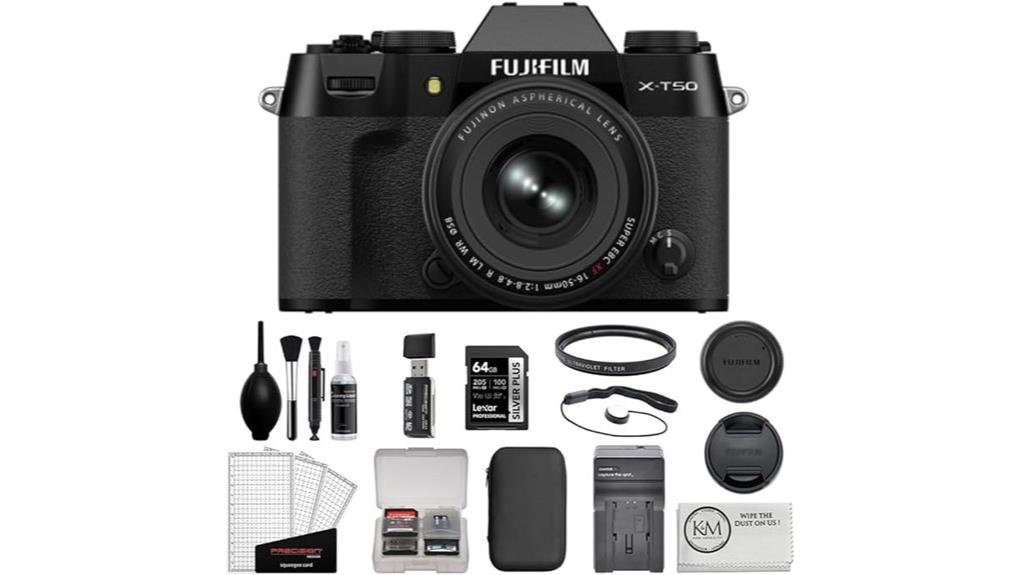
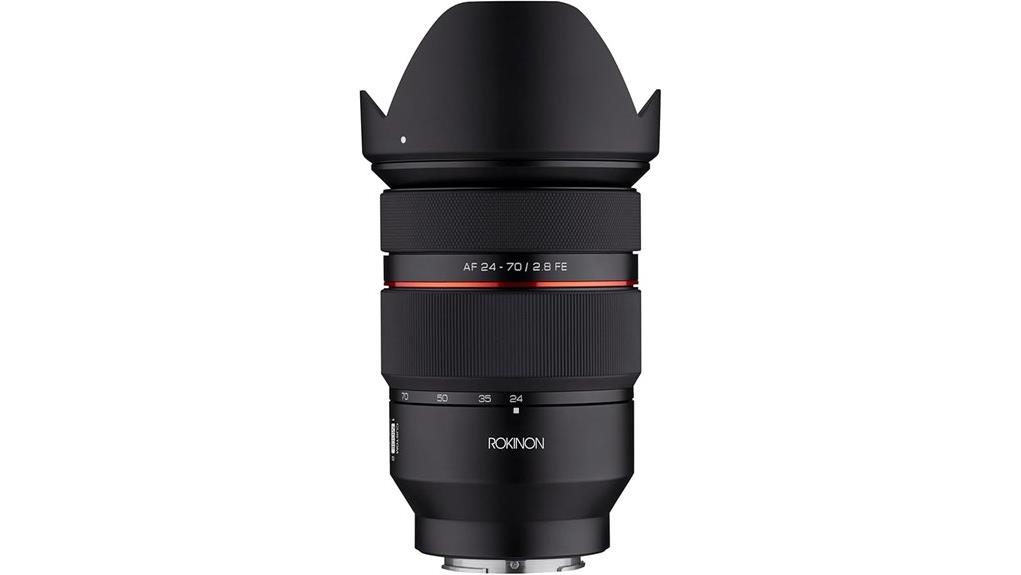
You get a versatile midrange DSLR: the D7500 body paired with the AF‑S DX 18–140mm f/3.5–5.6 kit gives you a strong balance of image quality, reach, and burst speed for hybrid shooters. The 20.9MP sensor, EXPEED 5, 51‑point AF and 8 fps drive handle action and low light well; the zoom’s VR and broad coverage reduce lens swaps though corners soften at tele. Keep reading to see detailed performance, tips and comparisons.
Some Key Takeaways
- D7500 with 18‑140mm is a versatile midrange DSLR balancing image quality, speed, and reach for travel, hybrid photo/video shooters.
- 20.9MP sensor and EXPEED 5 deliver clean detail to ISO 3200–6400 with good high‑ISO handling for most low‑light situations.
- Multi‑CAM 3500FX II 51‑point AF, Group Area AF, and 8 fps provide reliable subject acquisition and fast burst performance.
- 18‑140mm kit lens gives practical 7x zoom and effective VR, though corners soften at tele end and wide‑open apertures.
- 4K/30p video, tilting touchscreen, and solid ergonomics suit enthusiasts; use fast SD cards and spare EN‑EL15 batteries for long shoots.
Why the Nikon D7500 + 18–140mm Kit Is Worth Considering
Although it’s a midrange DX DSLR, the D7500 paired with the AF-S DX 18–140mm f/3.5–5.6 kit lens delivers a versatile balance of image quality, speed, and reach that suits serious enthusiasts and hybrid shooters. You get optical VR, broad focal coverage, and a compact package that minimizes lens changes on assignments. Lens compatibility with Nikon DX/FX mounts preserves future upgrade paths and third‑party options. The body’s build and included accessories support field reliability. Considering robust demand for Nikon DSLRs, you’ll retain stronger resale value compared with lesser-equipped kit combos, reducing total cost of ownership. Mastering lens adapters can expand that versatility by allowing the use of different mount lenses for creative flexibility.
Key Specs That Affect Real-World Shooting (Sensor, AF, and Speed)
Start by focusing on three pillars that determine how the D7500 performs in real shooting: the 20.9 MP CMOS sensor and EXPEED 5 engine for image quality and high‑ISO handling, the Multi‑CAM 3500FX II 51‑point AF system (with 180k‑pixel RGB metering and Group Area AF) for subject acquisition and tracking, and the 8 fps continuous drive for burst responsiveness. You’ll get clean detail to ISO 3200–6400, usable beyond if needed. Use back button focus for consistent tracking. The 8 fps rate with a deep buffer sustains long bursts; monitor buffer clearing times with your memory card choice to avoid dropped frames. The site also offers a curated selection of compatible lenses and accessories designed for enthusiast photographers.
How the 18–140mm F/3.5–5.6 Kit Lens Performs in Practice
The 18–140mm f/3.5–5.6 kit zoom covers a useful focal range and delivers solid everyday performance, but it also shows the typical trade-offs of a compact all‑purpose lens. You’ll get reliable AF tracking with the D7500’s system and effective VR for handheld work across the 7x range. Center resolution is good; corner to corner sharpness softens toward the long end and at wide-open apertures, so stop down for critical detail. Distortion and vignetting are modest and correctable in RAW. For travel and urban streetshooting versatility it’s a pragmatic, lightweight choice that balances reach and convenience. Perfect Portrait Lenses offers curated recommendations for portrait optics and lens-buying guidance to help photographers choose the right gear for their shooting style and needs, including kit lenses and specialty glass for DSLR users with the D7500 portrait camera lenses.
Low-Light, ISO, and Image Quality: What to Expect From the D7500
When you push the D7500 into low light it delivers clean, usable results across a wide ISO range thanks to its 20.9 MP CMOS sensor and EXPEED 5 processor, with native sensitivity from ISO 100 to 51,200 and expanded options down to Lo 1 (50) and up to Hi 5 (≈1,640,000) for extreme situations. You’ll find usable detail to about ISO 6400 with manageable high iso noise after restrained luminance reduction; ISO 12,800–25,600 is workable for web and small prints. Use solid support and mirror-lockup for long exposures motion control; sensor readout and metering remain predictable. This makes the D7500 a solid choice for mirrorless camera enthusiasts looking to supplement their kit with a versatile DSLR for mixed-system shooting.
Video and Live Shooting: 4K, Frame Rates, and Stabilization Tips
Although primarily a stills camera, the D7500 handles video work well: it records 4K UHD at 30 fps and 1080p at higher frame rates, offers reliable autofocus via the 51-point AF system and 180k-pixel RGB sensor, and lets you monitor framing on a 3.2″ tilting touchscreen. You’ll get sharp footage with the 18–140mm VR lens, but watch for rolling shutter during fast pans in 4K; limit rapid motion or use 1080p/60 for cleaner rolling behavior. Use VR plus a gimbal or tripod, enable continuous AF, and consider an external monitor for focus assist and easier framing during live shoots. External camera monitors can significantly improve focus accuracy and composition when shooting video with DSLRs by providing larger, clearer displays for critical monitoring and focus tools like peaking and zebras, making them a valuable accessory for hybrid shooters external camera monitors.
Battery, Storage, Ergonomics, and Connectivity for Travel Shoots
Because long days on the road can drain resources fast, plan your power and storage strategy before you shoot: carry the EN-EL15/EN-EL15a spares included in the bundle and swap batteries proactively, use the MH-25A charger when you can access mains, and budget for at least one high-speed SD card (the bundled SanDisk 64 GB Extreme PRO UHS-I U3, V30) plus a card reader for offloading—this lets you maintain the D7500’s 8 fps burst capability and long 4K sessions without interruptions. Manage battery charging cycles, rotate cards, and log file types. The D7500’s grip and control layout suit handheld travel; rubberized surfaces improve hold during long hikes. Use SnapBridge Bluetooth or Wi‑Fi and wired HDMI/USB connectivity options for fast transfers, tethering, or field monitoring. Keep a selection of compatible spare batteries and chargers on hand to avoid downtime and ensure continuous shooting with spare camera batteries.
Who Should Buy This Kit and Which Alternatives to Compare
Who needs this Nikon D7500 kit? You do if you want a robust DX body with 20.9MP, 8fps burst, Group Area AF and weather sealing for beginner wildlife and travel work, plus a versatile 18–140mm VR walkaround lens. It suits hobbyists upgrading from entry-level DSLRs, enthusiasts needing 4K video and solid battery life, and budget portrait shooters who’ll rely on the kit lens for casual portraits or add a fast prime. Compare alternatives: Nikon D500 (pro AF, higher fps), Canon 90D (similar resolution, Dual Pixel AF), Sony a6400 (compact mirrorless, superior autofocus). Essential gear for DSLR enthusiasts includes items such as spare batteries, protective bags, and a variety of lenses to match shooting needs, making it smart to plan purchases around accessories and lenses.
Some Questions Answered
Does the D7500 Support In-Camera Focus Stacking?
No — it doesn’t support in-camera focus stacking. You can use focus bracketing: the D7500 offers focus-bracketing-like burst shooting and precise manual or autofocus adjustments to capture multiple focus increments. You’ll need to shoot a bracketed sequence and perform focus stacking later in software (e.g., Photoshop, Helicon). Use a stable tripod, remote release or 8 fps burst, small aperture and consistent exposure to maximize overlap and stitching success during post-processing.
Can the Camera Charge via USB While in Use?
No — you can’t charge the D7500 via USB while shooting; it lacks battery passthrough for live use. You can charge EN-EL15/EN-EL15a batteries in the MH-25A charger or use external power packs that accept the camera’s DC input via a compatible dummy battery and AC adapter, but typical power banks connected over USB won’t power the camera directly during operation. Use dedicated DC couplers for continuous power.
Is the 18–140mm Lens Weather-Sealed to the Same Degree as the Body?
No — the 18–140mm kit lens isn’t weather-sealed to the same degree as the body. You’ll get a robust, weather-sealed camera build, but the AF-S DX 18–140mm f/3.5–5.6G ED VR lacks full environmental sealing at mounts and focus rings. For rigorous outdoor work you should treat the lens as less protected, use protective measures (covers, rain sleeves) or opt for a weather-sealed lens for an equivalent build comparison.
Are Lens Corrections Applied Automatically to RAW Files In-Camera?
No — you won’t get in-camera lens corrections baked into RAW; the D7500 stores unaltered NEF files while writing correction info to metadata tagging and can embed lens profile hints via raw embedding for compatible software. You can enable automatic JPEG corrections in-camera, but RAW retains original data. Post-processing apps that read the camera’s metadata tags or raw-embedded profiles will apply distortion, vignetting, and chromatic aberration corrections.
What Third-Party Batteries Are Safe to Use Without Voiding Warranty?
You shouldn’t expect Nikon to endorse third‑party batteries; using Wasabi Power or Watson Batteries may be convenient, but it can void warranty if Nikon ties failure to non‑OEM power. If you use them, keep OEM EN‑EL15/EN‑EL15a originals for diagnostics, retain purchase records, and avoid modifying contacts. Test third‑party cells for correct voltage, temperature behavior, and charger compatibility; stop use immediately on overheating or inconsistent performance.