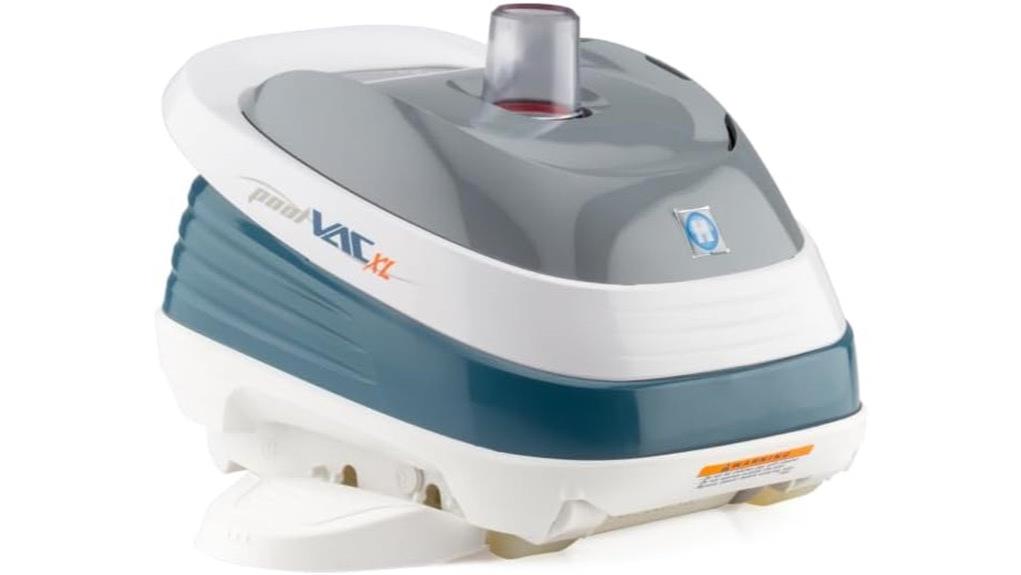
You’ll find the Hayward Pool Vac XL is a no-frills suction cleaner that hooks to your skimmer or suction port and uses your pool filter for power. It delivers systematic floor coverage with good cove and lower‑wall performance, but lacks strong climb force for upper walls and struggles with heavy floating debris. Setup is under ten minutes and maintenance is simple, though performance depends on filter flow and hose configuration. Keep going and you’ll get full details on tradeoffs and alternatives.
Some Key Takeaways
- Effective for inground/gunite pools up to ~20×40 ft, providing consistent floor cleaning without a booster pump.
- Connects easily to skimmer or dedicated suction port; typical setup under ten minutes, no tools required.
- AquaPilot steering enables systematic coverage, but limited climb force restricts cleaning of upper vertical walls.
- Relies on pool filtration flow and skimmer capacity; filter maintenance directly affects performance.
- Low maintenance and quiet operation, though heavy floating debris may need manual removal.
Hayward Pool Vac XL Overview: Who It’s For and What It Does
Although it’s built for straightforward suction cleaning, the Hayward Pool Vac XL (W32025ADC) targets pool owners who want efficient, hands-off maintenance for inground and gunite pools up to about 20 x 40 ft. You’ll appreciate that its design prioritizes simple hookup to a skimmer or suction port and leverages existing filtration—no booster pump. Technically, it contrasts with robotic units by trading autonomous filtration for low-complexity operation. The cleaning scope covers floor and surface debris removal using engineered wings and a skirt; its AquaPilot steering optimizes coverage patterns. For you, it’s a pragmatic, low-maintenance option aligned with clear target audience needs.
Real-World Cleaning Performance: Floor, Walls, and Cove Coverage
When you run the Hayward Pool Vac XL across a typical inground or gunite pool, its AquaPilot steering and low-profile skirt deliver systematic floor coverage while still handling wall and cove suction adequately; you’ll notice it prioritizes the floor and lower wall sections, leaving high vertical wall areas less consistently cleaned. You’ll observe consistent debris trajectory into the intake thanks to wing geometry and skirt seal; floor cleaning is thorough and comparable to competitors. Wall adhesion is adequate for lower walls and coves but lacks climb force for upper walls. For mixed debris loads it’s efficient; heavy floating debris may require manual removal.
Setup, Installation, and How It Uses Your Pool’s Filtration
After observing its floor-focused cleaning and modest wall lift, you’ll find the Pool Vac XL is equally straightforward to set up and integrate with your pool’s existing filtration. You connect the hose to a dedicated suction port or skimmer; no booster pump or tools are required, so setup takes under ten minutes. The cleaner draws solely on your filter’s suction, so you’ll compare flow rates and skimmer capacity to match performance expectations. Hose lengths and weight affect navigation; choose configuration for ideal coverage. For off-season, disconnect, rinse, and follow seasonal storage recommendations to protect hoses and housing.
Maintenance, Noise, and Long-Term Reliability Expectations
Because the Pool Vac XL relies on simple mechanical parts and your pool’s filtration, you’ll find routine upkeep straightforward and predictable, making it easy to follow pool maintenance tips: rinse the unit and hose after each season, inspect skirts and wings for wear, and periodically check hoses and connections for leaks or cracking. You’ll perform routine checks focused on skirt integrity and hose seals; filter care is essential since the cleaner uses your filtration system. Noise mitigation is inherent—its quiet glide outperforms booster-pump models—but monitor for increased vibration indicating motor wear or misalignment. For seasonal storage follow manufacturer guidance and set realistic warranty expectations for parts versus whole-unit coverage.
Should You Buy It? Pros, Cons, and Best Alternative Options
Routine upkeep and quiet operation set realistic expectations for long-term use, so now you should weigh whether the Pool Vac XL matches your needs and alternatives. You’ll appreciate efficient floor, wall, and cove coverage without a booster pump; wings and skirt deliver reliable debris pickup and simple setup. Pros: low maintenance, silent operation, compatibility with standard skimmers. Cons: limited to inground/gunite pools up to 20×40 ft, dependent on your filtration flow. Perform a cost analysis versus robotic options and factor in warranty comparison—Hayward’s standard coverage versus longer robotic warranties. If you want hands-off precision, consider a midrange robotic cleaner.
Some Questions Answered
Does It Void My Pool or Equipment Warranty?
It generally won’t void your pool or equipment warranty if installed correctly, but you should verify warranty transfer and manufacturer exclusions. Compare your pool maker’s terms: many allow suction cleaners that use existing filtration without booster pumps. Still, some manufacturers exclude third-party attachments or improper installations. You should document compatibility, keep installation proof, and consult both your pool and equipment manuals or contact manufacturers to confirm coverage before installing.
Can It Handle Fiberglass or Vinyl Pool Surfaces?
Yes — it’s compatible. For fiberglass compatibility, the cleaner’s wings and skirt provide gentle contact and intelligent steering that avoid aggressive scrubbing, so you won’t damage gelcoat when used correctly. For vinyl suitability, the unit’s soft skirt and controlled suction reduce stress on liners compared with rigid scrubbers. Comparatively, it’s safer for delicate surfaces than many pressure-side cleaners, though you should still monitor initial runs for proper clearance.
What Is the Expected Replacement Part Lifespan?
You can expect replacement parts like filter cartridges to last 1–2 seasons with regular use, while wheel assemblies often endure 2–4 seasons depending on surface and debris load. You’ll extend life by rinsing cartridges and inspecting wheels for wear; harsh environments or heavy debris shorten intervals. Compared to powered cleaners, suction models wear parts faster but cost less to replace, so monitor performance and replace proactively.
Is It Safe for Pool Heaters and Chlorinators?
Yes — you won’t harm heaters or chlorinators if installed correctly. The cleaner’s suction operation is compatible with standard heater compatibility and won’t interfere with chlorinator interaction when connected to the skimmer or suction port. Compared to booster-pump models, it uses existing filtration only, reducing flow spikes that can stress equipment. Verify proper fittings, follow manufacturer flow/specs, and monitor pressure to maintain safe, reliable operation with heaters and chlorinators.
Can Multiple Units Run on the Same Filtration System?
Yes — you can run multiple units on the same filtration system, but you’ll need to manage flow balance. You’ll compare total suction demand to pump capacity; adding cleaners reduces available flow to each unit and to skimmers/heater. Measure pump flow, then adjust valve positions or limit number of units so each cleaner receives adequate suction. If flow balance can’t be achieved, consider upgrading pump or using a dedicated booster pump.