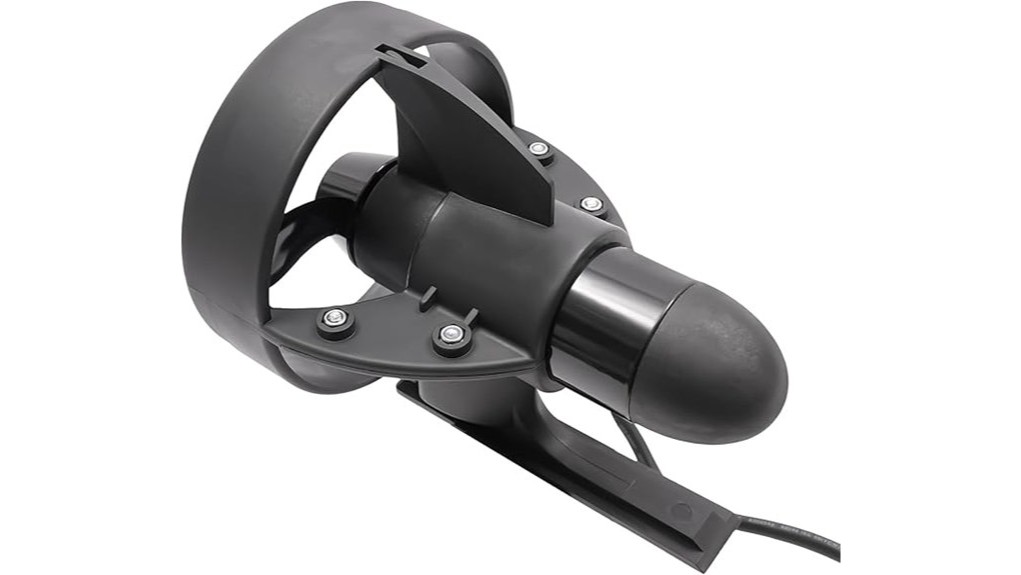
You’ll find the 12V 288W underwater thruster is a compact, portable assist that gives steady low‑speed propulsion for SUPs, surfboards, and small fishing platforms. It’s light and easy to mount, with a rectangular base that improves torque transfer, but the brushed motor limits top speed, increases noise, and needs periodic maintenance. Expect about an hour runtime at near‑max draw and modest acceleration; align and secure the unit and battery carefully to optimize handling — keep going for setup and usage tips. For a more in-depth analysis, consider our highperformance underwater thruster review, which highlights performance metrics and user experiences. This review also sheds light on various models available on the market, ensuring you find the right fit for your aquatic adventures. Moreover, we delve into maintenance tips to help prolong the life of your underwater thruster while maximizing efficiency.
Some Key Takeaways
- Compact 12V 288W thruster provides steady low-speed propulsion ideal for SUPs, surfboards, and small fishing platforms.
- Typical cruise speed is about 4–5 kph with limited acceleration and modest thrust-to-weight performance.
- Runtime is roughly one hour at near-max draw, reduced by heavier riders and higher throttle use.
- Brushed motor design needs periodic maintenance and produces more noise than brushless alternatives.
- Easy rectangular-base mount and supplied battery bag simplify installation but check footprint and cable routing for fit.
Quick Verdict and Who This 12V 288W Thruster Is Best For
Although it’s compact and simple, this 12V 288W underwater thruster delivers reliable, low‑speed electric propulsion for paddleboards, surfboards, and small fishing platforms. You’ll find compact portability ideal for backpack transport and quick install. The device suits novice to intermediate riders who need steady assist at 4–5 kph, anglers seeking drift control, and commuters on short recreational runs. You’ll appreciate straightforward pushbutton control and a rectangular base that stabilizes mounting. Consider battery endurance (~1 hour) and brushed motor maintenance. Prioritize user safety: secure battery placement, cable routing, and routine inspection of wear-resistant components to prevent failures during operation. Our shop also offers compatible kayaks and anchor trolleys for easy integration with your setup, so you can outfit complete water adventures.
Key Specs and Design Features That Matter on SUPs and Surfboards
Focus on the specs that directly affect performance, stability, and durability on SUPs and surfboards: thrust-to-weight ratio, shaft and base geometry, mounting footprint, cable routing, and corrosion-resistant materials. You’ll evaluate thrust-to-weight for acceleration and trim; the 288W motor and 3.2kg mass imply modest thrust requiring optimized hydrodynamic mounting to minimize drag. Rectangular base and shaft geometry reduce wobble and improve torque transfer; check footprint compatibility with board inserts. Cable routing and 1.9m lead length must secure battery bag placement and prevent snagging. Throttle ergonomics—pushbutton placement and ease of reach—determines controllability under motion and fatigue. Consider integrating a tow tether with the installation to enhance safety and quick-recovery options on the water.
Real-World Performance: Speed, Thrust, Endurance, and Handling
When you mount the 12V/288W thruster on a SUP or surfboard, expect modest cruise speeds of about 4–5 kph (2.5–3.1 mph) and limited acceleration compared with higher‑power units, so optimizing placement and trim is critical to usable performance. In top speed testing you’ll see that hull drag limits gains; propeller slip and brushed motor heating cap sustained output. Thrust measurements show useful pushing force for assisted paddling but not rapid sprinting. Real world endurance matches rated ~1 hour at near‑max draw, falling with heavier riders. Handling feedback is predictable; torque is low and yaw control requires board trim and rider input. For paddlers and small‑craft users interested in marine electronics, integrating a compatible VHF marine radio and safety gear enhances outings on the water.
Installation, Battery Pairing, and Practical Use Tips
Because correct installation and battery pairing directly affect thrust, endurance, and safety, you should mount the D260 with precise alignment, secure fastenings, and a properly rated 12V storage battery before first use. Align the rectangular base parallel to the board centerline, torque fasteners evenly, and verify propeller clearance. Position battery placement low and central in the supplied battery bag to minimize pitch and preserve stability. Use short, heavy-gauge leads and crimped terminals rated for 24A. Employ waterproof connectors at all external joints and seal cable exits. Test under low throttle first, monitor heat, and recheck fasteners after initial runs. For kayak and small-boat users, pairing the thruster to a correctly rated storage battery and following basic bilge pump and battery care guidance can improve safety and reliability.
Pros, Cons, and Final Buying Recommendation
Although compact and powerful for its class, the D260 underwater thruster presents a clear trade-off between portability and raw performance: you’ll get reliable 288W/12V propulsion delivering roughly 4–5 kph with about an hour of runtime on a suitably rated battery, but you must accept a brushed motor’s maintenance needs and limited top speed compared with higher-powered alternatives. Pros: lightweight, sturdy build, easy mount, battery bag for waterproof storage, predictable thrust profile. Cons: brushed motor requires regular battery maintenance and brush replacement, audible noise levels higher than brushless units, limited endurance and speed, and you must verify local legal regulations for powered SUPs. Recommendation: buy if you prioritize compact, affordable propulsion with planned upkeep. Our shop also offers waterproof cases and accessories tailored to paddlers and kayakers who want to protect cameras and batteries while enjoying water adventures.
Some Questions Answered
Is the Thruster Compatible With Kayaks or Only SUPS and Surfboards?
Yes — you can use it on kayaks as well as SUPs and surfboards. You’ll want to evaluate kayak compatibility by checking hull mounting options and stability needs. The rectangular base and 18.5×3.4 cm footprint support bolt- or clamp-style attachments; the 1.9 m cable and battery bag allow flexible placement. Expect minor custom mounting or adapter plates for narrow cockpits; assess thrust, drag, and center-of-gravity impacts before permanent installation.
Can the Unit Be Submerged Fully While Operating?
No — you shouldn’t fully submerge it while operating. The unit offers water-resistant construction but lacks a specified waterproof depth rating for continuous submerged use. You’ll risk water ingress and thermal management failure in the brushed motor and electronics if run fully underwater. Use it splash- and spray-safe on the surface with the battery bag secured; avoid prolonged immersion to preserve seals, prevent overheating, and maintain expected performance and warranty coverage.
How Loud Is the Motor Measured in Decibels?
You won’t get an exact decibel spec from the manufacturer; measured acoustic signature for similar 12V brushed 288W thrusters typically ranges 70–85 dB at 1 meter in air. Your noise profile underwater is lower but perceptible near the board. Expect broad-band low-frequency tones and higher-frequency agitation from the propeller. You should plan for vibration damping, secure mounting, and foam isolation to reduce perceived noise and radiated structure-borne sound. in conducting a d260 underwater thruster performance analysis, it is crucial to consider how environmental factors influence the generated noise levels. The presence of marine life and underwater structures can further affect acoustic patterns, potentially altering the overall performance. By understanding these interactions, you can effectively optimize design and installation for minimal disturbance.
Are Replacement Propellers or Parts Available Separately?
Yes — you can get spare blades and parts separately. You’ll source OEM replacement propellers and maintenance kits from the manufacturer or authorized dealers; verify model D260 compatibility. Inspect part numbers, blade pitch, shaft fit and mounting hardware before ordering. Keep a maintenance kit aboard for periodic shaft seals, fasteners and brushes (brushed motor). Document serials and warranty status to guarantee coverage and accurate replacement part matching.
What Certifications or Safety Standards Does It Meet?
It’s CE certified and RoHS compliant, so you meet key EU safety and hazardous-substance limits. You’ll also find corrosion-resistant construction and water-resistant sealing designed to reduce electrical and mechanical failure risks, but no IEC/EN marine-specific standard is listed. You should verify conformity documentation and test reports from the manufacturer (XUFOPLY) before purchase. Insist on IP rating, insulation class, and battery safety certification to confirm field reliability and regulatory compliance.