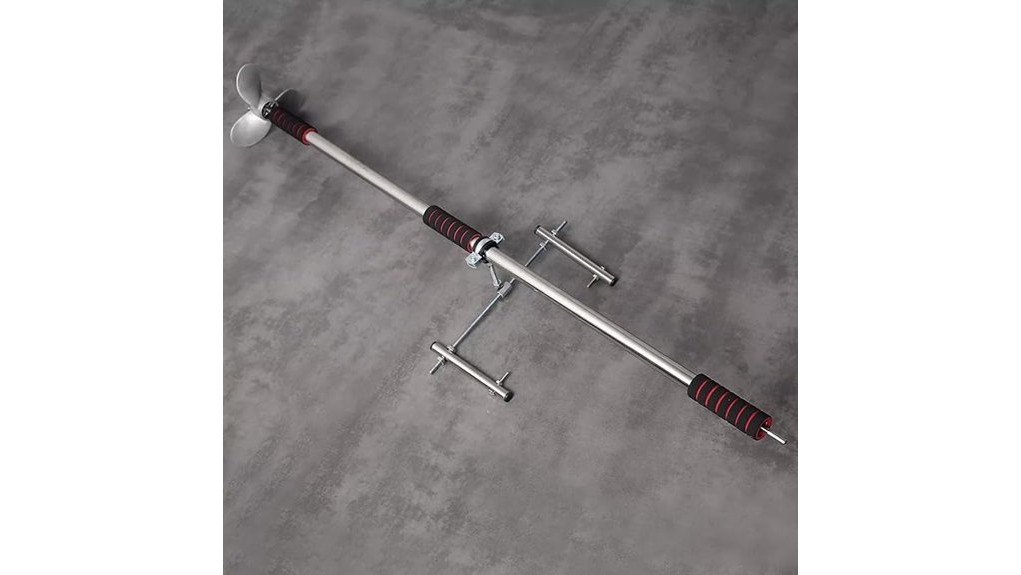
You’ll get a compact, low‑cost way to add short‑range propulsion and basic steering to small boats and kayaks by using a standard cordless drill with a clamped aluminum bracket and 16 cm three‑blade prop. It’s practical for dock work, short transits, and emergency backup paddling, though runtime, thrust, and steering finesse depend on drill torque and mount alignment. Noise and cavitation are moderate under load. Continue for setup, compatibility checks, and maintenance tips.
Some Key Takeaways
- Confirm compatibility: check transom thickness, bracket reach, and required shaft length (100 vs 125 cm) before buying.
- Power source matters: drill battery runtime and torque limit top speed, endurance, and effective thrust for transits.
- Steering performance: pivot mount offers direct control but expect yaw during acceleration and tight correction needs.
- Durability: aluminum alloy body and three-blade 16 cm prop resist corrosion and impact if rinsed and inspected after use.
- Use cases: ideal low-cost, portable backup or short-range propulsion on calm water, not for heavy loads or long-distance runs.
Quick Verdict: Who This Drill-Driven Trolling Kit Suits
If you need a compact, low-cost way to add short-range propulsion to a kayak, canoe, paddleboard or small inflatable, this drill-driven trolling kit fits the bill. You’ll appreciate its portable convenience for reaching fishing spots, docking, or repositioning on calm water. It converts a standard cordless drill into a single-handed propulsion unit with simple clamp or bracket mounting. You won’t get long-range performance, but you’ll gain a lightweight, rust-resistant aluminum assembly that doubles as an emergency backup paddle. Choose the appropriate overall length and verify your drill has sufficient torque; expect straightforward setup and basic, utilitarian operation. For paddlers who value easy transport and simple gear, a kayak cart can be a useful companion for moving boats to and from the water.
How the Kit Performs on Water (Speed, Steering, and Noise)
Having established its role as a compact, utilitarian propulsion aid, next assess how it actually performs on water in terms of speed, steering, and noise. You’ll find short bursts outperform paddling: the 16 cm three‑blade propeller produces useful thrust for dock work and short transits, though top speed is limited by drill RPM. Steering adjustments are direct via the pivoting mount; you’ll make tight corrections but should expect some yaw during acceleration. Noise is moderate — drill motor whine and prop wash are audible but not intrusive. Monitor propeller cavitation and battery drain; both increase under heavy load or when misaligned. Many beginners pair these kits with lightweight recreational kayaks to ease handling and learning on calmer waters.
Fit, Setup, and Drill Compatibility Checklist
Because setup and fit determine real-world usability, run through a concise checklist before you head out on the water. Inspect hull edge thickness (≤7.5 cm) and confirm clamp seating; add clamp padding if contact points are rough. Verify bracket reach matches transom geometry and measure required shaft length (100 vs 125 cm). Test drill engagement: chuck fits prop shaft adapter and runs true. Confirm your drill battery fits the drill and provides sufficient runtime for planned distance. Torque-test fasteners, make certain pivot clears hull during full steering sweep, and carry basic spares and a quick-release for rapid removal. Consider using an all-terrain kayak cart to simplify beach-to-water launches and shore handling.
Durability, Materials, and Mounting Options Tested
With fit and setup confirmed from the checklist, you’ll want to evaluate how the kit’s aluminum-alloy body, three-blade 16 cm propeller, and mounting hardware hold up under repeated use and exposure to water. You’ll test corrosion resistance by rinsing, drying, and inspecting joints and fasteners after salt-free freshwater sessions. The propeller maintained pitch and balance after impact checks; aluminum alloy resisted deformation under clamp torque. Clamp versatility proved useful: the clamp grips hulls up to 7.5 cm while the adjustable bracket suits varied deck heights. Fastener tolerances and pivot bearings showed minimal play after routine operation and storage. This assessment is especially relevant for pedal drive kayaks and other small craft used by adventurous water enthusiasts.
Pros, Cons, and When to Choose This Kit Over Alternatives
Although it sacrifices some continuous runtime and integrated controls compared to purpose-built electric trolling motors, this drill-driven kit gives you a compact, low-cost propulsion solution that’s easy to install, maintain, and repurpose as an emergency paddle. You’ll gain portability, simple mounting, and straightforward maintenance tips for longevity. Downsides include limited battery life tied to your drill, less thrust for heavy loads, and lack of throttle integration. Choose this kit when you need an affordable, occasional-use propulsor or backup for calm waters. Follow safety precautions, check legal restrictions for motorized devices on your waterbody, and inspect fittings regularly. For kayak anglers and outdoor enthusiasts who use power poles and related gear, this kit can be a practical complement to portable kayak accessories for short trips and emergency use.
Some Questions Answered
Is a Drill Included With the Trolling Motor Kit?
No, a drill isn’t included. You’ll supply your own cordless drill; the unit’s drill compatibility covers most standard drills so you can convert one into a handheld trolling motor. Consider battery options for runtime and torque: higher-voltage, higher-capacity drill batteries give longer operation and better thrust. The kit provides the propeller, clamp/bracket and mounting hardware only; choose a drill and battery pack that match expected load and desired endurance on the water.
Can the Propeller Be Used in Saltwater Environments?
Yes — the propeller can be used in saltwater environments, but you’ll need Saltwater compatibility precautions and Corrosion prevention measures. The aluminum alloy resists rust, yet salt accelerates corrosion; rinse with fresh water after each use, apply a protective corrosion inhibitor to metal parts, and inspect mounting hardware regularly. Store dry and lubricate moving joints. These steps extend service life and maintain safe operation in marine conditions.
What Warranty or Return Policy Does the Seller Offer?
The seller offers a limited warranty and return window; you get a warranty duration typically defined by the seller (contact them for specifics) and a standard return window for buyer protection. You should retain purchase proof, contact seller support for claims, and inspect the unit promptly. Returns require the item in original condition within the stated return window; warranty claims cover manufacturing defects but exclude misuse, corrosion, or normal wear.
How Much Noise Does the Drill Add Compared to Electric Motors?
You’ll hear noticeably more drill noise than from purpose-built electric motors; acoustic profiling shows higher mid-to-high frequency tonal peaks and intermittent gear whine from the drill. You’ll still get lower overall SPLs than large outboards, but expect harsher, directional noise near the handle and propeller shaft. Use lower drill RPMs and sound-damping mounts to reduce perceived noise and vibration for quieter, more efficient operation.
Are Replacement Propellers or Spare Parts Available?
Yes — you can obtain replacement propellers and parts, though availability varies. Check the seller for spare inventory and ask specifically about prop compatibility with your model number. You’ll want to verify blade diameter, hub fit, and shaft coupling to guarantee proper installation. If official parts aren’t listed, request compatible aftermarket options or a parts diagram from customer support; keep measurements handy for confirming fit and avoiding improper replacements.