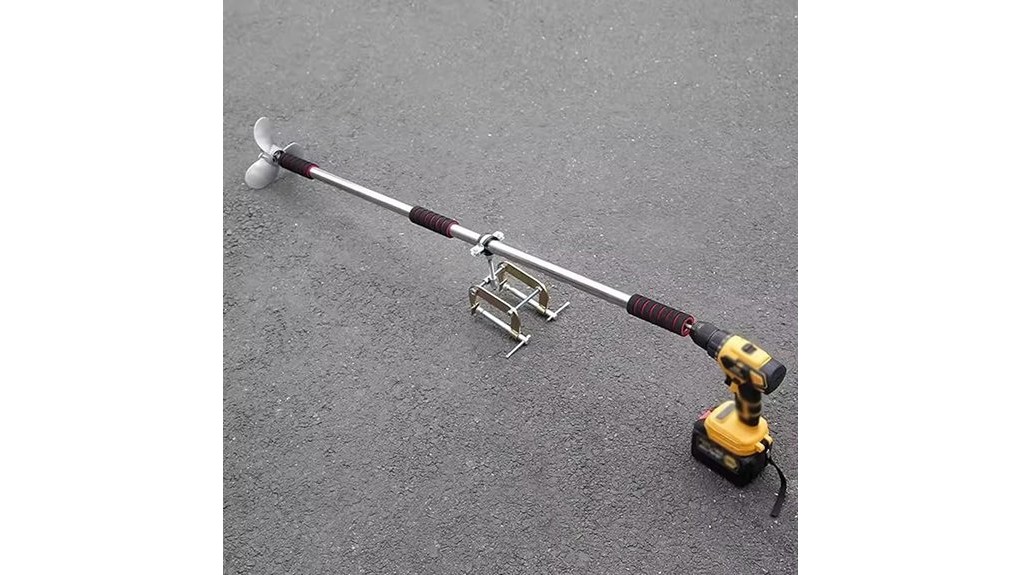
You’ll find this drill-powered propeller a pragmatic, low-cost way to add backup propulsion to kayaks, inflatables, and small dinghies. It clamps to standard cordless drills, uses an aluminum alloy shaft with 16 cm blades, and comes in 100 or 125 cm lengths; drill not included. Installation is one-handed and adjustable for transom thickness. Performance scales with drill RPM and battery capacity, so expect limited thrust and accelerated wear under heavy loads. Continue for setup, use, and safety details. Toddmomy electric thruster propeller review highlights its lightweight design and easy maneuverability on the water. Users have noted its efficiency in enhancing speed without the hassle of traditional motor setups. The propeller’s affordability makes it an attractive option for amateur and seasoned boaters alike.
Some Key Takeaways
- Compact drill-powered propeller offers a low-cost, rapid-deploy auxiliary thruster for kayaks, inflatables, dinghies, and small boats.
- Attaches to standard cordless drills with an adjustable clamp fitting transoms up to 7.5 cm thick and 40 cm bracket width.
- Provides controllable thrust proportional to drill RPM, suitable for light currents and short transits but limited for larger craft.
- Durable aluminum-alloy shaft and 16 cm blades resist corrosion, though repeated high-load use accelerates wear and blade fatigue.
- One-handed installation in seconds, but follow maintenance, sealing, and transom-reinforcement precautions for safe, reliable operation.
Quick Verdict: Is the Handheld Drill-Powered Propeller Worth It?
Often you’ll find this handheld drill-powered propeller delivers a pragmatic, cost-effective boost for small boats and emergency use. You’ll assess value via straightforward cost comparison against dedicated trolling motors and by weighting portability, installation time, and drill compatibility. You’ll note rapid deployment and low storage burden reduce lifecycle costs despite relying on drill power and variable torque. You’ll review user testimonials emphasizing quick 3-second fit, one-handed operation, and reliability in light currents; complaints mostly cite limited thrust for larger craft and drill exposure risks. You’ll conclude it’s a sensible backup or occasional-use solution, not a primary propulsion system. Our shop also recommends considering proper fuel canister storage and transport when planning longer water trips.
What It Does and What’s in the Box (Features, Materials, Sizes)
While it attaches to a cordless drill, this propeller kit turns your drill into a compact, detachable thruster for kayaks, canoes, inflatable and small wooden or metal boats, giving you quick, one-handed propulsion for light currents and emergency use. You get an aluminum alloy shaft and 16 cm blades (lengths: 100 or 125 cm) designed for corrosion resistance; follow aluminum maintenance guidance to prevent surface wear. The package includes one drill-powered propeller (drill not included); model 20222. Item weight ~7.05 lb. Package accuracy notes: small measurement variance (1–2 mm) and color differences may occur. This is an ideal accessory for propeller kayaks and other watercraft for outdoor enthusiasts who enjoy adventures on the water.
How to Fit and Use It: Compatibility, Clamp Setup, and One-Handed Operation
Start by confirming compatibility: the propeller clamps to any standard cordless drill (not included) and fits transom edges up to 7.5 cm thick with the bracket adjusted to a maximum width of 40 cm. Position the clamp on a flat, reinforced transom area; tighten the ergonomic handle until the bracket seats without deforming the hull. Check mounting angles for thrust vectoring; use the tilt control for coarse adjustment and fine-tune with drill torque. For single handed installation, pre-set clamp pressure, slide unit into place, then secure and insert the drill. Perform routine drill maintenance and apply clamp lubrication to pivot interfaces. For kayak users, ensure the clamp is seated on a reinforced area and use a transom thickness check before heading out.
Real-World Performance: Speed, Steering, Battery/Drill Considerations, and Durability
Having secured the clamp and set your tilt and torque as described previously, you’ll evaluate real-world performance across four linked areas: speed output, steering response, battery/drill limitations, and component durability. You’ll see linear speed increase with drill RPM; coarse speed control comes from drill trigger modulation and gear selection. Steering is effective via clamp swivel and asymmetric thrust but requires small corrective inputs. Battery life depends on drill battery capacity and load—expect reduced runtime under high current draw. Aluminum alloy resists corrosion and reduces propeller wear, though repeated high‑load use accelerates blade fatigue and clamp interface wear; inspect regularly. Consider routine maintenance and protective coatings to preserve finish and prevent gel coat corrosion.
Who Should Buy It and Practical Tips (Best Use Cases, Warnings, and After‑Sales)
If you need a lightweight, portable backup thruster for small boats or occasional use, this drill‑powered propeller is a practical, low‑cost choice that converts your cordless drill into an effective outboard replacement. You should buy it if you operate kayaks, inflatables, dinghies, or small fishing boats and want emergency propulsion or easy transport. Best use cases: short transits, current assistance, and stealthy trolling. Follow a pre-departure safety checklist and a regular maintenance schedule: clamp torque, blade inspection, and drill seal removal before flipping handle. Heed warnings about water ingress; contact seller for warranty or after-sales support. It is also useful for anglers who prefer pedal kayak setups and need a compact auxiliary motor for quick repositioning.
Some Questions Answered
Is a Specific Drill Torque Rating Recommended?
Yes. You should use a high torque, low speed cordless drill with variable speed control and a safety lock. High torque guarantees reliable thrust under load; low speed reduces cavitation and propeller stress. Variable speed lets you fine-tune thrust for steering and current conditions. Make sure the drill’s torque rating matches expected loads (check manufacturer guidance) and always engage the safety lock when mounting or removing the drill to prevent accidental startup.
Can It Be Used for Saltwater Fishing Long-Term?
Yes — you can use it for saltwater fishing long-term if you follow corrosion prevention and a strict maintenance schedule. The aluminum alloy resists rust, but you’ll need to rinse with fresh water after each use, dry thoroughly, lubricate moving parts, and inspect clamps and blades for pitting. Replace corroded hardware promptly. Store dry and avoid submersion of the drill. Adhere to manufacturer warranty and after-sales guidance for prolonged service life.
Are Replacement Propeller Blades Available Separately?
Yes — spare blades are available from some sellers and manufacturers. You’ll want to verify blade compatibility with your model number (20222) and blade diameter (16 cm) before purchasing. Check supplier listings or contact HAVUREL support to confirm mounting interface, material, and balance specs. Keep OEM part references or measurements handy to guarantee fit and performance; mismatched blades can reduce thrust and increase vibration or wear.
Does It Affect Boat Insurance or Safety Regulations?
Yes — you should check insurance implications and regulatory compliance before use. You’re altering propulsion and adding a non-certified device, which insurers may consider non-standard equipment and could affect coverage or claims. Regulatory bodies may classify it as auxiliary propulsion requiring lights, registration, or safety gear. Document installation, retain manufacturer specs, and notify your insurer. If in doubt, get written confirmation from your insurer and local marine authority.
Can It Tow Small Loads or a Second Person?
No, you shouldn’t expect reliable towing of small loads or a second person. Battery limitations of the cordless drill determine sustained torque and runtime, and the propeller size (16 cm) limits thrust generation. You might tow very light gear for short distances in calm water, but you’ll risk overheating the drill, draining the battery quickly, and stressing the clamp. For towing people, use a purpose-built motor with rated thrust and safety certifications.