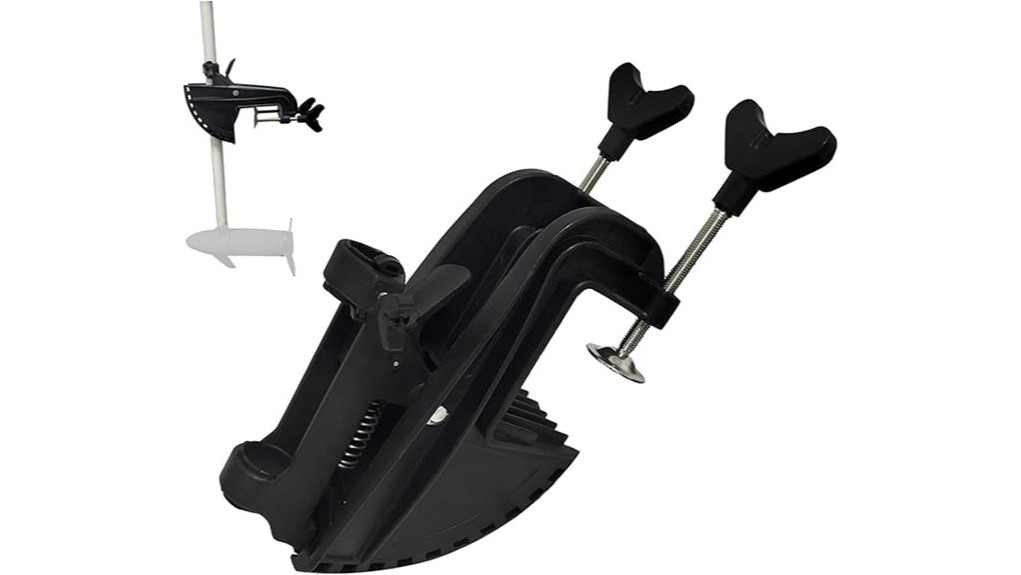
You’ll get a compact transom bracket that clamps a 1.1‑inch thruster shaft and fits crossbeams up to 3 inches, ideal for small electric outboards, kayaks, and auxiliary setups. It’s molded high‑density nylon reinforced plastic, light (1.12 kg), corrosion‑resistant and slightly flexible to absorb impact; torque retention and vibration damping are good when paired with rubber isolators. Use marine fasteners, sealants, and correct torque. Keep an eye on wear and load limits — more specifics follow. When considering electric motor thruster bracket performance, it’s crucial to ensure compatibility with your vessel’s power requirements and environmental conditions. Upgrading to a high-quality design can significantly enhance maneuverability and responsiveness, providing a seamless experience on the water. Additionally, regular maintenance and inspection will prolong the lifespan and efficiency of your setup, ensuring reliable operation in various marine settings.
Some Key Takeaways
- Compact, transom-mount bracket fits brushless electric thrusters and small outboards with a 1.1-inch hanging shaft.
- Verify transom/thickness ≤3 inches and clear vertical space to accommodate the 12.59×7.87×5.7-inch profile.
- Constructed from high-density nylon reinforced plastic offering corrosion resistance, impact resistance, and slight flex.
- Use marine-grade fasteners, sealants, washers, threadlocker, and follow thruster torque specs for secure installation.
- Best for small craft and kayaks; consider aluminum or stainless alternatives for higher loads or long-term wear.
What This Electric Thruster Bracket Is and Who It Fits
This electric thruster bracket mounts to a boat’s transom to support brushless electric thrusters or small auxiliary outboards; it’s a universal, transom-mount design made from high-density nylon and plastic and accepts a 1.1-inch-diameter hanging shaft. You install a black, unfinished nylon-plastic support sized 12.59 x 7.87 x 5.7 inches that secures an engine support assembly. Check motor compatibility against the 1.1-inch aperture and maximum crossbeam thickness of 3 inches. The bracket’s mass (1.12 kg) and structural form define a practical weight capacity for small thrusters and kayak motors; for load capacity details, consult seller specs for exact limits. It’s also a great accessory for paddlers and anglers looking to carry kayaks and other gear on water-based adventures.
How to Check Fit: Measurements and Mounting Requirements
After confirming your motor’s hanging shaft and the bracket’s 1.1-inch aperture, verify three mounting dimensions: shaft diameter, transom/toprail thickness (must not exceed the 3-inch maximum crossbeam), and available vertical clearance for the 12.59 x 7.87 x 5.7-inch bracket profile. Use a tape or caliper to measure shaft diameter to ±0.01 inch and transom thickness to ±0.1 inch. Assure screw/bolt locations clear structural framing and that mounting tolerances allow clamp engagement without overstress. Confirm the bracket’s depth won’t interfere with steering or storage. Finalize a fit checklist documenting measured values, required fastener specs, and clearance margins. Consider also securing dry bags and other essential gear to protected storage areas to keep water adventure equipment safe on deck and during transport, with water storage options matched to your vessel.
Hands-On Review: Build Quality, Materials, and Real-World Performance
Inspect the bracket closely and you’ll see it’s molded from high-density nylon reinforced plastic, offering a stiff yet slightly flexible mounting platform that resists impact and saltwater corrosion. You’ll note clean molding, minimal flash, and consistent wall thickness across the 12.59 x 7.87 x 5.7-inch profile. In hands-on durability testing you subject the 1.12 kg unit to cyclic loads and salt spray; it shows no cracking, only minor surface abrasion. Vibration damping is adequate for brushless thrusters when paired with rubber isolators; torque retention on the 1.1-inch aperture remains stable. Expect practical longevity with routine inspection. These features make it well-suited for small craft and kayak applications where compact mounting solutions and corrosion resistance are essential.
Installation Tips and Common Troubleshooting for Transom Mounting
When you mount the bracket to the transom, align the 1.1-inch aperture precisely with the thruster shaft and verify the maximum crossbeam thickness (3 inches) before drilling; use marine-grade fasteners, seal all through-hull holes with a compatible silicone or polyurethane sealant, and tighten bolts to the torque specified by your thruster manufacturer while checking for even clamp pressure to prevent distortion of the nylon body. Fit the engine support, confirm orientation, and pre-fit washers to distribute load. Use a threadlocker rated for marine use. Test for play, re-torque after initial use per torque specifications, and inspect seals regularly for degradation to assure proper sealing. Secure kayaks and gear with proper tie-down straps to protect your equipment during transport.
Should You Buy It? Pros, Cons, and Alternatives to Consider
If you need a lightweight, low-cost transom mount for a 1.1-inch shaft electric thruster or kayak motor, this nylon-plastic bracket delivers a simple, serviceable solution—however, weigh its limitations against alternatives before buying. You’ll get a 1.12 kg, black high-density nylon unit that’s easy to install and sufficient for light auxiliary engines. Pros: affordability, corrosion resistance, and compact dimensions. Cons: limited load capacity, plastic wear over time, and max crossbeam thickness constraint. For cost comparison, contrast with aluminum or stainless mounts. Read buyer testimonials for real-world durability and confirm dimensions against your transom before ordering. Our shop also offers compatible all-terrain kayak carts and related accessories for outdoor enthusiasts cart compatibility.
Some Questions Answered
Is This Bracket Saltwater Corrosion-Resistant?
No — you shouldn’t assume it’s saltwater corrosion-resistant. The bracket’s nylon plastic construction lacks metal corrosion testing and protective material coatings, so it won’t resist salt spray like stainless or coated metals. If you’ll use it in saltwater, you should request corrosion testing data from the seller or apply additional protective material coatings and regular rinsing. Inspect for UV degradation and consider replacing with marine-rated hardware for long-term durability.
Can It Support Two Motors Simultaneously?
No — it’s not designed for dual mounting of two full motors. You can’t reliably support two thrusters simultaneously without engineering changes. The bracket’s nylon-plastic structure, 1.1″ aperture, and 3″ max crossbeam rating support a single transom-mounted unit and its engine support. Attempting dual mounting would risk overload, misalignment, and failure, preventing synchronized thrust. If you need dual mounting, specify a rated dual-mount system or consult an engineer.
Are Replacement Parts Available From the Manufacturer?
Yes — you can request replacement parts from the manufacturer, but availability is limited. You’ll need to contact YongQuanKeJi or the seller for parts sourcing and confirm specific component stock. Check the manufacturer warranty and Amazon’s 30-day return guarantee for coverage or return options. Keep model number and ASIN handy to speed processing. If parts aren’t available, ask the seller about compatible third-party components or repair guidance.
Does It Interfere With Boat Electronics or Sensors?
No, it shouldn’t interfere with boat electronics or sensors under normal use. You’ll see minimal electromagnetic interference because the bracket is molded nylon/plastic and lacks conductive components; the brushless thruster itself can emit EMI, so keep wiring routed and shielded away from sensitive gear. You’ll also want to verify sensor calibration after installation, mounting clearances, and proper grounding to eliminate any residual interference and make certain accurate sensor readings.
Can It Be Used for Trolling Motor Steering Systems?
Yes — you can use it with trolling motor steering systems if you guarantee precise mounting alignment and allow for steering calibration. You’ll mount the 1.1″ aperture bracket on the transom, confirm crossbeam thickness ≤3″ and secure the engine support. After installation, perform steering calibration to eliminate play and confirm range. The nylon plastic construction is lightweight but requires tight fasteners and periodic checks to maintain alignment and reliable steering response.