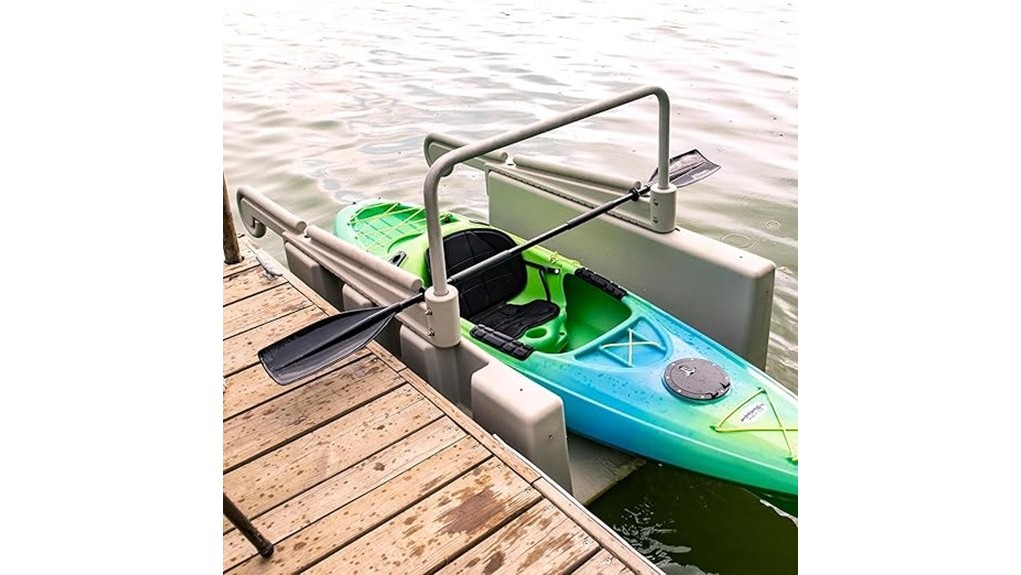
You’ll get a stable, guided 85″ x 48″ floating launch that bolts to fixed docks and makes solo kayak, canoe, or SUP entry and exit safer and easier. It fits craft up to 34″ wide, floats with changing water levels, and uses guide rails, an overhead assist bar, and paddle notches for steady mounting. Install brackets matched to your dock, use marine fasteners, and inspect annually. Keep going to see specs, install tips, and real-use pros and cons.
Some Key Takeaways
- Stable floating launch (85″ x 48″) clamps to fixed docks, providing steady entry/exit for kayaks, canoes, and SUPs up to 34″ wide.
- Guide rails, overhead assist bar, and paddle notches improve balance, speed launches, and reduce risk during mounting and disembarkation.
- Choose the correct mounting kit for timber, concrete, or composite docks; use marine-grade fasteners and torque to spec.
- Confirm your craft’s beam and hull shape fit the 34″ channel and verify published weight capacity covers user plus loaded gear.
- Pros: reliable stability and water-level flotation; cons: large footprint and periodic maintenance like rinsing, inspections, and retorquing.
How This Kayak Launch Works and Who It’s Best For
Think of the launch as a stable, guided platform that you attach to a fixed dock with the supplied brackets—its 85″ x 48″ footprint and compatibility with watercraft up to 34″ wide give you a clear, roomy staging area. You’ll use guide rails, overhead assist bar, and grab bars with paddle notches to steady entry and exit, reducing slips and strain. The unit floats with water level changes yet mounts securely to fixed docks, so you’ll deploy it for casual paddling, adaptive users, or group outings. Accessibility benefits are real, and it’s ideal for rental fleets and community programs seeking safer access. It’s also a great match for paddlers who combine kayaking with solo camping trips on waterways.
Key Specs That Matter: Dimensions, Weight Capacity, and Watercraft Compatibility
Because the launch needs to fit your dock setup and your boat, focus first on its footprint—85″ x 48″—and the 34″ maximum watercraft width, which together determine whether your kayak, canoe, or SUP will sit squarely in the channel without binding. You’ll want to confirm watercraft compatibility against your craft’s beam and hull shape. Check published weight capacity so the platform supports you, loaded gear, and any passenger—don’t guess. Consider clearance under dock rails and how the launch floats with changing water levels. Pick a model that matches dimensions, weight capacity, and intended boat types for reliable, safe use. For sit-on-top enthusiasts, also consider accessories like kayak accessories that improve stability and convenience.
Installing the Launch on Fixed Docks: Mounting Brackets, Kit Choices, and Step-by-Step Tips
Now that you’ve confirmed the launch’s footprint and your craft’s beam, focus on how it fastens to your fixed dock: mounting brackets and the correct kit determine stability, alignment, and whether the unit will float properly alongside rising and falling water. Choose the kit matched to timber, concrete, or composite docks; verify bracket spacing and bolt size. During install, check dock alignment, level the frame, and pre-fit hardware. Use stainless or marine-grade fasteners and apply anti-seize to prevent hardware corrosion. Torque bolts to spec, retorque after a week, and inspect annually for wear, movement, or loose brackets. Also consider the benefits of proper wall-mount racks for organized storage and easy access.
Safety and Usability Features in Real Use: Guide Rails, Overhead Assist Bar, and Paddle Notches
When you step up to the launch, the guide rails, overhead assist bar, and paddle notches work together to keep entry and exit controlled and predictable. You’ll grip the overhead bar for steadying while edging onto the platform; it’s solid enough for leverage during balance training. Dual guide rails funnel your craft position and prevent slipping; rail padding cushions contacts and reduces wear on hulls. Integrated paddle notches keep blades secure and hands free as you mount or disembark. Together these features shorten learning curves, speed launches, and lower risk—making solo entries safer and more reliable for varied skill levels. This setup pairs well with durable kayak cart wheels to simplify transporting your craft between trail and water.
Pros, Cons, and Final Verdict: When to Buy This 85″ X 48″ X 50″ Gray Launch
Having seen how the guide rails, overhead assist bar, and paddle notches improve safety and handling, let’s weigh the practical pros and cons of this 85″ x 48″ x 50″ gray launch so you can decide if it fits your dock and use. Pros: solid stability, easy entry/exit, floats with water level, fits craft up to 34″ wide, straightforward installation on fixed docks. Cons: bulky footprint, limited to certain dock types, periodic upkeep required. Maintenance tips: rinse, inspect brackets, lubricate moving parts seasonally. Final verdict: buy if you need safe, accessible launches; expect good resale value with care. This launch pairs well with kayaks and ceiling hoists commonly used by water adventure enthusiasts.
Some Questions Answered
Is This Launch Compatible With Saltwater Environments Long-Term?
Yes — you can use it long-term in saltwater if you maintain it. The materials offer corrosion resistance and UV stabilization, but salt will still attack metal fittings and fasteners over time. You should rinse with fresh water regularly, inspect and grease mounting brackets, and replace corroded hardware with marine-grade stainless or galvanized components. With routine care and proper fasteners, it’ll hold up and stay safe for years.
Can It Be Used for Assisted or Adaptive Paddling Entry?
Yes — you can use it for assisted transfers and adaptive seating setups. You’ll rely on the guide rails, overhead assist bar, and grab bars with paddle notches to steady the craft and person during transfers. With attendants or adaptive gear, you’ll position seating devices on the platform or craft, secure them, and use the floating rise/fall to match heights. It’s practical, stable, and supports varied adaptive paddling needs.
Are Replacement Mounting Brackets Available Separately?
Yes — you can buy replacement brackets and mounting hardware separately. Check the manufacturer or retailer for exact part numbers and choose the correct kit for your dock type. You’ll want original-spec brackets to maintain fit and safety; if those aren’t available, request compatible mounting hardware recommendations. Keep bolt sizes, material, and load ratings in mind, and save installation instructions or photos for proper reassembly.
What Maintenance Is Required to Keep Flotation Reliable?
You should inspect seams and hardware regularly, at least seasonally, and after storms. Rinse salt and debris, tighten brackets, and lubricate moving parts. If you see soft spots, waterlogging, or cuts, replace foam or damaged floatation blocks immediately. Pump out trapped water and let components dry before storage. Keep an eye on UV damage and recoat or cover surfaces as needed so flotation stays reliable and safe.
Does the Launch Void Dock or Boat Insurance Coverage?
It might — you should check your policy. Liability concerns and specific insurance clauses vary, so contact your insurer and provide installation details. You’ll want written confirmation that adding the launch won’t void dock or boat coverage, and ask whether inspections, approved mounting kits, or additional endorsements are required. Keep records of installation and maintenance, and get any required permits or photos to support claims if liability concerns arise.