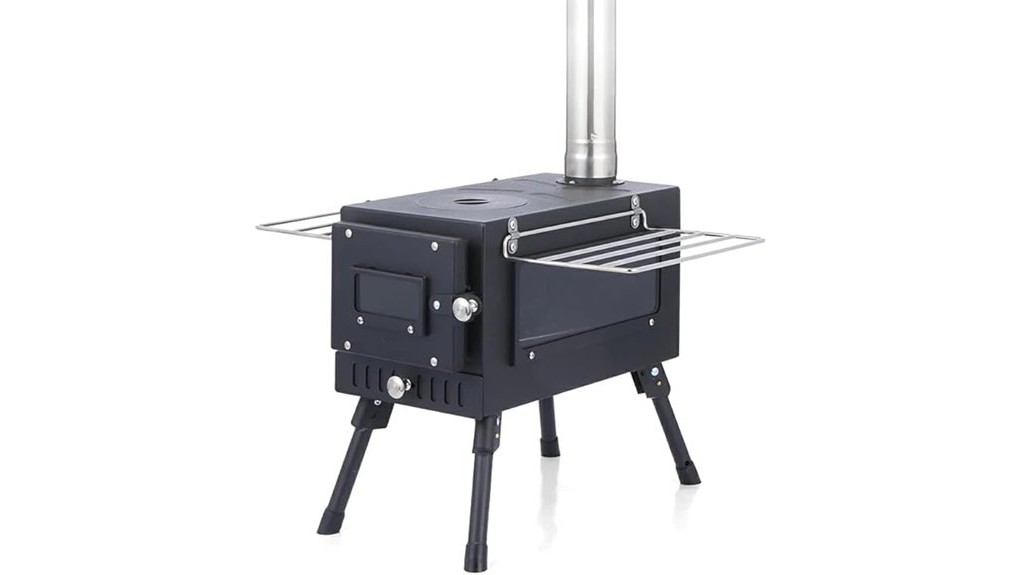
You’ll find this compact steel tent stove suits solo campers, couples, and small groups who want real campfire ambiance with efficient secondary combustion. It’s about 18 lb, folds compactly, and includes five chimney sections, spark arrester, heat‑resistant glass door, ash drawer, gloves, and carry bag. The steel body concentrates heat for warming and cooking; adjustable vents and chimney control burn rate and smoke. Follow simple packing and safety steps for best results, and the full review covers setup, maintenance, and troubleshooting.
Some Key Takeaways
- Compact steel tent stove weighs ~18 lb, balancing durability with reasonable packability for car camping and emergency kits.
- Pre-fitted glass window and adjustable vents allow visible, controllable combustion and efficient secondary burn.
- Five-section chimney (four 32 cm, one 22 cm) and spark arrester enable tuned draft and safer operation.
- Assembled ~40×53×38 cm, folds to ~40×21×24 cm with nested parts for compact transport and storage.
- Regular maintenance—empty ash drawer, clean creosote, inspect glass, and use CO detectors—prevents smoke issues and hazards.
Quick Verdict and Who This Stove Is Best For
While compact and sturdy enough for serious outdoor use, this wood-burning tent stove best suits solo campers, couples, and small-group adventurers who need reliable heat and a simple cooking surface; it packs down neatly, offers adjustable chimney heights and a spark arrester for safer use, and provides visible, controllable combustion via a glass window and air vents, though you must follow CO and handling precautions and accept the roughly 18 lb weight and steel construction. You’ll appreciate efficient secondary combustion, easy ash removal, and the ability to recreate campfire ambiance safely. It’s practical for routine trips and emergency preparedness kits. This stove pairs well with essential camp stove gear designed for wood-burning setups to ensure safe, efficient, and convenient outdoor cooking and heating.
What’s in the Box and Build Quality (Dimensions, Weight, Materials)
Open the box and you’ll find a compact, well-organized kit: the steel stove body, five chimney sections (four 32 cm and one 22 cm), a spark arrester, a storage bag, heat-resistant-glass window already fitted in the door, a large-capacity ash drawer, and a pair of gloves. You’ll get a roughly 40×53×38 cm assembled unit (15.8×20.8×15 in), folding to 40×21×24 cm and weighing about 8.2 kg. Cold-rolled steel offers a utilitarian material finish; glass is heat resistant. Parts nest inside for transport. Assembly fitment is straightforward, with tight joints and predictable tolerances. This stove is ideal for campers who like reliable warmth while outdoors and complements other camping propane heaters offered by the site.
Real-World Performance : Heating, Cooking, and Burn Efficiency
When you light this stove, you’ll quickly notice it concentrates heat effectively into a small area, making it well suited for warming a tent or a small campsite; the steel body radiates warmth and the adjustable chimney lets you tune draft for faster heat-up or longer, steadier burns. You’ll find heat mapping useful—positions near the top and sides run hottest for cooking, center embers give steady simmering. Ember control via vents and the ash drawer lets you slow or intensify burns and conserve wood. The glass window helps monitor flames; secondary combustion cuts smoke and fuel use, yielding efficient, controllable performance. For cold-weather use, pairing the stove with an insulated sleeping pad can significantly improve overnight warmth by reducing heat loss to the ground and enhancing overall camp comfort, especially when using a winter sleeping pad.
Portability, Setup, and Storage Tips (Chimney Sections & Packing)
Because the stove’s chimney sections nest inside the main body and the legs fold flat, you can pack the whole unit into a compact bundle that fits easily in a car trunk or the included storage bag. When breaking down, remove the spark arrester and stack the four long and one short chimney sections inside the firebox, aligning threads for smooth chimney alignment during reassembly. Use the ash drawer space for gloves and small tools. For transport, place the bundle in the transport case, then follow a camping checklist that notes stove weight and pack organization to balance load and access. For added peace of mind on trips, keep a few tent pole repair sleeves handy to address unexpected gear damage with pole repair sleeves.
Safety, Maintenance, and Common Troubleshooting
Although you’ll enjoy reliable warmth and cooking performance, you must adhere to strict safety and maintenance guidelines to keep the stove working and prevent hazards. Always use fireproof gloves when loading fuel, adjusting vents, or handling hot components. Install carbon monoxide detectors in tents or enclosed shelters and never run the stove in fully sealed spaces. Empty the ash drawer regularly, inspect the glass for cracks, and clean creosote from the chimney sections and spark arrester after several uses. Tighten loose joints, replace damaged seals, and test air vents for smooth operation. If smoke backflows, check chimney alignment and fuel size before relighting. For added protection on camping trips, bring appropriate fire extinguishers and other essential fire safety gear.
Some Questions Answered
Can This Stove Be Used With a Gas or Propane Adapter?
No, you shouldn’t use a gas conversion or attach propane without explicit manufacturer approval; this steel wood stove isn’t designed for gas fuel. Converting it would require professional gas conversion parts and pressure testing to certify safety and prevent leaks or CO hazards. You’d void any warranty and risk fire or poisoning. If you need propane, buy a stove specifically rated for gas or get a certified conversion done by a qualified technician with proper testing.
Is the Glass Replaceable if It Cracks or Breaks?
Yes — you can replace the glass if it cracks, but you’ll need the correct heat-resistant part and basic tools. Check the manufacturer warranty first; some warranties cover defects but not breakage from misuse or impact. Contact the seller or manufacturer for a replacement glass and installation guidance, confirm dimensions and fit, and follow safety steps (cool stove, wear gloves). Keep proof of purchase to support any warranty claim.
What Is the Recommended Fuel Type and Maximum Log Length?
Recommended fuel is seasoned dry hardwoods (oak, maple) or compact softwoods; you’ll get cleaner burns and better secondary combustion. Don’t use wet wood, treated lumber, plastics, or trash. Maximum log length is about 15.8 inches (40 cm) to fit the firebox comfortably; shorter logs (10–14 in) improve airflow and efficiency. You’ll control heat with air vents, empty the ash drawer regularly, and always follow safety precautions.
Does the Stove Require a Ground Protection Pad Under It?
Yes — you should use ground insulation beneath the stove. You’ll protect grass, soil, and tent floors from heat damage and hot embers; ember containment is also improved, reducing fire risk. Place a non-combustible pad or metal heat shield under the legs, keep clearance from flammable surfaces, and use the spark arrester on the chimney. Always follow site-level fire rules and maintain a safe perimeter while the stove’s hot.
Are Replacement Chimney Sections or Spare Parts Available?
Yes — you can get replacement parts and chimney extensions, but availability depends on the seller. You’ll want replacement parts like extra chimney sections, spark arrester pieces, glass panels, or ash drawers. Check the manufacturer or the original retailer for matching chimney extensions (same 2.36 in / 6 cm diameter) and spare components. If originals aren’t available, look for third‑party parts with identical dimensions and heat‑resistant materials to guarantee a safe fit.