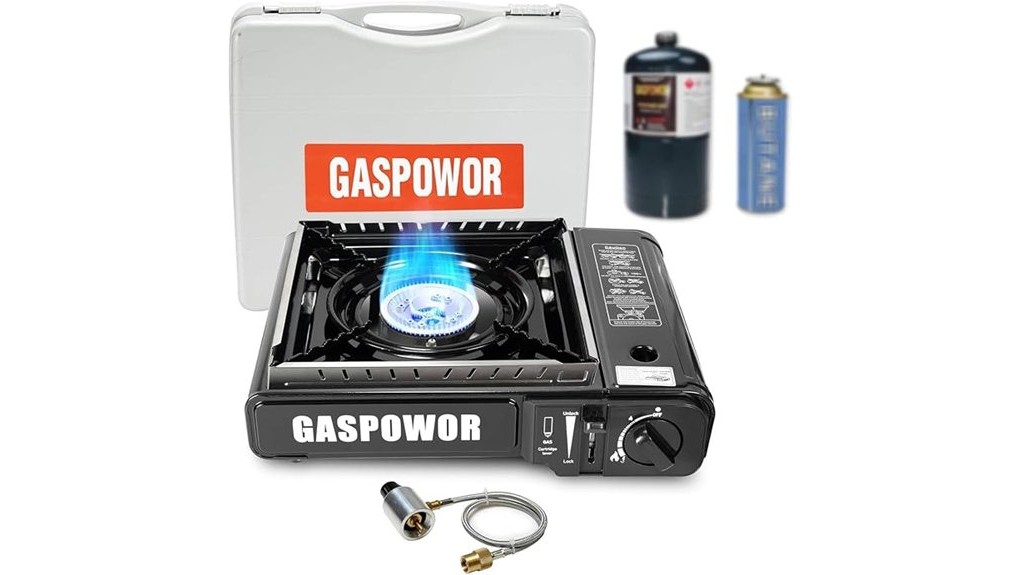
You’ll get a reliably powerful 10,000 BTU burner that’s windproof, auto-igniting, and accepts both propane and butane so you can match fuel to temperature and trip length. The solid metal body, braided hose, and hardshell case mean durable, packable performance for car camping and emergency use. Inspect hoses and valves before each use and purge/disconnect canisters for storage. It’s not for ultralight treks, and the full review explains fit, fuel tradeoffs, and maintenance.
Some Key Takeaways
- Delivers steady 10,000 BTU heat with stable boil and simmer performance, suitable for most camp meals.
- Windproof glass shield and overpressure protection ensure consistent flame and reliable cooking in breezy conditions.
- Dual-fuel compatibility accepts propane for cold/altitude reliability or butane for warm, lightweight car camping.
- Solid metal build, braided hose, and auto-ignition provide durable, quick setup and reliable flame control.
- Best for car camping and emergency use; not ideal for ultralight or extended remote backpacking.
Performance Snapshot: Flame Power, Run Time, and Wind Resistance
While you’re cooking, the Dual Fuel Camp Stove delivers a steady 10,000 BTU per hour output that handles boiling, simmering, and most camp meals without struggle. You’ll notice reliable heat stability thanks to the windproof glass shield and overpressure protection that keep flame size predictable. Auto-ignition means you get quick start-ups with excellent ignition consistency, reducing fumbling in wind. With efficient fuel use, run time matches expectations for small 1 lb propane or 8 oz butane canisters; plan meals accordingly. The metal build and braided hose maintain performance in rough conditions, so you can count on consistent, practical flame control. This gear pairs well with other camp stove essentials designed for outdoor cooking and durability.
What the Dual Fuel Design Actually Buys You: Propane vs. Butane Use Cases
Because the Dual Fuel Camp Stove accepts both propane and butane, you get real flexibility to match fuel to conditions: choose propane for cold-weather reliability and longer shelf life, and pick butane when you want a lighter, often cheaper canister for warm-weather car camping. You’ll use propane at high latitude or when temps drop, leveraging better pressure and consistent Altitude performance. Butane saves weight and cost on short, warm trips. Fuel flexibility means you can switch based on availability, storage and temperature. You should carry propane for backcountry cold snaps, and butane for casual roadside or fair-weather outings. Consider canister size and valve type when buying to ensure compatibility with your stove and optimal canister performance.
Build, Portability, and Accessories Tested (Hose, Case, Windproof Glass)
When you pick up the Dual Fuel Camp Stove, its solid metal body and ceramic-coated surfaces feel built for repeated use, and the compact 13″ x 11″ footprint plus 3.5 lb weight make it easy to stow in a pack or car. You’ll notice the braided stainless hose resists kinks and promises hose longevity; attachment is quick with the propane adapter. The hardshell case shows good case ergonomics—snug fit, molded cutouts, secure latches. Windproof glass offers dependable glass clarity and shields flame. Overall assembly speed is fast: hose, latch, and glass lock into place in seconds. It’s a great match for campers who rely on portable power and camping generators for extended trips.
Safety, Durability, and Everyday Maintenance Tips
You’ve seen how the stove’s build and accessories make setup quick; now focus on keeping it safe and working reliably. Inspect the hose, canister lock, and overpressure valve before each use. Use outdoors only, keep flammable materials clear, and practice child safety—store fuel and ignition out of reach. Clean detachable parts after spills; the ceramic coating reduces sticking but wipe before residues bake on. Check the braided hose for nicks or corrosion; replace if damaged. For seasonal storage, purge small disposable canisters, disconnect propane, dry components, and stow in the hardshell case in a cool, dry place. Consider keeping essential camp stove gear—like a wrench and spare hose fittings—on hand for roadside repairs.
Who Should Buy This Stove and Where It Fits vs. Alternatives
If you need a lightweight, reliable stove that runs on either 1 lb propane cylinders or 8 oz butane cartridges, this Dual Fuel Camp Stove is a solid choice for car campers, weekend hikers with vehicle support, and anyone who values quick setup and wind resistance. You’ll appreciate camping versatility: auto-ignition, windproof glass shield, and a 10,000 BTU burner make cooking fast and stable. Choose it if you want rugged convenience, easy cleaning, and a hardshell case. For ultralight backpacking or multi-day remote treks, consider canister-standalone or liquid-fuel alternatives. It’s also sensible for emergency preparedness. The stove pairs well with essential accessories like a compact butane camp stove windscreen to maximize performance and safety.
Some Questions Answered
Can I Use This Stove at High-Altitude Locations Above 10,000 Feet?
Yes — you can use it above 10,000 feet, but expect reduced altitude performance because lower air pressure and oxygen effects thin the flame. You’ll get weaker heat output and may need longer cook times or higher flame settings. Use propane over butane at high altitude, keep windblocker engaged, and monitor flame stability. Follow safety warnings, make sure proper ventilation, and carry extra fuel since burns are less efficient up there.
Is a Regulator Needed for Larger Propane Tanks?
Yes — you’ll need an external regulator when using larger propane tanks. The included propane adapters and 1.6 ft braided hose are meant for 1 lb cylinders; hooking straight to a 20 lb cylinder without a proper regulator risks overpressure and safety shutoff engagement. Use a regulator rated for camping stoves and compatible fittings, secure the propane adapters, check for leaks, and follow the stove’s overpressure protection and canister safety lock instructions.
Are Replacement Glass Windshields Available Separately?
Yes — you can get replacement shields for the glass windblocker, but availability varies by seller. Check GASPOWOR support or the hardshell case contact info; they’ll confirm replacement shields, part compatibility, and ordering. When you order, ask about glass durability and whether replacements use the same windproof glass. Keep proof of purchase handy for warranty or returns, and inspect mounts to make sure the replacement fits securely and seals against wind.
Can I Cook Directly on the Glass Shield Surface?
No, you shouldn’t cook directly on the glass shield surface. The shield’s meant for wind protection and heat transfer control, not as a cookware surface. Direct contact can crack or weaken the glass and make surface cleaning difficult. Use proper pots or pans on the burner, keep the glass clear of spills, and clean per instructions after cooling. That preserves safety, performance, and avoids voiding any warranty.
Is There a Recommended Storage Temperature for the Braided Hose?
Yes — you should store the braided hose at ambient storage conditions within the manufacturer’s temperature limits. Keep the hose in a cool, dry place away from direct sunlight, extreme heat, or freezing temperatures to preserve the stainless braid and seals. Avoid temperature swings and chemical exposure. Coil it loosely in the hardshell case when not in use, and inspect for damage before reconnecting; replace if you see cracking or corrosion.