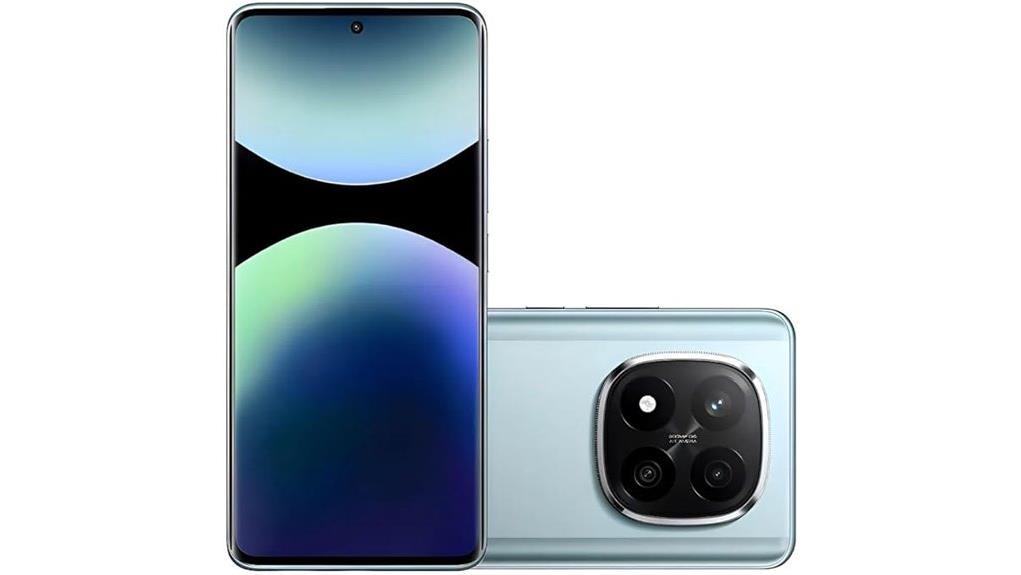
You’ll get flagship-grade display and imaging for far less than a true flagship: a bright 6.67" 1.5K AMOLED with 120Hz, Dolby Vision and 3000‑nit peaks, plus a 200MP main with 4x lossless zoom and strong night/video modes. Snapdragon 7s Gen 3 and 12GB RAM handle daily use and casual gaming well, though sustained loads can throttle. Battery and 120W charging are excellent with some longevity tradeoffs. Scroll on to see detailed comparisons, test notes, and buying guidance.
Some Key Takeaways
- Excellent 6.67" CrystalRes AMOLED with 1.5K, 120Hz, 3000‑nit peak and Dolby Vision offers standout HDR media performance.
- 200MP 1/1.4" main sensor with 4x optical‑grade zoom and Smart‑ISO Pro delivers sharp daytime shots and usable low‑light images.
- Snapdragon 7s Gen 3 with 12GB RAM and LiquidCool provides smooth everyday performance and sustained camera processing.
- 5110 mAh battery plus 120W HyperCharge yields strong single‑day life and very fast top‑ups, though frequent full‑speed charging may age the battery.
- Broad 5G, Wi‑Fi 6E, NFC, stereo extras, and no microSD make it a value‑focused phone for media, gaming, and photography workflows.
Verdict Up Front: Is the Redmi Note 14 Pro+ 5G Worth Buying?
While it won’t beat flagship silicon or the most advanced camera systems, the Redmi Note 14 Pro+ 5G delivers an exceptional value proposition: you get a 1/1.4" 200MP main sensor with 4x lossless zoom, a stunning 6.67" CrystalRes AMOLED (1.5K, 120Hz, 3000‑nit peak) with Gorilla Glass Victus 2, long 5110 mAh battery life with included 120W HyperCharge, and solid everyday performance from the Snapdragon 7s Gen 3 — all for a midrange price tier. You’ll appreciate durable build materials and camera durability; software updates commitment and strong resale value make this a pragmatic buy. It’s also a great companion for mirrorless shooters looking for essential accessories and mobile workflow tools.
Real-World Performance: Everyday Speed, Gaming, and Thermal Behavior
Because the Snapdragon 7s Gen 3 pairs efficient cores with a capable Adreno GPU, the Redmi Note 14 Pro+ feels brisk in daily use — apps open instantly, multitasking is smooth with 12 GB of RAM, and HyperOS’s memory management keeps background tasks ready without aggressive kills. You’ll notice snappy web browsing, swift app switching, and consistent frame pacing in casual games. In sustained loads the LiquidCool system delays thermal throttling better than many mid‑range peers, but long GPU‑heavy sessions eventually drop clocks and frames. Overall, performance balances efficiency and bursts of power; it’s competitive against Snapdragon 7‑class rivals. For photographers who shoot a lot and need reliable storage workflows, pairing the phone with dedicated photo backup gear ensures your images stay safe even if the device is damaged or lost.
Camera Deep Dive: 200MP Main, 4x Lossless Zoom, Night and Video Results
Performance gains on the Note 14 Pro+ carry over into imaging: the phone’s processing headroom and LiquidCool system keep the 200MP sensor and AI pipelines responsive during extended shoots. You’ll notice sensor binning yields clean 12.5MP images with 2.24μm effective pixels, retaining dynamic range and low-noise detail. The 4x optical‑grade lossless zoom is class-leading at moderate distances, outperforming typical digital crops. Night mode combines Smart‑ISO Pro and AI stabilization for steadier long exposures and usable shadow recovery. Video is stable and color‑accurate at 4K/30, with Motion Tracking Capture and reliable autofocus throughout. For better-lit stills and smoother video capture, consider using continuous LED lighting to maintain consistent exposure during sessions.
Display and Multimedia: 1.5K AMOLED, 120Hz, Dolby Vision and Brightness
Few phone displays manage the balance of sheer brightness and color fidelity like the Redmi Note 14 Pro+; its 6.67" CrystalRes 1.5K AMOLED delivers pinpoint clarity at 2712×1220 and a high 395 ppi while supporting Dolby Vision and HDR10+ for noticeably richer highlights and deeper blacks. You’ll appreciate the 120Hz refresh and 480Hz touch sampling for fluid scrolling and responsive gaming. Peak 3000‑nit brightness and 12‑bit depth make HDR tweaks effective without crush. Color calibration out of the box is accurate across DCI‑P3, superior to many midrangers, and TÜV certifications confirm low blue‑light, flicker‑free performance. For photographers who shoot and edit on the go, pairing the phone with RGB lighting accessories can help preview how images will look under varied colored lighting conditions.
Battery and Charging: 5110 mAh, 120W HyperCharge, Endurance and Longevity
After a display that can push HDR content to extreme brightness, battery behavior becomes more noticeable—especially when HDR playback, high refresh rates, and gaming tax the hardware. You get a 5110 mAh cell paired with 120W HyperCharge and an in‑box charger; that combo beats many rivals for single‑day topups. Pay attention to battery chemistry and charging cycles: Xiaomi’s fast charging reduces overnight top‑up needs but risks accelerated long term degradation without moderated use. Thermal throttling can appear under sustained loads; LiquidCool helps, yet you should avoid frequent full‑speed charging to preserve capacity over years. For photographers on the move, consider portable power options like portable power banks to extend shooting sessions and reduce reliance on fast charging.
Connectivity, Sensors and Extras: 5G Bands, Wi‑Fi 6/6E, NFC, IR, Positioning
While the Redmi Note 14 Pro+ packs flagship-style radios, you'll want to confirm band support for your carrier before buying: its 5G coverage is broad (n1/n2/n3/n5/n7/n8/n20/n28/n38/n40/n41/n48/n66/n77/n78) and it’ll work on T‑Mobile‑based US networks like Mint or Tello with an activated SIM, but Verizon’s mmWave and some CDMA legacy services aren’t covered. You get Wi‑Fi 6/6E with 2x2 MIMO, Bluetooth 5.4, dual SIM (no microSD), reliable positioning (GPS/GLONASS/Galileo/Beidou/QZSS, sensor-assisted). NFC supports contactless payments, an IR remote’s onboard, and Sensor fusion enhances positioning and motion tracking for apps and AR. If you use your phone for photography or on-location work, consider the right power accessories and AC adapters to keep your devices charged.
Should You Buy It? Competitors, Best Use Cases, and Final Buying Recommendation
So, should you buy the Redmi Note 14 Pro+ 5G? You should if you want flagship‑grade display, fast charging, strong cameras and solid performance at a midrange price. Compared to Pixel A‑series and OnePlus Nord models, Xiaomi offers better peak brightness, 200MP detail and 120W charging, but expect camera tradeoffs in ultra‑wide and computational consistency. Choose it for media, gaming, and long battery days. Consider long term software support and resale value—Xiaomi’s update cadence lags Pixel. Check accessory ecosystem availability in your region. Final verdict: buy if value and specs matter more than top‑tier camera consistency. Also consider using custom editing tools like Lightroom presets to make the most of the phone’s camera output.
Some Questions Answered
Does It Support Expandable Storage via microSD Card?
No — you won’t get microSD compatibility; the phone has dual Nano SIMs without a microSD slot. You should rely on the internal 512 GB and manage files or cloud backup. For storage benchmarks, the onboard UFS performance will outperform typical microSD cards in speed and random I/O, so internal storage gives steadier app and camera performance. Comparatively, expandable storage would have been slower and less reliable for heavy use.
Is There Official IP Water/Dust Resistance Rating?
No, there’s no official, certified IP water resistance rating for this model. You shouldn’t assume water resistance — the device is listed as not water resistant and any protection is unconfirmed. Compared with IP‑rated phones, it lacks specified dust/water sealing, so you shouldn’t expose it to moisture or submersion. If you need ingress protection, choose a phone with a confirmed IP67/68 rating rather than relying on unverified claims.
Which Carriers in the USA Require Specific APN Settings?
Most US carriers don’t require carrier specific APN settings if your SIM’s activated, but some MVNO quirks mean you’ll need manual APN changes. You’ll typically only set APN for T‑Mobile‑MVNOs (Mint, Metro variants), AT&T‑based MVNOs, and smaller regional carriers with activation requirements. Compare carrier guides: postpaid majors auto‑provision, MVNOs often need specific APN values, manual APN entry, or reboots to fully enable data and MMS.
Is the In‑Box Charger Usb‑Pd Compliant for Other Devices?
Yes — the in‑box charger supports USB‑PD? protocols for fast charging other devices, but you should run compatibility testing before regular use. You’ll get broad compatibility with phones, tablets, and laptops that accept PD voltages, though peak 120W negotiation may be limited. Compare voltage/current profiles and heat behavior; smaller devices will charge safely at negotiated lower wattage, while some laptops may need explicit PD PPS support for peak speeds.
What Warranty and Return Options Are Available Internationally?
You get a limited international warranty (typically 30 days from seller for defects, manufacturer terms vary by country) and standard return windows that differ by retailer. You should compare seller policies: some offer 14–30 day return windows, others 7 days. For cross‑border purchases, you’ll rely on local importer rules and Xiaomi’s regional service centers; keep receipts and IMEI to speed claims under international warranty.