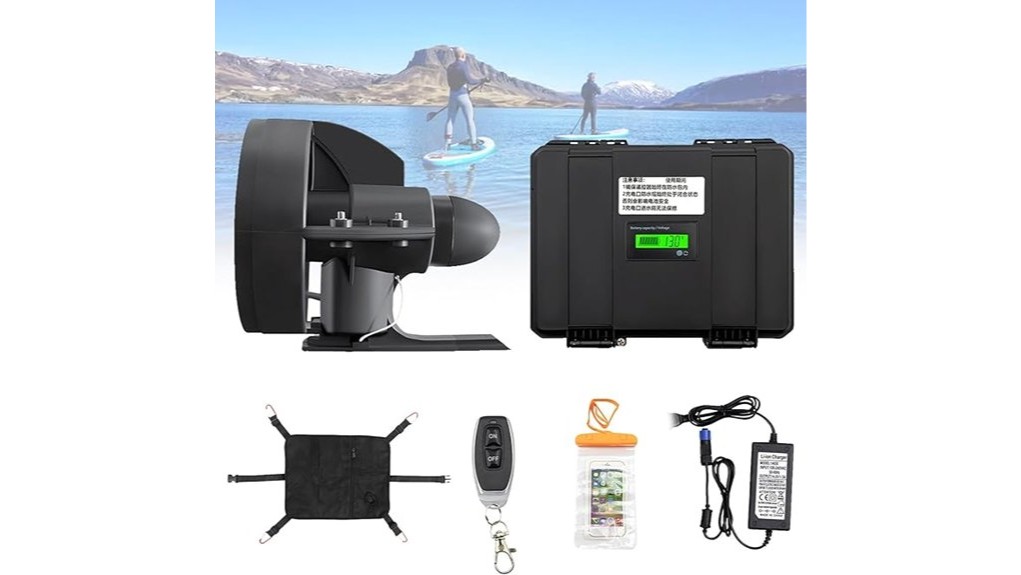
You’ll find the 216Wh pack is lighter and better for longer, slower trips—drawing about 18A for roughly two hours at 3–4 km/h—while the 288Wh gives stronger thrust and higher speed (≈24A, 1.5 hours at 4–5 km/h) for currents or faster transit. Installation is drill-free into a 9-inch fin box and the kit includes everything needed; protect the non‑waterproof controller in its bag. Choose based on mission profile and learn practical setup and safety tips ahead.
Some Key Takeaways
- 216Wh offers ~2 hours at 3–4 km/h (~18A draw) and lighter carry for casual, slower paddling.
- 288Wh delivers ~1.5 hours at 4–5 km/h (~24A draw) for higher speed or current assistance.
- Higher current use accelerates battery degradation and reduces effective charge cycles.
- Drill-free fin-box installation and quick-release bracket enable easy mounting and removal.
- Controller is non-waterproof; always use the supplied waterproof bag and practice emergency cutoff.
Performance and Runtime: 216Wh vs 288Wh Battery
Comparing the two battery options, you’ll get noticeably different trade-offs between speed and runtime: the 216Wh pack draws about 18A and delivers roughly 2 hours at 3–4 km/h while the 288Wh pack draws about 24A and gives about 1.5 hours at 4–5 km/h. You’ll choose based on mission profile: longer, slower trips favor 216Wh; higher speed bursts favor 288Wh. Monitor peak discharge to avoid stressing cells; higher currents increase battery degradation and reduce effective charge cycles. Implement basic thermal management during repeated runs and avoid full-depth discharges to maximize lifespan and predictable performance. Solar charging can extend time on the water when paired with a suitable solar charger sized for the battery.
Installation and Mounting: What’s in the Box and How to Install Without Drilling
If you want a quick, drill-free setup, the kit includes everything you need to mount the thruster into a standard 9-inch fin box and secure the battery and controls on most kayaks and inflatable boards. You get the thruster, battery bag, 2m charger, controller with waterproof bag, a quick release bracket, and a complete accessory kit. Install by sliding the unit into the fin box and locking the quick release bracket; route the cable to the cockpit and stow the battery in the supplied bag. Use foam padding under the bag and around the controller bag for vibration and abrasion protection. This setup is ideal for paddlers using kayaks equipped with a standard fin box who want a removable electric boost without modifying the hull.
Motor, Propeller, and Thrust Basics: Speed, Current Draw, and Handling
With the unit locked into the fin box and wires routed to the cockpit, you’ll want to understand how the 12V motor, 15 cm propeller, and battery choice work together to set speed, current draw, and handling. The motor’s torque and prop size deliver predictable thrust: 3–4 km/h on 216Wh (≈18 A) and 4–5 km/h on 288Wh (≈24 A). Expect concentrated prop wash and monitor for cavitation effects at high rpm or shallow angles. Simple thrust vectoring comes from mounting angle and paddle positioning, influencing handling dynamics more than raw power. Balance battery weight and runtime for stable, efficient tracking. Consider matching gear to your paddling goals and outfitting needs for open water adventures.
Controller, Waterproofing, and Safety Features
Although the controller gives you simple forward and stop buttons for one-handed operation, you should treat it as a sensitive, non-waterproof component and use the supplied waterproof bag every time. You’ll appreciate the clear layout, but the manufacturer doesn’t claim IP-rated waterproofing standards for the unit itself. For safety, the system features an emergency cutoff you can reach quickly; practice using it before heading out. If you prefer variable control, consider retrofitting a mountain bike throttle-compatible interface, though that alters wiring and warranty. Engage child lock safety when needed and stow the controller dry between trips to prolong service life. Many paddlers also carry essential accessories like deck-mount pumps and spare parts to stay prepared on the water.
Which Battery/Motor Setup to Choose: Use Cases, Trade-Offs, and Final Recommendation
When choosing between the 216Wh and 288Wh setups, consider how you’ll use the motor—short, leisurely paddles or longer, faster runs—because each option trades runtime, speed, and weight differently. If you want lighter carry and marginally longer advertised runtime per amp profile, the 216Wh (4.9 kg) suits casual outings and minimizes weight tradeoffs. For higher top speed and stronger thrust on currents or when you need faster transit, pick the 288Wh (5.1 kg) despite its higher draw and slightly shorter runtime figures. For long trips, consider spare battery strategy and prioritize capacity versus total carried weight. Gear Up for Rainy Water Adventures includes kayaks and rain jackets for outdoor enthusiasts who enjoy adventures on the water, making it a good place to explore kayaks and rain jackets.
Some Questions Answered
Can I Charge the Battery Onboard From a Boat’s 12V Outlet?
Yes — you can use onboard charging from a boat’s 12V outlet, but check specifics first. You’ll need a compatible charger and confirm alternator compatibility to avoid overloading or undercharging. Use the supplied 2-meter charger matched to the battery, secure connections, and monitor charge rate and temperature. Don’t assume waterproof safety for the controller; keep electronics dry. If unsure, consult a marine electrician to verify wiring and fuse protection.
Are Spare Propellers or Repair Parts Available Separately?
Yes — you can get spare propellers and repair kits separately. You’ll be able to order spare propellers and basic repair kits from the manufacturer or authorized dealers for common wear parts. Keep your serial number handy, because they’ll ask for model details to match props and parts. If you’re planning heavy use, grab a spare prop and a repair kit before heading out so you won’t be stranded.
What Is the Battery’s Expected Lifespan and Warranty Period?
You can expect typical battery longevity of about 300–500 full charge cycles (roughly 2–4 years with regular use); actual life varies with charge habits and storage. Warranty coverage usually runs 12 months for the battery from manufacture defects; some sellers may offer extended warranties or return policies. You should register the battery, follow charging/storage guidelines, and keep receipts to guarantee warranty coverage and maximize battery longevity.
Can the Motor Be Used in Saltwater Without Extra Corrosion Protection?
No, you shouldn’t use it in saltwater without extra corrosion protection. Saltwater corrosion will attack metal parts and connectors; the supplied waterproof bag and standard kit don’t replace proper anti-corrosion measures. You should rinse after each use, dry thoroughly, and add protective coatings or install sacrificial anodes on exposed metal components. Periodically inspect fasteners and electrical contacts, and replace any pitted parts to keep the motor reliable in marine environments.
Is There a Throttle Upgrade for Variable Speed Control?
Yes — you can upgrade for variable speed control. You’ll find aftermarket throttles and wireless controllers that integrate with the supplied controller if you replace or bypass it. You’ll want a 12V-compatible electronic speed controller (ESC) matched to the motor’s current (18–24 A) and a waterproof wireless throttle or wired aftermarket throttle. Install carefully, keep the controller sealed in the waterproof bag, and verify connectors and mounting before first use.