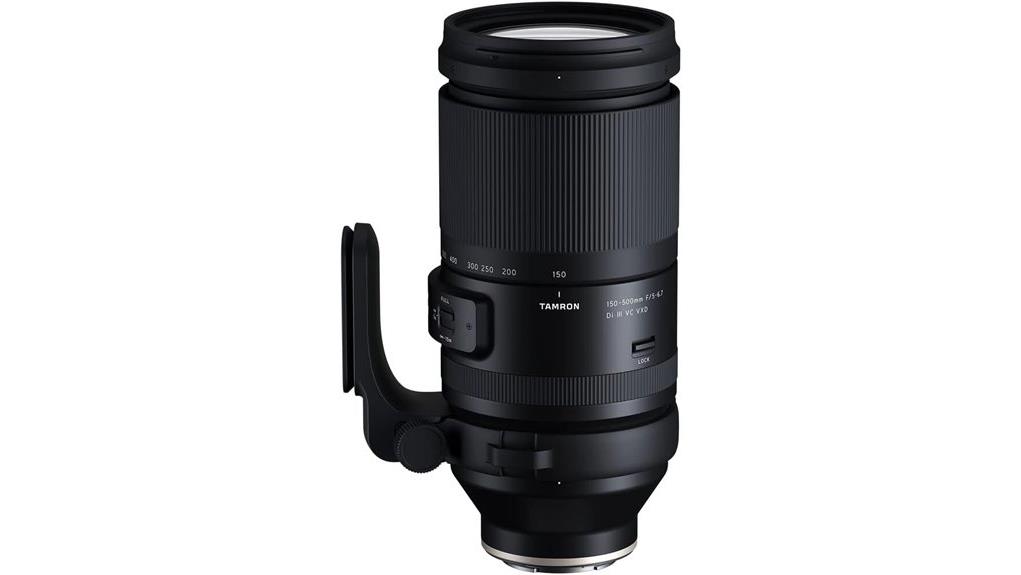
You’ll get a compact, stabilization-first 150–500mm tele for handheld landscape, bird, and wildlife work where reach and portability matter more than fast glass. It weighs about 4.1 lb, seals well, and uses VXD linear AF with reliable bird-in-flight tracking on capable bodies. VC gives roughly 3–4 stops at longer focal lengths; center sharpness is strong to 400mm and improves stopped down at 500mm. Keep a monopod for long sessions — more details follow.
Some Key Takeaways
- Excellent 150–500mm reach (APS-C equivalent 225–750mm) ideal for birds, wildlife, and sports with portable long-telephoto framing.
- VXD linear motor AF is fast, precise, and quiet, delivering reliable tracking for BIF and sports with good camera bodies.
- VC stabilization provides roughly 3–4 stops of handheld benefit at long focal lengths, though bracing or monopod recommended for extended use.
- Strong center sharpness 150–400mm wide open, slight softness at 500mm improved by stopping down; corners soften toward the long end.
- Compact 4.1 lb build with weather sealing, metal mount, 82mm filters, and good value versus native alternatives for portability-focused shooters.
Tamron 150–500mm at a Glance: Who This Lens Is For
If you need an ultra-telephoto zoom that’s compact enough for handheld work, the Tamron 150–500mm f/5–6.7 Di III VC VXD targets landscape, bird, sports, and wildlife shooters who prioritize reach, stabilization, and portability over extreme low‑light aperture. You’ll appreciate its 150–500mm range and VC stabilization for fieldwork where tripods are impractical. Travel photographers gain extended reach with a manageable package; beginner birders get access to APS‑C equivalent 225–750mm framing without pro bulk. Autofocus uses VXD linear motors for rapid, precise acquisition. Optical design, fluorine coating, and 82mm filters support practical, high-quality results in varied conditions. This lens also complements wide-angle systems for comprehensive coverage in landscape photography.
How It Handles: Size, Weight, Build, and Handling at 500mm
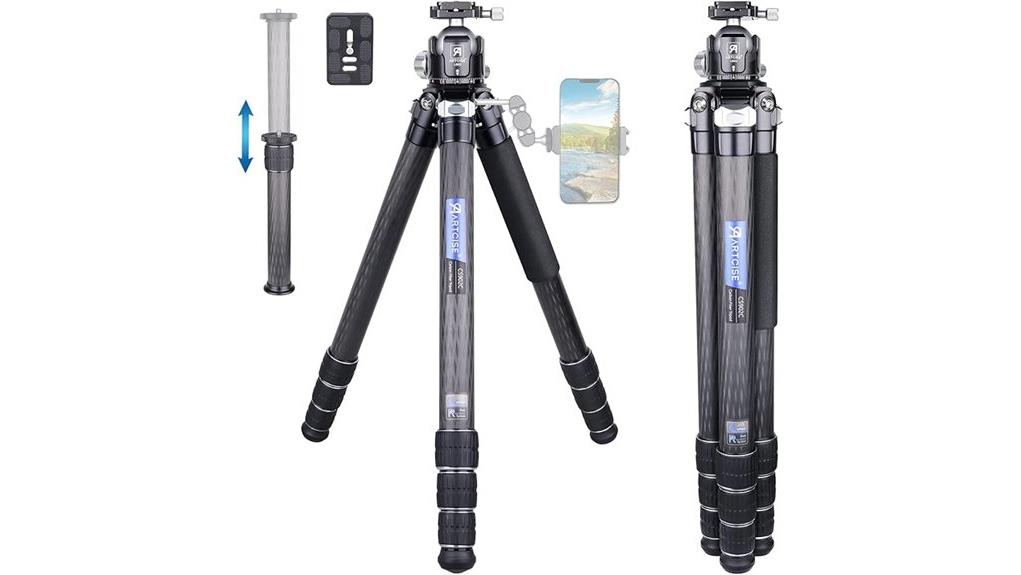
While its 4.1-pound mass and relatively compact barrel keep the Tamron 150–500mm manageable for handheld work, you’ll notice the balance shifts noticeably at 500mm and longer shooting sessions benefit from bracing or a monopod. You’ll find build quality solid: metal mount, sealed joints, and fluorine-coated front element reduce maintenance. The zoom and focus rings are damped for precise control, though extended reach amplifies perceived torque. Thanks to compact portability you can move quickly in the field, but prolonged handholding increases wrist fatigue; short bursts handheld are practical, while sustained use favors support for steadier framing. Perfect Tripods offers accessories to help steady long telephoto shots tripod and monopod options.
Autofocus, Stabilization, and Real-World Performance for Photos and Video
Having mentioned how balance and fatigue affect handheld use at 500mm, now look at how the lens' AF, stabilization, and overall performance support practical shooting. You’ll find the VXD linear motor delivers fast, precise, quiet acquisition; AF tracking on moving subjects is consistent for birds-in-flight and sports when paired with competent body algorithms. VC stabilization noticeably extends usable shutter speeds—stabilization tests show 3–4 stops of benefit handheld at 500mm under real conditions. For video, autofocus is smooth with minimal hunting and VC reduces microshake, though you’ll still prefer gimbals for panning cine work at longer exposures. This lens is a useful addition to any photographer’s kit for long-telephoto work and complements other essential lens gear for better results.
Image Quality Across the Zoom: Sharpness, Bokeh, and Low-Light Behavior
Because you’ll be relying on the 150–500mm for distant subjects, evaluating sharpness, bokeh, and low-light behavior across the zoom is essential for judging real-world usability. You’ll find center sharpness strong from 150–400mm wide open, with a slight falloff at 500mm that improves stopped down. Corner resolution softens toward the long end; diffraction appears near f/22. Bokeh is generally smooth thanks to seven blades, though specular highlights can show onion-ring texture and occasional double-lines. Chromatic aberration is well controlled but can appear on high-contrast edges at 500mm. Focus breathing is minimal, aiding consistent framing for handheld work. A polarizer can help increase color saturation and reduce reflections when shooting distant scenes with polarizing filters.
Buy or Skip? Pricing, Alternatives, and Practical Buying Advice
If you need a portable, long-reach lens that lets you handhold at 500mm without a gimbal or big tripod, the Tamron 150–500mm f/5–6.7 is worth serious consideration. You’ll weigh optics, stabilization, and weight against price. Do a price comparison versus native Sony 200–600mm and 100–400mm primes; Tamron undercuts many options while delivering comparable sharpness and VC. For timing, buy when body promotions or Tamron rebates appear, or watch the used market for minimal-depreciation units. Consider alternative lenses if you need faster apertures or ultimate resolution; otherwise this is a pragmatic, cost-effective choice. This site carries a curated selection of mirrorless camera accessories and lenses that complement long-reach telephoto setups.
Some Questions Answered
Does This Lens Come With Weather Sealing?
No, it doesn't offer full weather sealing. You’ll get some weather protection and dust resistance at critical joints and the mount, but Tamron specifies limited sealing rather than a full IP-rated enclosure. That means you can tolerate light moisture and dust-laden conditions cautiously, but you shouldn't expose the lens to heavy rain, splashes, or prolonged dusty environments without additional protection. Use a rain cover or shelter for reliable field use.
Can It Be Used With Full-Frame and APS-C Sony Bodies?
Yes — you can use it on both. You’ll get Full frame compatibility with Sony E-mount bodies, preserving the 150–500mm range and full-frame image circle. On APS-C bodies you’ll see APS C performance with an effective ≈225–750mm equivalent, tighter field of view and slightly improved apparent reach. Autofocus, VC stabilization, and exposure systems remain functional on both formats, though depth of field and peripheral illumination will differ between sensors.
Is a Teleconverter Compatible With This Lens?
Yes — you can use some teleconverters, but you’ll need compatibility testing and teleconverter recommendations before purchase. You should verify AF performance and front/back clearance with 1.4x and 2x converters on your Sony E body; 1.4x often preserves AF and image quality better, while 2x may slow AF and reduce sharpness. Conduct lab or field tests to confirm reliable focus, stabilization behavior, and vignetting for your setup.
What Tripod Foot or Collar Is Included or Available?
No tripod foot or rotating collar is included; you’ll rely on tripod compatibility via the lens’s integrated tripod mount option sold separately. For collar options, Tamron offers an optional Arca-type tripod foot/collar that clamps the lens securely and supports lens balance with gimbal heads. You’ll attach that foot to the lens’s compatible mounting points, enabling stable support for handheld-to-tripod shifts and optimized collar options for precise panning and balance.
How Loud Is the Focus Motor During Video Recording?
You’ll find the VXD linear motor operates with near-silent operation during video recording; you won’t hear intrusive whining in typical handheld use. AF shifts are quick and precise, minimizing audible artifacts, though very quiet ambient scenes may reveal subtle mechanical noise. Focus breathing is well-controlled for an ultra-telephoto zoom, with only minor focal-length shift during rack focus. Overall, it’s suitable for most run-and-gun video where silent AF matters.