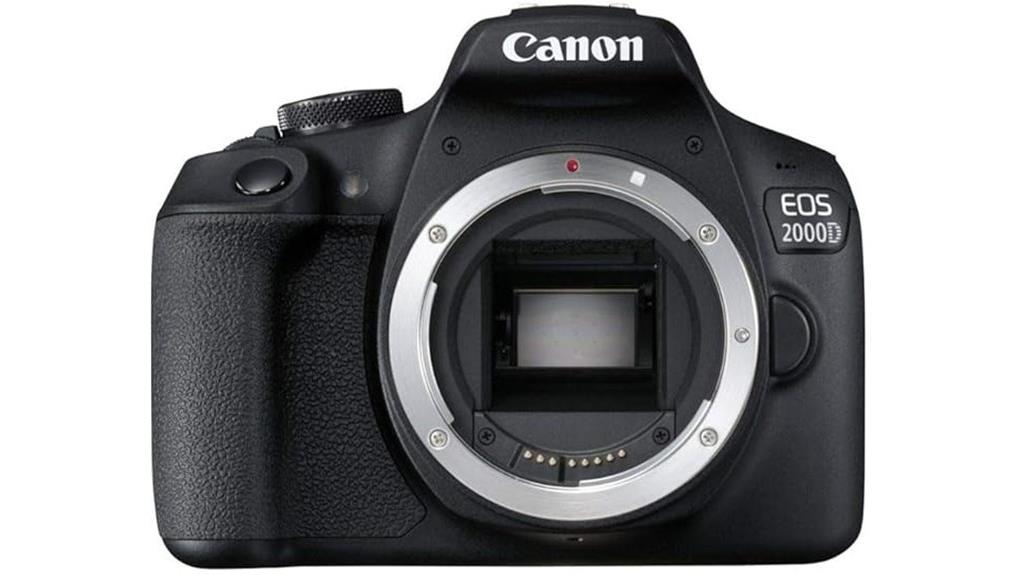
You’ll find the Canon EOS 2000D is a budget-focused 24.1MP APS‑C DSLR that gives you solid JPEGs, usable RAWs and serviceable 1080p video with modest bitrate and limited AF in Live View. Its 9‑point phase/contrast AF and optical viewfinder favor decisive, static shooting over fast action, while 3 fps burst and conservative high‑ISO noise reduction constrain enthusiasts. Kit 18–55mm IS lens is adequate; bring faster glass and spare batteries for low light. Keep going to see detailed strengths, limits and alternatives.
Some Key Takeaways
- 24.1MP APS-C sensor with DIGIC 4+ delivers solid JPEGs and usable RAW for everyday photography.
- 9-point AF and optical viewfinder provide reliable accuracy for static subjects; Live View AF is slower.
- 1080p MP4 video is acceptable for web use but has limited autofocus and modest bitrate for grading.
- 3 fps continuous shooting and small RAW buffer limit action photography; JPEGs maintain longer streams.
- Comfortable entry-level handling, EF/EF-S lens compatibility, and recommended accessories include spare batteries and fast SD cards.
Canon EOS 2000D at a Glance : Key Specs and Kit Contents
Get straight to the essentials: the Canon EOS 2000D is a 24.1 MP APS-C DSLR (renewed international model) that pairs a CMOS sensor with a DIGIC 4+ processor to deliver JPEG and RAW stills plus Full HD 1080p MP4 video. You’ll get the body, 18–55mm f/3.5–5.6 IS II kit lens, battery, charger, strap and basic accessories, matching typical entry level ergonomics with a comfortable grip and straightforward control layout. Compare its 9-point AF, 3 fps burst and optical viewfinder to peers: it favors simple beginner workflows over pro speed, prioritizing reliability and cost-effective expandability. Our shop also recommends essential mirrorless-friendly accessories like spare batteries and protective cases for everyday shooting and travel essential gear.
Image and Video Quality in Real Use : Photos, Low Light, and 1080p Footage
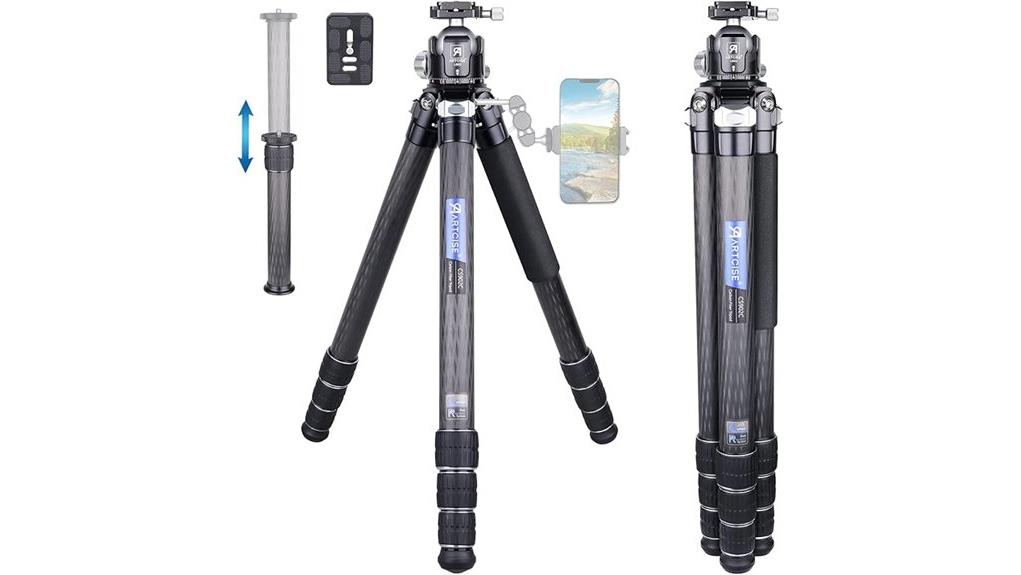
While the 2000D’s 24.1 MP APS‑C sensor and DIGIC 4+ processor won’t match newer mid‑range models for dynamic range or high‑ISO performance, they deliver solid, detailed JPEGs and usable RAW files for most everyday shooting scenarios. You’ll get accurate color reproduction straight from camera, though tones clip earlier than newer sensors under contrasty skies. In low light you’ll rely on conservative noise reduction and careful exposure to retain texture; ISO above 1600 shows visible luminance loss. 1080p footage is serviceable for web use; limited autofocus and a modest video bitrate constrain grading latitude compared with modern DSLRs and mirrorless bodies. For stable handheld shots and long exposures, pairing the camera with a sturdy tripod can noticeably improve image sharpness and composition.
Autofocus, Burst Rate, and Shooting Performance
How well does the 2000D keep subjects sharp in real shooting? You’ll find a hybrid phase/contrast AF with nine points delivers reliable autofocus accuracy for static subjects and moderate tracking. In Live View contrast detection is slower, so prefer viewfinder AF for decisive moments. Continuous shooting tops out at 3 fps; that’s conservative compared with modern entry-level rivals, so plan sequences accordingly. Buffer management is modest—JPEGs sustain the 3 fps stream, but RAW fills the buffer quickly and pauses shooting while writing. Overall, predictability and consistent AF hits matter more than burst speed on this body. The camera pairs well with common DSLR accessories for improved handling and versatility.
Handling, Controls, and Viewfinder/LCD Experience
After you’ve managed focus and burst behavior, the camera’s physical interface determines how quickly you can act on those settings. You’ll find an ergonomic layout with a grippy, compact DSLR body that places primary dials and the shutter within natural reach; it’s more comfortable than entry mirrorless rivals but less advanced than higher-tier Canons. Menu navigation is straightforward, hierarchical, and responsive, though deep submenus slow expert workflows. Viewfinder clarity is acceptable for framing and manual focus confirmation, with modest magnification. The fixed 3.0-inch LCD lacks full touch responsiveness for menu control, but live view tapping remains usable. The site offers a curated selection of accessories and lenses for enthusiasts gear guide to expand the camera’s capabilities.
Lens Compatibility, Stabilization, and Typical Kit Lens Performance
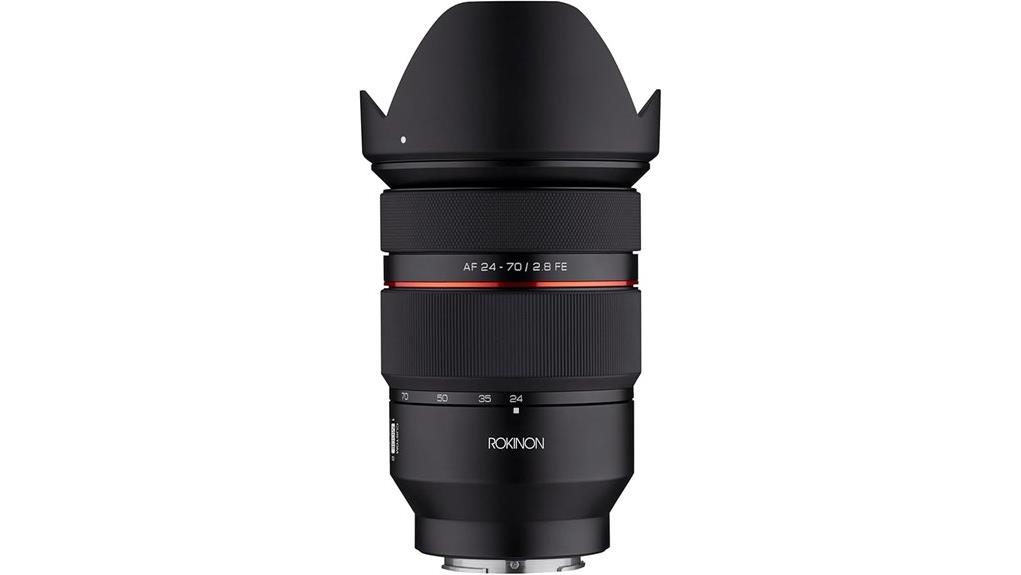
Because the 2000D uses Canon's EF/EF-S mount, you can fit the full range of Canon DSLR lenses—from older full-frame EF glass to modern, compact EF-S zooms—without adapters, though crop-factor effects and autofocus behavior vary by lens type. You’ll get full mechanical compatibility with EF lenses and optimized coverage from EF-S designs on the APS-C sensor. Image stabilization is provided in-lens (IS in Canon optics), so you should prioritize IS-equipped glass for low-light handheld work. The kit 18–55mm f/3.5–5.6 IS II performs predictably: modest sharpness central, softer corners at wide apertures, acceptable contrast, useful IS for slower shutter speeds. For enthusiasts building a lens kit, consider including both a fast prime and a versatile zoom for essential lens gear.
Battery Life, Connectivity, and Storage Practicalities
Typically, you’ll get modest battery life from the EOS 2000D’s LP-E10 pack—enough for a few hundred shots per charge under mixed use (live view and occasional Wi‑Fi), but expect that number to drop markedly if you shoot lots of Live View video or use wireless remote control frequently. You’ll manage battery longevity by carrying spares and disabling Wi‑Fi when idle. Connectivity uses Wi‑Fi/NFC plus USB; transfer workflows are straightforward via Canon Camera Connect or card-reader. Storage accepts SDXC (up to 128 GB, UHS-II compatible), so prioritize fast cards for burst buffering and video to avoid write bottlenecks. For accessories and replacement options, consider shopping products from a dedicated camera battery retailer.
Who Should Buy the 2000D and the Best Alternatives to Consider
If you’re stepping up from a smartphone or an entry-level point-and-shoot and want a low-cost, straightforward DSLR platform, the Canon EOS 2000D gives you a technically competent 24.1 MP APS-C sensor, basic but reliable autofocus, and compatibility with Canon’s extensive EF lens ecosystem. You should buy it if you’re a beginner photographer seeking solid image quality, Wi‑Fi transfer, and lens growth without complex menus. For budget upgrades consider the Canon EOS 4000D or refurbished 2000D bodies, or mirrorless alternatives like the Canon EOS M50 / Sony a6100 for faster AF, better video and compactness. A collapsible backdrop can help beginners create cleaner, more professional-looking images with minimal gear and setup time collapsible backdrop.
Some Questions Answered
Does the 2000D Support In-Camera Intervalometer/Time-Lapse Recording?
No — the 2000D doesn't offer an in camera timelapse feature, so you won't find a built‑in intervalometer/time‑lapse recorder. You can still capture time‑lapses by using an external intervalometer or tethering via Canon apps/software to trigger shots. Compared to models with native interval functions, this requires extra gear or workflow steps, but it preserves full RAW/JPEG control and lets you set exposure, interval and duration precisely with compatible external controllers.
Can You Use Third-Party Batteries Safely With This Camera?
Yes — you can use third-party batteries, but you’ll want to be cautious. Aftermarket reliability varies by brand; choose high-quality cells with protection circuits and accurate voltage/current specs to match the Canon battery. Compare capacity, cycle life and thermal performance. Note warranty considerations: using non-Canon batteries may void Canon service or specific warranty claims. If reliability or service is critical, stick with OEM or reputable third-party suppliers that offer returns and certifications.
Is There a Microphone Input for External Audio Recording?
No — you don’t get an external microphone jack on this body. That limits external microphone use and can constrain audio quality compared with cameras offering a 3.5mm input. You’ll rely on the built‑in microphone or record externally with a separate recorder and sync in post to improve audio quality. If you need direct on‑camera external microphone monitoring and higher fidelity, consider a model with dedicated external microphone support.
Does the Camera Offer Focus Peaking in Live View for Manual Lenses?
No — the camera doesn’t provide focus peaking in Live View, so you won’t get that highlighted edge assist for manual focusing. You’ll need to rely on Live View magnification and the 3.0" LCD to judge sharpness. Compared to cameras with focus peaking, manual focusing is slower and less intuitive here; adapters and lenses still work, but you’ll be doing precision work using magnified view, contrast/phase AF points and careful trial shots.
Can the 2000D Be Used for Astrophotography With Long Exposures?
Yes — you can use the 2000D for astrophotography with long exposures, but you’ll face limits. Its 24.1MP APS‑C sensor and max shutter of 30s let you capture deep sky and star trails, though long exposure noise rises at high ISO; use dark frames and noise reduction. For pinpoint stars on longer integrals, you’ll want star tracking mounts or shorter sub‑exposures stacked to reduce trailing and noise.