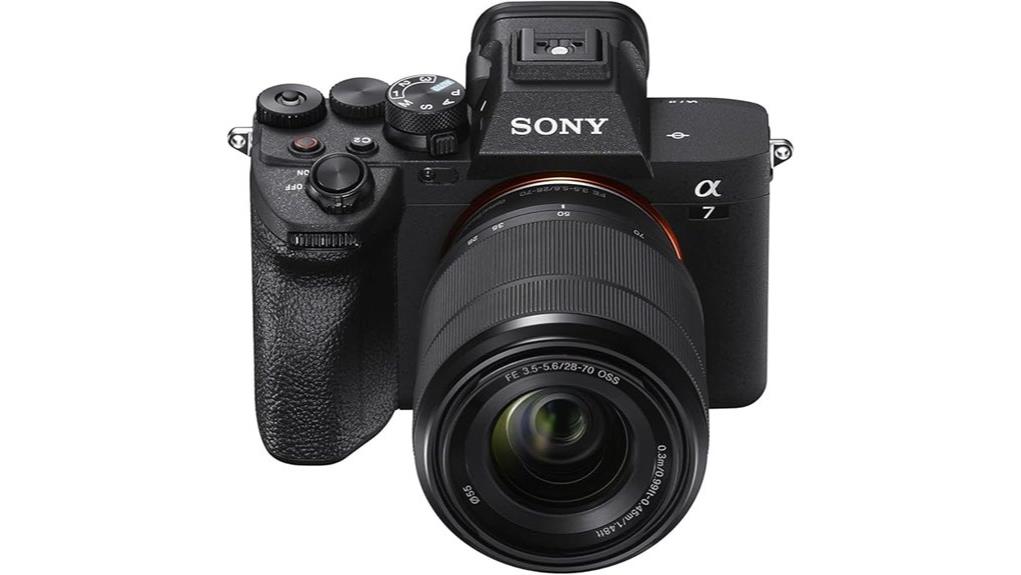
You'll get a versatile, pro-capable hybrid that delivers 33MP stills, robust real‑time AF, and clean 10‑bit 4K60 video in a compact, serviceable body. It uses a back‑illuminated full‑frame Exmor R sensor and BIONZ XR engine for 10‑fps bursts with preserved dynamic range and strong low‑light headroom to about ISO 6400. The 759‑point hybrid AF, 5‑axis IBIS, and dual video outputs suit solo creators and small studios; keep reading for full performance and kit details. The Sony Alpha a6000 camera specifications highlight its remarkable autofocus system, which is essential for capturing fast-moving subjects with precision. Additionally, its lightweight design makes it an ideal choice for travel photographers looking to minimize their gear while maintaining high-quality performance. With a variety of interchangeable lenses available, this camera is adaptable for various shooting styles and environments.
Some Key Takeaways
- 33MP full‑frame Exmor R sensor and BIONZ XR engine deliver high-resolution 10‑bit stills and video with strong low‑light performance.
- 759‑point hybrid AF with real‑time Eye AF provides reliable subject tracking for photo and video workflows.
- In‑body 5‑axis SteadyShot hybrid stabilization enables sharper handheld stills and steady 4K60 video capture.
- 10‑bit 4:2:2 internal recording, full‑pixel readout, and minimal rolling shutter suit professional 4K production.
- Ergonomic refreshed body, dual video outputs, and robust connectivity make it ideal for hybrid shooters and content creators.
Quick Verdict and Who the A7 IV Is Best For
Although it builds on Sony’s proven Alpha line, the A7 IV delivers a clear step up in resolution, video capability, and hybrid performance that makes it a versatile tool for professionals and serious enthusiasts who need a single camera for both high-resolution stills and advanced 4K video. You’ll find the renewed body balances advanced controls with approachable menus, giving it measurable beginner appeal while retaining pro-grade flexibility. You can integrate it into structured creative workflows across photo and video, switching formats and profiles efficiently. Its hybrid orientation suits content creators, small studios, and solo operators prioritizing one camera that reliably handles diverse assignments. It also pairs well with a range of mirrorless camera accessories to expand its capabilities.
Key Specs That Matter (Sensor, AF, Stabilization, Video)
When you need a camera that balances high-resolution stills with professional video, the A7 IV's core specs make that tradeoff explicit: a 33 MP back-illuminated full-frame Exmor R sensor paired with the BIONZ XR engine delivers detailed 10-bit images and 10‑fps continuous shooting while preserving dynamic range and low‑light performance; you’ll get a high resolution sensor that supports 10 bit video with full‑pixel readout and 4:2:2 color. Autofocus uses a 759‑point hybrid system with real‑time Eye AF for Fast AF tracking. In body stabilization is 5‑axis SteadyShot hybrid, aiding handheld 4K capture and sharper stills. This makes the A7 IV a versatile choice for enthusiast photographers looking for both advanced stills and video features.
Real-World Photo and Video Performance (Low Light, AF Reliability, 4K 60p)
Because Sony paired the 33 MP Exmor R sensor with the BIONZ XR engine and 5‑axis SteadyShot, you'll see substantial low‑light headroom and usable shutter speeds handheld that preserve detail and color fidelity down to about ISO 6400 before noise reduction starts to smear fine texture; pushing to ISO 12800 is possible for editorial or web output but expect more aggressive NR and a drop in fine detail. In practice, low light resilience is excellent for available‑light portraits and events. Autofocus consistency is strong—759‑point hybrid AF and real‑time Eye AF track reliably. 4K60 workflow delivers clean 10‑bit 4:2:2 files, with accurate motion rendering and minimal rolling shutter. Choosing the right tripod head can further improve stability for long exposures and precise framing when shooting with high-resolution sensors, especially using a ball head for quick adjustments.
Handling, Battery Life, Ports, and Connectivity for Shooters
Having covered how the A7 IV performs in low light and autofocus, let's look at how its handling, battery life, and I/O affect real-world shooting workflows. You’ll notice solid grip comfort for extended handheld use; the deeper handgrip and textured surface reduce fatigue with medium telephoto lenses. The menu layout is logical but dense—expect a learning curve to map custom buttons and Fn menu. Battery life is competent for hybrid shoots; plan for spares on long days despite included cells. Physical I/O includes dual video out ports, HDMI, USB 3.0/2.0 and Wi‑Fi/Bluetooth for tethering and rapid file transfer. If you’re relying on studio or extended-location work, consider compatible AC adapters to ensure uninterrupted power with external power.
Buying Considerations: Kits, Lenses, Price vs. Value, and Final Recommendation
Although the A7 IV renewed kit with the 28–70mm f/3.5 provides a versatile starting point for hybrid shooters, you should evaluate lens strategy and total cost of ownership before buying. Consider bundle options: body-only versus kit pricing affects immediate capability and resale. Factor mount flexibility—Sony E-mount supports both Sony glass and third party lenses with competent optics and often lower cost. Model weight, battery life, and accessory ecosystem (grips, chargers, cages, mics) add ongoing expense. Compare price vs. value by projecting long term resale and upgrade paths. If you need versatile, high-quality stills and video now, this is a pragmatic buy. Many photographers also invest in essential lens gear to expand creative options and protect their equipment.
Some Questions Answered
Does the A7 IV Include In-Body Raw-To-Jpeg Conversion On-Camera?
Yes — you can perform in camera processing to convert RAW to JPEG on the A7 IV. You’ll use the camera’s RAW development menu to apply settings (picture profile, white balance, noise reduction) and output high jpeg quality files. The process leverages the BIONZ XR engine and preserves selectable jpeg quality levels, letting you generate 10-bit compatible JPEGs with chosen S-Cinetone or standard profiles while keeping original RAW files intact.
Can the Camera Charge and Record Simultaneously via USB-C?
Yes — you can charge via USB-C while recording. USB charging works with the Sony A7 IV’s USB-C power delivery to keep the battery topped during use, and simultaneous recording is supported for most video modes, including 4K. You’ll get continuous power over USB while capturing footage, though heavy-duty prolonged 4K/60p recording may still heat the camera or trigger auto-shutdown depending on conditions and power source quality.
Is There a Built-In Microphone With Headphone Jack Monitoring?
Yes — you get a built in microphone for basic onboard audio, and you can use headphone monitoring via the dedicated 3.5mm jack to check levels in real time. You’ll also find a 3.5mm input for external mics and improved internal preamps; headphone monitoring lets you verify gain, clipping and stereo balance during recording. This setup supports more reliable audio capture for run-and-gun and interview shooting.
Does the Shutter Have a Rated Lifespan or Replaceable Mechanism?
Yes — the shutter has a rated mechanical longevity and can be replaced. You’ll encounter a hybrid arrangement: an electronic leafless shutter mode for silent shooting and a mechanical focal-plane shutter with a specified life expectancy (manufacturer service documents typically list cycles). You should assume service or authorized repair is required for replacement rather than user swap. For precise cycle rating and replacement policy, consult Sony service literature or warranty terms.
Are There Significant Differences Between Renewed and New Warranty Coverage?
Yes — you’ll usually see differences: renewed units often carry a shorter warranty duration and more limited coverage compared with new items. You should check for coverage exclusions like accidental damage, sensor issues, or third‑party parts. Inspect the renewed seller’s service terms, verify whether batteries or accessories are included, and confirm repair pathways. Technically compare warranty duration, authorized service availability, and any stated coverage exclusions before buying.