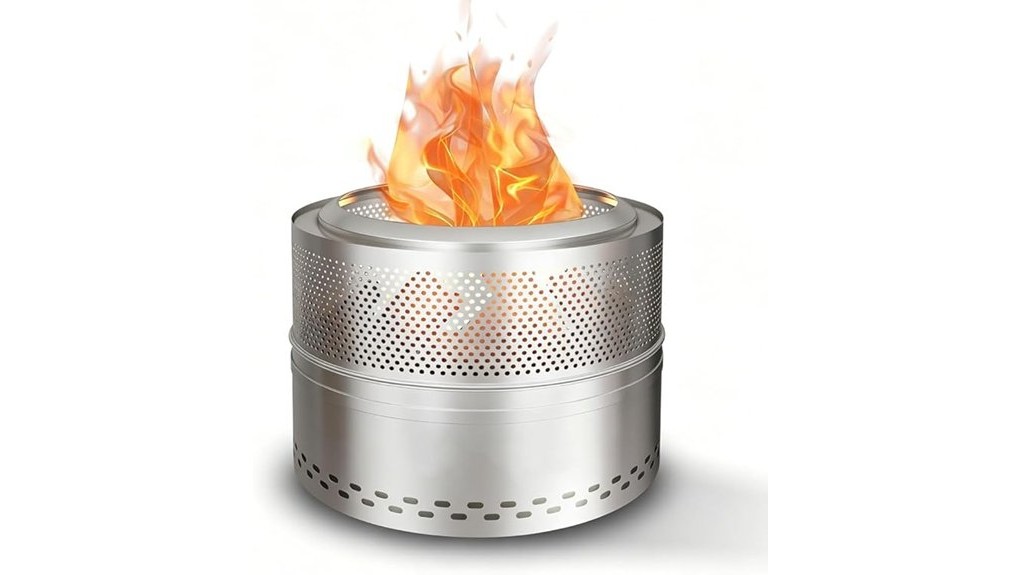
You’ll get a compact 20″ smokeless fire pit that outperforms regular pits by preheating air and using a 360° airflow plus secondary combustion to burn smoke for hotter, cleaner flames. Built from heavy-gauge 304 stainless and weathering steel, it resists rust and warping and folds down for travel, serving 4–6 people. Ash removal and routine cleaning are simple, and a 24-month warranty covers defects—keep going to see detailed features, care tips, and use cases.
Some Key Takeaways
- 20″ portable smokeless fire pits use 360° airflow and secondary combustion to reduce smoke and produce cleaner flames.
- Heavy-gauge 304 stainless steel body and weathering steel exterior resist corrosion, warping, and repeated high-heat cycles.
- Double canopy and radiant shielding focus heat upward, making warmth more usable and reducing heat loss.
- Foldable, disassemblable design fits a carry bag, serving 4–6 people for camping, tailgates, or small patios.
- Removable ash tray, simple cleaning steps, and a 24-month warranty support maintenance and long-term use.
What Makes This 20 Smokeless Fire Pit Different From a Regular Fire Pit?
While a regular fire pit just burns wood and sends smoke into the air, this 20″ smokeless fire pit uses a 360° airflow system that super-heats incoming air to cut smoke and produce cleaner, hotter flames. You’ll notice the double canopy and radiant shielding focus heat upward and protect surrounding surfaces, so warmth is more usable and less wasteful than an open pit. Built from heavy-gauge 304 stainless and weathering steel, it’s durable yet portable, disassembling for travel. You’ll clean ash easily with the removable tray and rely on a 24-month warranty—more practical, safer, and cleaner for gatherings. Designed for camping enthusiasts, it’s ideal for portable fire pits and outdoor use.
How the 360° Airflow and Secondary Combustion Reduce Smoke
Having seen how the fire pit channels heat and protects surrounding surfaces, let’s look at how the 360° airflow and secondary combustion actually cut smoke. You’ll notice airflow dynamics force preheated air evenly around the burn chamber, feeding flames from beneath and around the wood. That steady, circular intake promotes more complete burning, so fewer particulates form. Secondary combustion reintroduces super-heated air to ignite smoke vapor, raising combustion efficiency versus open pits. Compared to a traditional fire pit, you’ll get hotter, cleaner flames and less irritation. In short, the design trades wasted smoke for sustained heat and clearer evenings. Many campers prefer collapsible designs for their portable convenience and easy storage.
Build Quality and Materials: 304 Stainless Steel, Weathering Steel, and Longevity
Look for heavy-gauge 304 stainless steel in the main body and weathering steel for external parts—those choices mean the fire pit resists rust, warping, and the high heat cycles you’d expect from regular outdoor use. 304 stainless handles corrosion and repeated heating better than thinner steels or painted metals, so seams and the burn chamber stay solid over time, while weathering steel gives a tougher exterior finish that develops a protective patina rather than flaking. You’ll notice less marine corrosion risk if you use it near coastlines, and the thicker steel tolerates thermal expansion without distorting. Regular cleaning preserves longevity. Many campers also use a durable tent footprint beneath pits to protect groundcover and extend campsite gear life.
Real-World Performance: Portability, Capacity for 4–6 People, and Ideal Use Cases
Sturdier materials mean the fire pit stays reliable when you take it on the move, and that durability shows up in everyday use. You’ll find the disassemblable, foldable 20” design slips into the carry bag quickly, offering real camping convenience compared with bulkier stoves. Once assembled, it comfortably serves 4–6 people; seating arrangements feel natural whether you’re around a backyard circle or arranging balcony friendly seating. Heat output and 360° airflow deliver consistent warmth without smoke, so you can use it for camping, tailgates, small outdoor gatherings, or tight urban patios where space and smoke control matter. It’s an ideal pick for those who want dependable, portable gear for campfire gatherings and outdoor living.
Maintenance, Packing, Warranty, and Final Buying Recommendation
While you won’t need intensive upkeep, a few quick steps keep the 20″ smokeless pit performing and make packing easier. Use the removable ash tray and base for routine cleaning; these cleaning tips cut residue and protect the 304 stainless and weathering steel parts. Let components cool, brush loose ash, then wipe before storage. For travel, follow a compact packing checklist: folded stove, grates, ash tray, hardware, and carry bag. Warranty covers defects for 24 months—contact customer service for issues. Recommendation: if you want durable, low-smoke warmth for 4–6 people and easy transport, this pit’s a smart buy. For campers looking to pair this with essential gear, consider adding a camping fire bucket to keep ashes contained and make cleanup even easier.
Some Questions Answered
Is the Fire Pit Safe to Use on Wooden Decks or Composite Surfaces?
You shouldn’t place it directly on wooden decks or composite surfaces without protection. Deck compatibility depends on heat transfer and embers; the 20″ design reduces smoke but still radiates heat. You’ll want a sturdy heat‑shield pad or fire‑pit mat and risers to create airflow and surface protection. Compared to ground use, take extra precautions: keep clearance, use protective barriers, and monitor constantly to prevent scorching or ember damage.
Can I Cook on This Fire Pit (Grill or Use Cookware Directly)?
Yes — you can cook on it. You’ll get decent direct grilling using grill grates over the 360° airflow, and it’s compatible with most cookware when you place a sturdy grate or tripod. Compared to camp stoves, heat is more diffuse so thicker pans work better. Use cast iron or heavy stainless, avoid warped thin pans, and keep ash tray clean. Don’t leave cookware unattended; follow safety and warranty guidance.
How Long Does a Full Set-Up and Pack-Down Typically Take?
You’ll usually finish setup time in about 5–10 minutes and teardown time in roughly 5–8 minutes. Compared to bulky grills, this disassemblable, foldable design is quicker; it fits the carry bag and snaps together fast. For first-time assembly allow a few extra minutes; once you’ve done it a couple times you’ll be at the low end of those ranges. Cleaning ash adds a few minutes to teardown.
Are Replacement Parts (Grates, Ash Tray) Available Separately?
Yes — you can get replacement grills and spare hardware separately. You’ll usually order grates, ash tray parts and fasteners from the manufacturer or authorized dealers, which beats replacing the whole unit. Availability and shipping times vary, so compare supplier policies and warranty coverage. If you’re planning regular use, keeping spare hardware on hand saves downtime and is more cost-effective than waiting for repairs or buying a new fire pit.
Does the Included Carry Bag Meet Airline or TSA Size Restrictions?
No — the included carry bag likely won’t meet strict airline carry on or TSA compliance for cabin baggage. You’ll need to check your carrier’s size limits; the disassembled 20″ parts usually fit as checked luggage or oversized cabin items if allowed. Compared to typical carry-on dimensions, the packed bag is bulkier, so plan to gate-check or check it, and confirm TSA rules for transporting wood-burning stove components and ashes.