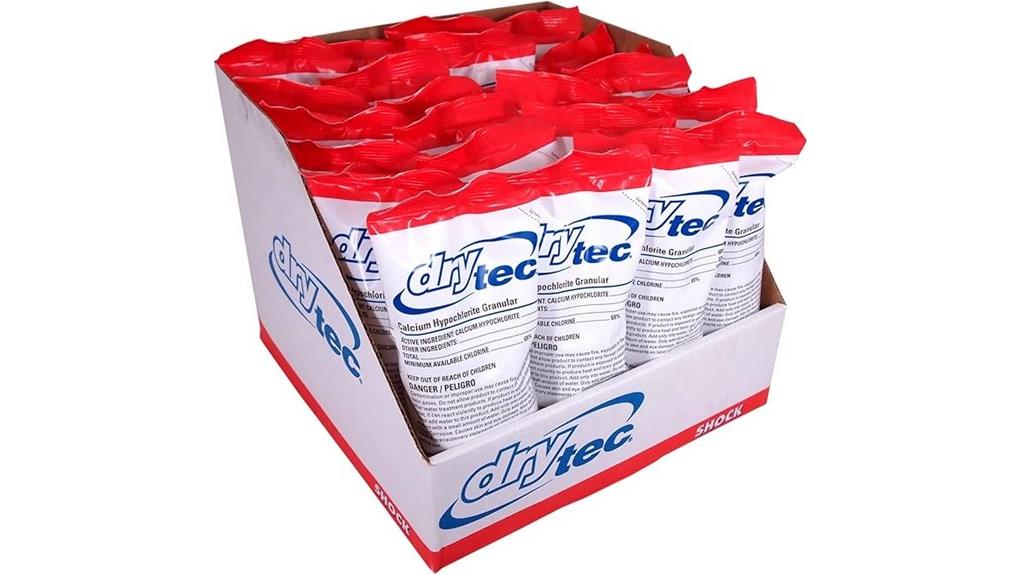
You’ll get predictable, single-bag shocks with Drytec 1-1901-24-A: one 1-lb bag raises available chlorine about 5–10 ppm per 10,000 gallons, giving reliable superchlorination for routine or emergency use. Its calcium hypochlorite releases HOCl to oxidize organics, inactivate bacteria, and inhibit algae; granules disperse and brush out if they settle. Use in the evening with the pump running, test pH and free chlorine, and follow safety gear and storage guidance — more specifics follow. Fiji pool calcium hypochlorite granules can enhance the sanitization process further when added to your pool maintenance routine. These granules are especially effective in maintaining stable chlorine levels, which is crucial for optimal water clarity. Additionally, they are an excellent choice for handling unexpected spikes in bacteria levels, ensuring your pool remains safe and enjoyable.
Some Key Takeaways
- Drytec 1-1901-24-A is a 24-pack of 1-lb calcium hypochlorite bags, offering predictable 5–10 ppm chlorine boost per bag for 10,000 gallons.
- Granular calcium hypochlorite releases HOCl to oxidize organics, inactivate bacteria, and inhibit algae when used as directed.
- Best used for routine weekly superchlorination or emergency shocks by broadcasting granules into deep pool with pump running.
- Requires pH 7.2–7.6, TA 60–120 ppm, calcium hardness >200 ppm, and protective gear; avoid moisture in storage.
- Ideal for multi-pool managers and regular users seeking bulk savings; not recommended for infrequent users or minimal dry storage.
Quick Verdict: Is Drytec 1-1901-24-A Worth Buying?
If you need a straightforward, high‑strength granular shock, Drytec 1-1901-24-A delivers: each 1‑lb bag treats 10,000 gallons to raise available chlorine by 5–10 ppm, kills bacteria, destroys organics and controls algae, and the 24‑pack gives you a full season of routine and emergency shocks. You’ll get predictable chlorine dosing, simple single‑bag dosing, and granular form that disperses when brushed if it settles. That reliability preserves pool aesthetics by maintaining clarity and preventing staining. Bulk packaging yields measurable cost savings versus singles. Choose it if you want efficient, standardized shock dosing and inventory simplicity.
How the Product Works and Expected Performance (Kill Bacteria, Control Algae, Destroy Organics)
Disinfecting pools, Drytec calcium hypochlorite releases hypochlorous acid (HOCl) when dissolved, which oxidizes organic contaminants, inactivates bacteria by disrupting cell walls and enzymes, and inhibits algae growth by destroying cellular structure and reproductive cells. You’ll see rapid oxidation pathways: HOCl attacks double bonds, amino groups, and sulfhydryls, converting organics to smaller, oxidized compounds. Expect effective kill rates against common bacteria and algae; microbial resistance is unlikely due to broad chemical mechanisms. Monitor chlorine demand since organics consume HOCl and raise required dose. Track residual byproducts (combined chlorines, chloramines) and maintain free chlorine to guarantee continued performance.
Dosage, Application Steps, and Timing for Safe, Effective Shock Treatments
Plan shock treatments around measured needs and follow precise dosing: for routine superchlorination, add one 1‑lb bag per 10,000 gallons (delivering ~5–10 ppm available chlorine) during evening hours with the filter pump running, broadcasting granules evenly into the deepest part of the pool, brushing any settled material to disperse, and allowing ~30 minutes for initial dispersal before testing; you’ll perform evening application to reduce UV loss and boost residual. Add whole bag when opened, broadcast over deepest area, circulate with pump, brush settling spots, wait 30min, then retest. Repeat or escalate dose only for persistent contamination or visible algae.
Water Balance, Testing, and Safety Precautions You Must Follow
After you’ve completed shock application steps, you need to verify and maintain proper water chemistry to make the treatment effective and safe. You’ll measure pH (7.2–7.6), total alkalinity (60–120 ppm), calcium hardness (>200 ppm) and free chlorine using calibrated pool testing kits. Don protective gear—gloves and eye protection—when handling granules or test reagents. Run the filter while dispersing product and wait at least 30 minutes before retesting. Do not permit bathers until free chlorine is within safe range (1–4 ppm as specified). Record results, adjust using labeled products, and repeat shock/testing for persistent contaminants or after heavy use.
Pros, Cons, and Who Should (or Shouldn’t) Buy This 24-Pack
While you’ll appreciate the pack’s economy and consistent dosing if you manage multiple pools or perform frequent shock treatments, the 24 one‑pound bags also demand careful storage and handling to avoid moisture exposure and accidental over‑chlorination. You’ll benefit from predictable 5–10 ppm boosts per bag and lower unit cost in cost comparison to single purchases. However, you must address storage concerns: keep bags sealed, dry, and segregated from acids and organics. Buy if you maintain several pools, run weekly shocks, or need inventory efficiency. Don’t buy if you have limited dry storage, infrequent use, or small-volume pools.
Some Questions Answered
Can Calcium Hypochlorite Be Mixed With Other Pool Chemicals Safely?
No — you shouldn’t mix calcium hypochlorite with other pool chemicals. Avoid mixing it with incompatible chemicals like acids, cyanuric acid in concentrated form, or other oxidizers; violent reactions and chlorine gas can result. Observe storage compatibility: keep it dry, sealed, and separate from organics and reducers. Have emergency procedures ready (ventilate, evacuate, call emergency services). Always follow label directions and add products to water separately while the pump’s running. After ensuring proper storage and handling, it’s essential to understand pool shock application tips and techniques for effective use. Always add the shock product to the water while the pump is running to ensure even distribution. Additionally, test the water chemistry frequently following application to maintain balanced levels and optimize pool safety.
How Long Is Each Unopened 1-Pound Bag Shelf-Stable?
Each unopened 1-pound bag is expected shelf life of about 2–3 years when stored properly. Storage tips: keep bags sealed, dry, cool (below 77°F/25°C), out of direct sunlight and away from organic materials or acids. Maintain stable humidity and avoid temperature cycling. Inspect before use; if you see caking, discoloration, or strong chlorine odor, don’t use. Follow manufacturer warranty and disposal guidance for degraded product.
Is This Product Approved for Use in Indoor Pools or Spas?
No—it’s not ideal for indoor pools or spas without precautions. You should avoid routine use in enclosed spaces unless indoor ventilation meets code and you monitor chlorine residuals carefully. Calcium hypochlorite raises chlorine and can release fumes; spa compatibility is limited because high chlorine and calcium hardness can damage equipment and irritate users. If you must use it, follow label directions, guarantee ventilation, verify free chlorine 1–4 ppm before entry, and test frequently.
What Personal Protective Equipment Is Recommended When Handling Granules?
You should wear glove protection and eye protection when handling granules. Use chemical-resistant gloves (nitrile, neoprene, or rubber) and splash-resistant safety goggles or a face shield. Wear long sleeves, pants, and closed-toe shoes; consider an apron and respiratory protection if dusty. Work in a well-ventilated area, avoid inhalation and skin contact, and wash hands after handling. Follow label directions and replace PPE if contaminated.
Does the 24-Pack Include Child-Resistant Packaging or Tamper Seals?
No, the 24-pack doesn’t specify child resistant packaging or tamper seals. You should assume standard retail bags without certified child resistant closures or single-use tamper-evident seals. Handle and store each 1-pound bag locked away and out of reach, following label safety directions. If you require certified child resistant or tamper seals, contact the manufacturer or retailer to confirm availability or request special packaging before purchase.