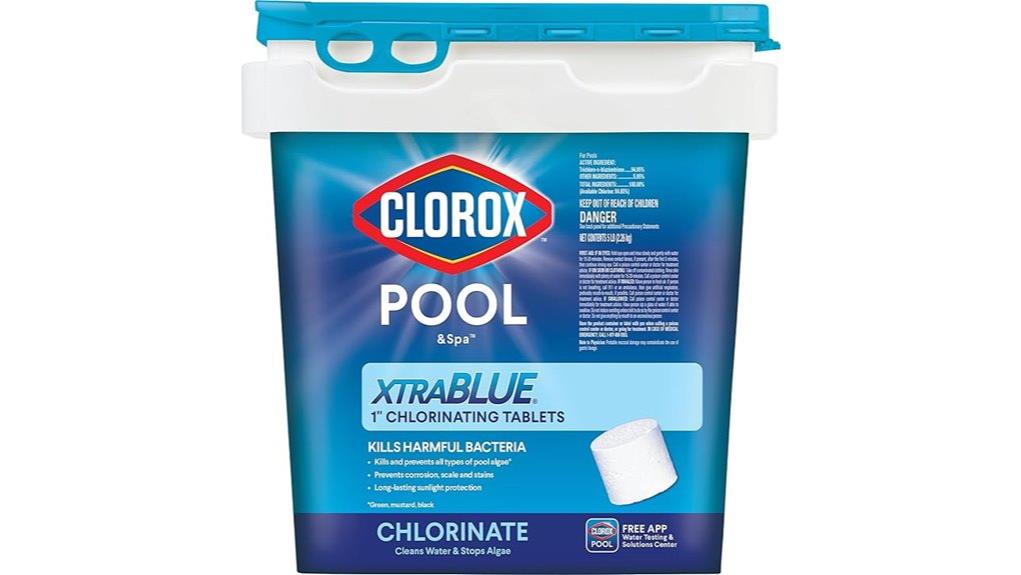
Clorox® Pool&Spa™ XtraBlue 1” tablets give you compact, stabilized chlorine for predictable residual sanitization and reliable algae prevention when used in a floating or inline feeder. You’ll dose by pool volume to hit target ppm, monitor free chlorine, pH and CYA, and avoid mixing with other chemicals. They’re surface-safe and include scale/corrosion conditioners, but may raise cyanuric acid over time and dissolve slower than sticks. Continue to learn about application nuances and alternatives. Pool shark chlorine tablet effectiveness can significantly impact your pool maintenance routine. Choosing the right product can help ensure that your pool remains clean and safe for swimmers. Additionally, exploring various options can lead to better efficiency and cost savings in the long run.
Some Key Takeaways
- Stabilized 1″ tablets provide steady chlorine release and UV protection, making them effective for routine residential pool sanitization.
- Best used in floating feeders, tablet feeders, or inline chlorinators; not suitable for direct addition as emergency shock.
- Includes conditioners to reduce scale and corrosion risk, but may slightly alter water feel and interact with sensitive equipment.
- Main downside is cumulative cyanuric acid buildup over time, requiring periodic CYA monitoring and possible dilution.
- Compatible with vinyl, plaster, fiberglass, and tile; dissolve slower than sticks and alternatives include unstabilized chlorine or liquid bleach.
What the XtraBlue 1” Tablets Are and Who They’re Best For
Think of XtraBlue 1” tablets as a compact, stabilized chlorine dosing option designed to kill bacteria and prevent all types of pool algae while protecting surfaces and equipment. You’ll find these 1” tablets suit routine pool maintenance for small and residential pools, offering predictable residual chlorine and sunlight protection. They support swimmer safety by controlling pathogens and algae, while conditioners reduce scale and corrosion risk. Store tablets dry and ventilated to preserve efficacy; tablet storage away from organic materials minimizes decomposition. Use them for ongoing algae treatment and preventive sanitization, not as an emergency shock; they’re optimized for steady, measured dosing.
How to Use These 1” Tablets Safely and Get the Right Dosage
Having covered what XtraBlue 1” tablets are and where they work best, now focus on safe handling and accurate dosing to maintain target free chlorine levels. You’ll wear gloves and eye protection, avoid inhaling dust, and never mix tablets with other chemicals. Store sealed containers in a cool, dry location away from direct sunlight and combustible material—proper storage prevents degradation and hazardous reactions. Use a floating feeder, tablet feeder, or inline chlorinator; follow pool volume and target ppm using a dosage chart or the Clorox Pool App to calculate tablets per week. Test water frequently and adjust dose to maintain recommended free chlorine.
Real‑World Performance: Sanitizing, Algae Prevention, and Stabilizer Life
In real-world use, XtraBlue 1″ tablets deliver consistent sanitization by releasing a steady chlorine dose that quickly inactivates bacteria and controls organic load when you maintain proper feeder settings and target free‑chlorine levels. You’ll observe reliable sanitizer longevity under moderate bather load and sunlight exposure; measured free‑chlorine decay aligns with expected stabilized tablet profiles, reducing dose frequency. Algae prevention is effective when residuals remain within recommended ranges; you’ll rarely see algae resurgence if cyanuric acid and pH are managed and circulation is adequate. For shock events or heavy contamination, supplemental oxidizer dosing restores protection faster than tablets alone.
Compatibility, Effects on Equipment, and Water Feel (Conditions and Cautions)
While XtraBlue 1″ tablets are formulated for compatibility with vinyl, plaster, fiberglass and tile surfaces and most pool equipment, you should monitor sanitizer concentration and cyanuric acid to avoid material stresses and scale. You’ll maintain surface compatibility by keeping free chlorine within target ranges and CYA per guidelines. Test for pH and alkalinity to limit equipment corrosion and scale deposition. The tablets’ conditioners can affect water texture; monitor total dissolved solids and calcium hardness to preserve intended water feel. For swimmer comfort, maintain combined chlorine low and guarantee stabilizer levels don’t mask sanitizer depletion.
Final Verdict: Pros, Cons, and When to Choose XtraBlue vs. Alternatives
Because XtraBlue tablets combine stabilized chlorine with conditioners and broad-spectrum algaecide properties, you’ll get reliable bacterial control, extended chlorine life in sunlight, and smoother water feel in most pool types when you maintain proper free chlorine, CYA, pH, alkalinity, and calcium hardness. Pros: all-in-one formulation, surface-safe, reduces algae risk, easy feeder dosing. Cons: slower dissolution than sticks, possible cumulative cyanuric acid buildup, added formulation components may affect sensitive equipment. Choose XtraBlue if you want low-maintenance routine and balanced performance. For strict cost comparison or minimal environmental impact, evaluate unstabilized chlorine, liquid bleach, or non-chlorine oxidizers depending on maintenance priorities.
Some Questions Answered
Can These Tablets Be Used With a Saltwater Chlorinator System?
No, you shouldn’t use these tablets as the primary chlorine source in a saltwater chlorinator system. They’re not designed for saltwater compatibility and will bypass the electrolytic effects the generator relies on. You can still add occasional stabilized tablets for shock or to maintain free chlorine, but you’ll need to monitor stabilizer (CYA) and chlorine levels closely to avoid fouling the cell and altering electrolysis efficiency.
Are They Safe if Accidentally Ingested by Pets or Children?
No — they’re not safe if ingested by pets or children. You should initiate first aid and emergency response immediately: remove contaminated material, rinse mouth, and call poison control or emergency services. Ingredient toxicity (stabilized chlorine and oxidizers) can cause burns, vomiting, respiratory distress. For pet safety, contact your veterinarian promptly and bring packaging. Keep tablets secured and follow label warnings to prevent accidental exposure.
How Should Leftover Tablets Be Stored Long‑Term After Opening?
Store leftover tablets in airtight containers immediately after opening to limit moisture and chlorine breakdown. Place desiccant packs inside each container to absorb residual humidity. Keep containers cool, dry, and out of direct sunlight, away from organic materials and metals. Label containers with date opened and contents. Follow local regulations for hazardous chemical storage and maintain original product labeling for safety and disposal instructions. Inspect tablets periodically for degradation.
Do the Tablets Leave Any Tint or Odor in Pool Water?
No, the tablets won’t tint water; you shouldn’t see any color change, though heavy localized contact can cause slight bleaching on materials. You may notice a faint scent of chlorine after dosing, especially near feeders or after shock treatment. That smell dissipates with proper circulation and stabilizer levels. Maintain recommended dosages, insure good filtration and follow testing guidance to avoid over‑chlorination and minimize material discoloration and odor persistence.
Are They Compliant With Local Pool Chemical Disposal Regulations?
You should follow local waste handling rules; the product itself doesn’t automatically guarantee regulatory compliance. Check municipal hazardous-waste and pool-chemical disposal regulations before discarding tablets or residues. Use recommended dosing to minimize excess, neutralize residual chlorine per local guidelines, and document disposal if required. Contact your local waste authority or the manufacturer for disposal instructions to confirm regulatory compliance and obtain records for proper chain-of-custody or reporting.