You’ll get a 42.4MP back‑illuminated full‑frame sensor with 14‑bit RAW, class‑leading detail, and a world‑first 5‑axis IBIS that steadies hand‑held slow‑shutter work. Fast Hybrid AF with 399 phase points and eye detection makes tracking reliable for stills and video. 4K uses full‑pixel readout with clean HDMI but pushes storage and post workflows; internal XAVC‑S is convenient yet limited. Ergonomics and weather sealing suit pros — continue for detailed limitations, workflow tips, and lens choices. the sony alpha 7 iv camera specifications offer impressive features tailored for both enthusiasts and professionals. With its robust battery life and customizable buttons, it enables seamless shooting even during long sessions. Photographers will appreciate the camera’s ability to handle various lighting conditions, ensuring stunning results in every scenario.
Some Key Takeaways
- 42.4MP back-illuminated full-frame sensor delivers exceptional RAW resolution and tonal latitude for commercial and landscape work.
- 5-axis in-body stabilization enables slower handheld shutters, though lens quality and diffraction can limit ultimate detail.
- Fast Hybrid AF with 399 phase-detect points and eye-detection offers reliable subject tracking for stills and hybrid use.
- 4K UHD uses full-pixel readout with no binning, but internal 100 Mbps long-GOP codec and noise at high ISO limit grading flexibility.
- Robust magnesium-alloy body, tilting touchscreen, and single SD slot suit pro field use, though battery life and storage demands require extras.
Sony A7R II at a Glance: Who It’s For and Core Specs
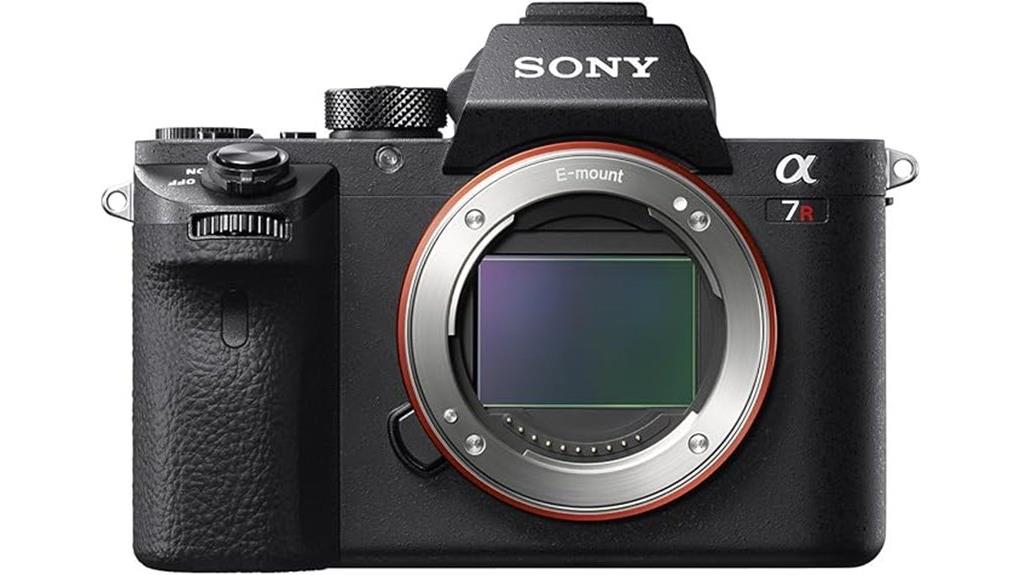
Cutting through the marketing, the Sony a7R II is a professional-grade, full-frame mirrorless camera designed for high-resolution stills and 4K video capture. You’ll find its target audience is pros who need a durable, high-detail platform: commercial photographers, landscape shooters, and hybrid stills/video creators. Core specs include a 42.4MP back-illuminated full-frame sensor, 14-bit RAW, ISO to 102,400, 4K UHD with full-pixel readout, fast hybrid AF with 399 phase-detect points, XGA OLED EVF, tilting 3.0" LCD, and world-first 5-axis in-body stabilization. Body-only E-mount form factor, robust build, single SDXC slot. It’s a natural fit for mirrorless camera enthusiasts who rely on specialized gear and accessories.
How the 42.4MP Sensor and 5-Axis IBIS Perform in Real Use
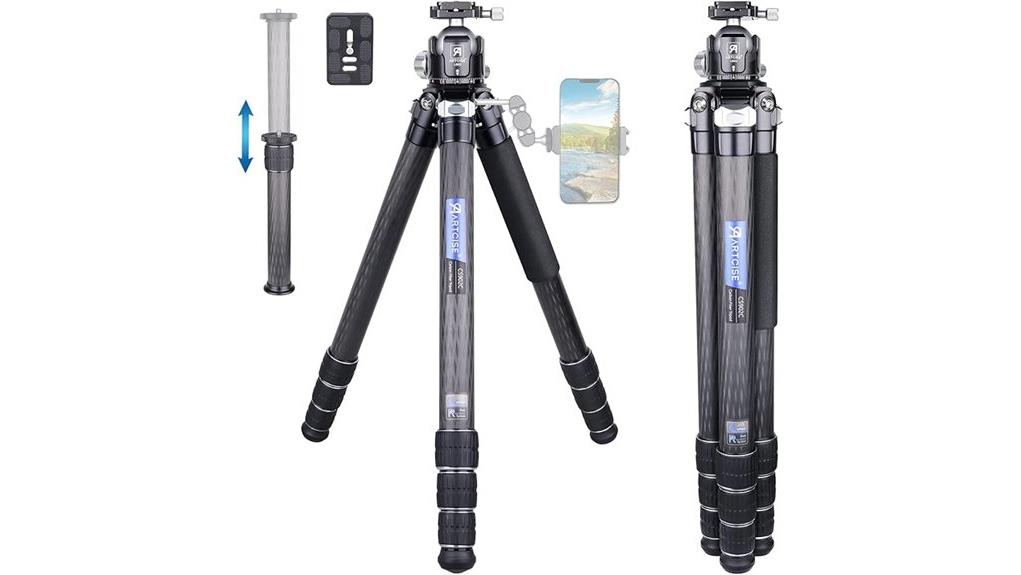
While the 42.4MP back-illuminated sensor delivers exceptional resolving power and tonal latitude, its real-world value depends on pairing it with careful technique and optics that match its resolving capability. You’ll see fine sensor micro details in RAW files—edges, texture, and subtle tonal gradations—when you use sharp primes and stop down modestly. The optimized 5-axis IBIS lets you handhold slower shutter speeds, extending usable exposure without introducing blur; stabilization benefits are clear for low-ISO, high-resolution work. Still, you must mind diffraction, camera motion, and lens quality to fully exploit the sensor’s native 42.4MP fidelity. Choosing a stable, high-quality support like a precision tripod can make it far easier to realize that resolving potential.
Autofocus, EVF, and Screen: Speed, Accuracy, and Usability
Expect the a7R II’s autofocus, EVF, and rear screen to feel purpose-built for demanding work: the Fast Hybrid AF system (399 phase-detect points) delivers broad, reliable subject coverage and responsive tracking, the XGA OLED Tru-Finder EVF gives a crisp, low-latency view with 2.4 million dots and 0.78x magnification for critical composition, and the 3.0-inch tilting LCD supplies clear framing and menu control with 1,228,800 dots. You’ll get fast real time tracking performance in AF-C, accurate eye-detection, and usable AF point density for high-resolution framing. Touch focus gestures add quick, intuitive point selection and AF repositioning. For shooters working with high-resolution files and external displays, pairing the camera with external camera monitors can improve critical focus and composition accuracy.
Video Capabilities: 4K Recording, Codecs, and Practical Limits
Because Sony engineered the a7R II with full-pixel readout and no pixel binning for 4K, you get high-detail UHD video from the full 35mm frame when recording internally (or via clean HDMI), but you’ll hit practical limits in workflow and ISO performance you should plan for. You’ll record 4K UHD with heavy detail, but manage 4K workflows carefully: large files, CPU/GPU demands, and storage throughput matter. Codec limitations include long-GOP XAVC S (MP4) at 100 Mbps and limited bit-depth/color sampling compared with external recorders. Expect noise at high ISO and post needs for grading. Gear Guide for Enthusiast Photographers and Camera Fans highlights related digital camera gear for enthusiasts.
Handling, Build, Battery Life, and Connectivity for Pros
Having covered the a7R II’s 4K capabilities and the workflow demands they impose, you’ll want to contemplate how the camera’s physical design and power/connectivity choices support sustained professional use. The SLR-style mirrorless body offers ergonomic controls with a confident grip and well-placed dials for rapid exposure and AF adjustments. Robust magnesium-alloy construction and Weather sealing resist field conditions. Battery endurance relies on the NP-FW50; expect modest runtimes for prolonged 4K work—carry spares or external power. Connectivity includes USB 3.0, Micro HDMI and Wi‑Fi/NFC for streamlined wireless workflows and tethered transfer when speed matters. For enthusiasts and pros, pairing the camera with essential accessories like replacement batteries and protective gear completes a reliable kit.
Lens Choices and Accessories That Unlock the A7R II
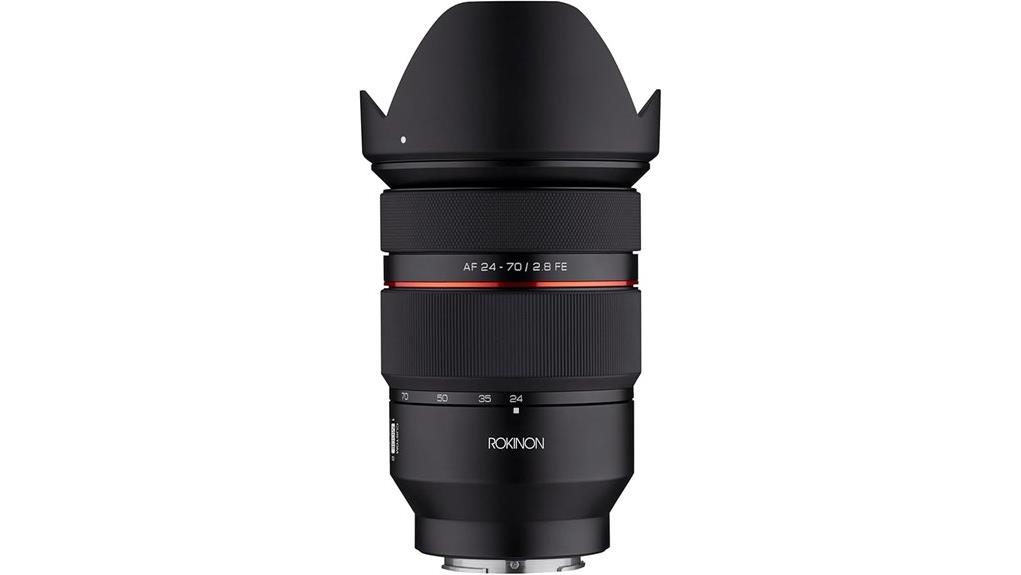
Dialing in the right glass is essential to unlock the a7R II’s 42.4MP resolving power, so you’ll want lenses that match its high-resolution sensor and full-frame coverage. Choose sharp, low-dispersion primes and high-quality zooms with robust MTF performance; prioritize lenses with minimal field curvature and controlled CA to exploit 14-bit RAW detail. Use lens adapters to mount legacy optics—maintain flange distance and electronic coupling where possible. Rigid tripods and precise focusing aids (focus peaking, magnification) matter. Adopt multi-coat filter systems and slim circular polarizers/NDs to avoid vignetting and preserve contrast at high resolution. Consider high-quality lens mount adapters to expand creative options while preserving optical alignment and functionality.
Pros, Cons, and Who Should Buy the Sony A7R II
While the a7R II’s 42.4MP sensor and 5-axis in-body stabilization deliver class-leading resolution and usable handheld detail, you should weigh those strengths against trade-offs in speed and workflow. You’ll get superb image quality, 14-bit RAW depth, reliable AF coverage, and 4K oversampled video for studio and landscape work. Drawbacks include modest 5 fps burst rate, single card slot, and heavy RAW files that tax editing and storage. Buy it if you prioritize resolution, dynamic range, and professional ergonomics. Consider budget alternatives for faster action shooting; expect strong resale value among pros and enthusiasts. Also consider pairing it with a high-speed memory card reader to speed transfers and streamline your workflow.
Some Questions Answered
Does the a7R II Support In-Camera Focus Stacking or Bracketing for Focus?
No — the a7R II doesn’t offer native in camera stacking or dedicated focus bracketing. You’ll need to capture multiple frames manually by adjusting focus between shots or use third-party tethering software or intervalometers that can change focus via supported lenses. After shooting, you’ll stack those images in post using focus-stacking software. The camera does provide precise manual focus control, focus peaking, and fine AF adjustments to help you capture the required focal steps.
Can the Camera Be Used as a High-Resolution Webcam via USB or HDMI?
Yes — you can use it as a high-resolution webcam, but you’ll need proper setup. You’ll use USB tethering with Sony’s software for basic live view, though resolution and latency are limited. For full-quality clean output, use HDMI capture via the camera’s Micro HDMI output into a capture device; set clean HDMI, disable auto power-off, and make certain continuous power. Expect heat and recording limits during extended streaming. When exploring the sony alpha a6000 photography features, you'll find impressive autofocus capabilities and continuous shooting speeds that make it ideal for action shots. Additionally, its interchangeable lens system allows for creative versatility, enabling photographers to adapt the camera to various lighting conditions and subjects. Whether you're shooting in a studio or on the go, the compact design enhances portability without sacrificing performance.
Are There Firmware Updates That Significantly Change Performance or Features?
Yes — firmware enhancements and feature rollouts have improved the a7R II over time. You’ll get AF refinements, stability fixes, video codec tweaks and connectivity reliability updates that boost real-world performance. Sony’s releases rarely add major new hardware features, but they do optimize autofocus, exposure behavior, and compatibility with lenses/accessories. Stay current: check Sony’s support page, follow version change logs, and apply updates to maintain peak operation and compatibility.
How Well Does the Camera Handle Long-Term Sensor Fungus or Dust Prevention?
You’ll find the a7R II handles sensor maintenance reasonably well but won’t prevent fungus alone. Use the built-in sensor-shift cleaning and occasional manual wet cleaning to remove dust; they’re effective for particles. For long-term fungus prevention you’ll control humidity in storage and use silica gel packs or a dehumidified cabinet. Regularly inspect, service professionally if needed, and avoid prolonged exposure to high-humidity environments to minimize fungal growth.
What Third-Party Batteries or Grips Are Reliably Compatible?
You can reliably use Wasabi Power batteries (NP-FW50 equivalents) and the Meike ProGrip battery grip with the a7R II; both maintain proper contacts and support battery switching. Wasabi Power offers high-capacity, protected cells; Meike’s ProGrip provides dual NP-FW50 slots, sturdy shutter/AF controls, and pass-through charging compatibility. Test any third-party unit before critical shoots, verify firmware compatibility, and buy from reputable sellers to avoid power or contact issues.