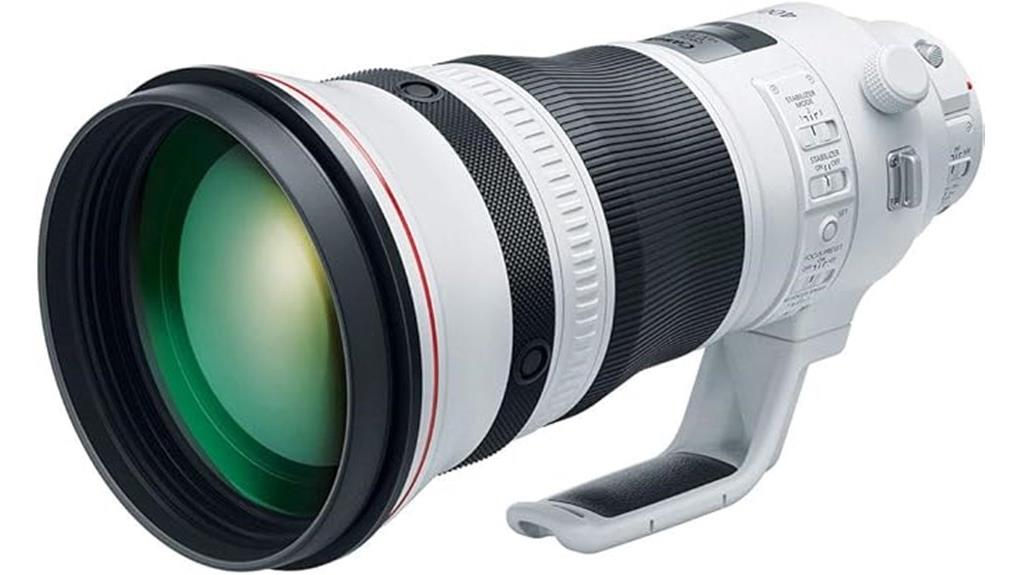
You’ll find the Canon EF 400mm f/2.8L IS III USM delivers class-leading sharpness and micro-contrast at f/2.8, with fast, quiet AF on modern EOS bodies and effective IS that steadies handheld panning for wildlife and sports. It’s noticeably lighter and better balanced than earlier 400mm Canons, with pro-grade sealing, refined coatings, smooth nine-blade bokeh, and reduced chromatic aberration. It’s expensive but holds resale value—keep going to see detailed comparisons, use cases, and alternatives.
Some Key Takeaways
- Exceptional edge-to-edge sharpness at f/2.8 delivers class-leading high-frequency detail for wildlife and sports.
- Fast, quiet AF on modern EOS bodies provides immediate subject acquisition and reliable continuous tracking.
- Effective IS enables steadier handheld reach and improved panning for birds and action, reducing reliance on tripods.
- Durable, lighter build with professional weather sealing and balanced mounting improves handling and gimbal use.
- High price and remaining weight are trade-offs against top optical performance; used older versions or TC combos are alternatives.
Real-World Performance: Sharpness, Autofocus Speed, and Image Stabilization
Although the EF 400mm f/2.8L IS III USM pares weight and refines optics compared with earlier versions, you'll notice its sharpness, AF speed, and stabilization deliver the professional performance you'd expect from a flagship super-telephoto. You’ll resolve exceptional high frequency detail across the frame at f/2.8, outperforming many prior Canon 400mm iterations and rival primes in edge contrast. AF is fast and quiet; subject acquisition is immediate on modern EOS bodies. The IS gives steady handheld reach and, combined with AF algorithms, improves tracking reliability for birds and fast sport. Contrast and micro-contrast remain consistent under varied light. This makes it an excellent choice for photographers focused on telephoto performance.
Build, Handling, and Weather Resistance for Pro Field Use
When you shoulder the EF 400mm f/2.8L IS III USM, its pared-down weight and balanced construction make long shoots noticeably less fatiguing than with previous Canon 400mm iterations, yet it still feels reassuringly robust for pro use. You’ll notice improved weight distribution that centers mass toward the mount, reducing torque when handholding. The tripod collar is refined and tightens securely, enabling smooth panning on gimbals. Grip texture on focus and zoom rings is subtle but positive, aiding control with gloves. Weather resistance is professional-grade: dust- and water-resistant seals and heat shielding increase reliability, enhancing carry comfort on extended assignments. It's a strong choice for those who need a lens that pairs well with heavy-duty tripods in demanding outdoor conditions.
Optical Features Explained: Coatings, Bokeh, Chromatic Aberration, and Flare Control
Because Canon refined the optics and coatings on the EF 400mm f/2.8L IS III USM, you'll see tangible improvements in contrast, flare suppression, and micro-contrast compared with earlier versions. You’ll notice Super Spectra and Air Sphere coating technologies reduce ghosting and improve highlight control, aiding flare mitigation in backlit scenes. The nine-blade diaphragm yields smoother bokeh rendering with tight, pleasing out-of-focus discs at f/2.8, while fluorine front coatings ease cleaning. Chromatic suppression benefits from optimized glass and element placement, cutting lateral and longitudinal CA compared with prior models. Overall, optical refinements give cleaner images with minimal artifacts. Consider pairing this lens with a collapsible backdrop to simplify on-location shooting and control backgrounds.
Use Cases and Sample Setups: Wildlife, Sports, and Landscape Workflows
If you need a go-to super-telephoto for wildlife, sports, or isolated landscape details, the Canon EF 400mm f/2.8L IS III USM delivers a blend of reach, speed, and image quality that maps well to each workflow. For wildlife you’ll favor handheld panning with IS and fast AF; add a monopod for long watches to balance mobility and stability. For sports you’ll push high shutter speeds and continuous AF; tethering and quick prime lenses beat heavy zooms for action. For landscapes use isolated compression from distance; evaluate tripod compatibility for long exposures and apply lowlight techniques—wide aperture, IS, and high-ISO management—to retain sharpness. Consider also matching the lens to a robust tripod head and leg set for optimal support and balance when shooting from a static position with long glass tripod compatibility.
Buying Verdict: Pros, Cons, Alternatives, and Who Should Buy This Lens
Although it's a serious investment, the Canon EF 400mm f/2.8L IS III USM earns its keep for photographers who prioritize ultimate reach, speed, and image quality, delivering class-leading sharpness, reliable AF, and effective optical stabilization in a remarkably lighter, more durable package than previous iterations. You'll get pro-grade build, improved coatings, and excellent low-light performance, though cost and weight remain barriers. Consider budget alternatives like used older 400/2.8 versions or third-party 300/2.8 plus TC for savings. Strong resale value cushions upgrade paths. Buy this if you need consistent pro-level results for wildlife, sports, or high-end editorial work. Our site also recommends choosing the right tripod head to maximize stability when shooting with heavy telephotos, especially opting for heads designed for tripod heads to improve balance and tracking.
Some Questions Answered
Is This Lens Compatible With Full-Frame and Crop-Sensor Canon Bodies?
Yes — you can use it on both. Full frame compatibility is native: it covers the full-frame sensor, giving true 400mm focal length and maximum f/2.8 light-gathering. On crop bodies you'll see crop sensor behavior: an APS‑C camera effectively crops the frame, increasing the field‑of‑view equivalence to about 640mm while retaining the f/2.8 aperture and image quality. You’ll compare reach versus depth‑of‑field differences when choosing bodies.
Can the Lens Be Used Handheld for Extended Periods?
Yes — you can use it handheld for extended periods, but handheld endurance depends on technique and strength. The lens is lighter than prior versions, yet its 6.3 lb mass still taxes you; balancing techniques like using a monopod, gimbal, proper grip with the tripod collar forward, and bracing your elbows reduce fatigue. Comparatively, it’s more manageable than older 400mm f/2.8s, though you’ll still want support for long shoots.
What Tripod/Monopod Collars Are Recommended?
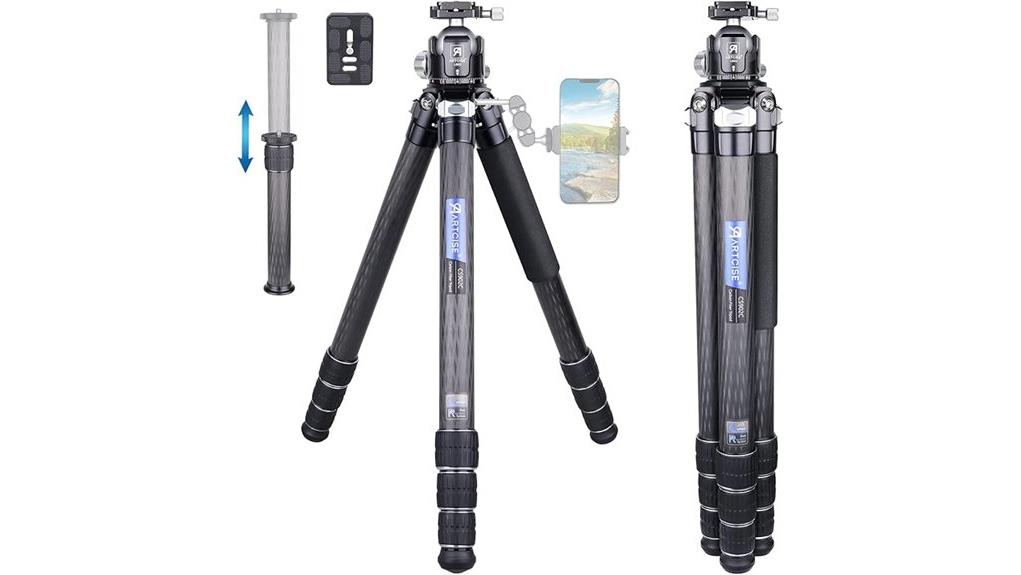
You should use an Arca compatible collar with a Dual foot tripod or a Carbon fiber collar monopod for best balance. Compare options: Arca compatible collar plates offer seamless Quick release mount integration; Dual foot tripod collars give stability for long sessions; Carbon fiber collar models cut weight for handheld mobility. Choose manufacturers with precision machining and good load ratings so your Quick release mount stays secure and vibration-free during shooting.
Does the Lens Accept Teleconverters and Retain Autofocus?
Yes — you can use Canon teleconverters with this lens, and teleconverter performance varies by model. You’ll retain autofocus with a 1.4x on most Canon bodies, preserving good autofocus reliability; with a 2x the effective aperture narrows to f/5.6, so autofocus may work on higher-end bodies but becomes less reliable on entry-level cameras. Compare results: 1.4x offers better balance of reach, sharpness, and autofocus reliability than 2x.
How Long Is the Manufacturer Warranty and Service Process?
You get a 1 Year Manufacturer Limited Warranty; that’s the warranty duration. If you need repairs, you’ll contact Canon US for authorization and shipment; service turnaround often ranges from a few days to several weeks depending on parts and workload. Compared with extended plans, this standard warranty is shorter; you’ll want to document issues and ask Canon for estimated service turnaround upfront so you can compare repair timelines and costs before committing.