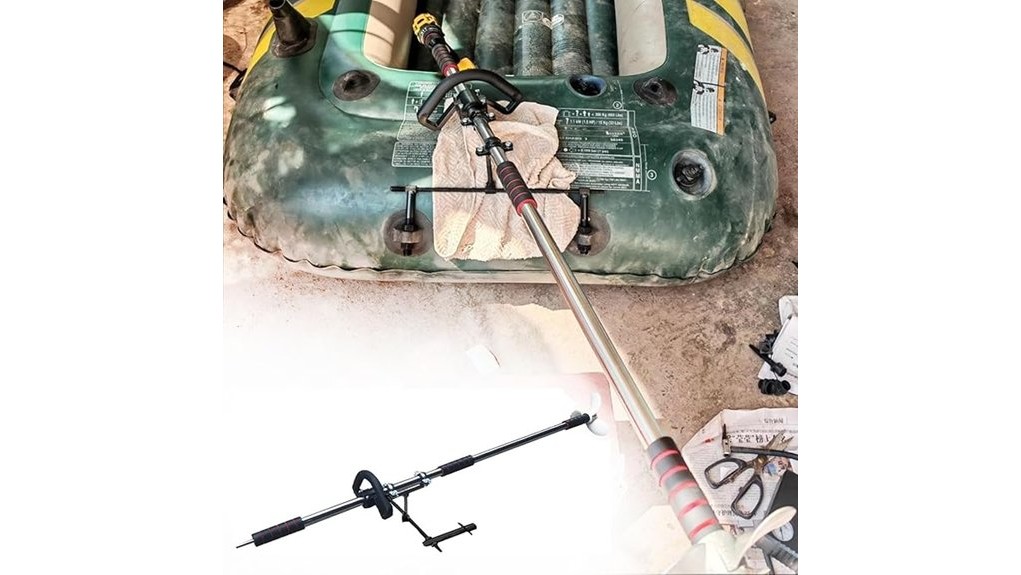
You’ll get a compact, no-nonsense backup that turns a compatible cordless drill into dependable short-hop propulsion for canoes, kayaks, inflatables, and dock work. It clamps to the hull, uses a 16 cm blade on a 100 or 125 cm aluminum shaft, and gives steadier thrust than paddling when paired with a high-torque drill. Expect limited torque in rough water, possible drill heat, and clamp wear; keep spare fasteners and a charging plan handy if you want more details.
Some Key Takeaways
- Converts a standard cordless drill into a compact trolling motor, offering quick emergency propulsion for canoes and kayaks.
- Best for short hops, dock work, and calm-water emergencies rather than sustained or heavy-wake use.
- Works best with high-torque drills and moderate RPMs to maximize thrust and avoid cavitation or overheating.
- Clamp or adjustable bracket mounting must match hull thickness and include secure fasteners for reliable performance.
- Pros: lightweight, inexpensive backup; cons: limited torque, potential drill overheating, and clamp durability concerns.
How the Canoe Drill Propeller Works and Who It’s For
Because it converts an ordinary cordless drill into a trolling motor, the Canoe Drill Propeller gives you quick, reliable propulsion without bulky equipment. You attach the propeller to your drill, mount the shaft to the hull, and control thrust by easing the drill trigger—manual operation that’s intuitive. It suits solo anglers, beginner paddlers learning gear-based propulsion, and anyone needing a lightweight backup. You’ll appreciate stealth mode for quiet approaches to fish and the compact form for campsite transport. Use it for short hops, dock work, or emergency propulsion when paddles or motors fail; it’s practical, portable, and straightforward. It’s an ideal addition for water enthusiasts looking to complement kayaks and other gear with compact propulsion options like dry bags.
Key Specs, Materials, and Mounting Options to Check
Now that you know how the drill propeller functions and who benefits, focus on the tangible specs, materials, and mounting options that determine performance and fit. Check blade length (16 cm), overall shaft length options (100 or 125 cm), and package weight to assess weight distribution and balance on your hull. Verify aluminum alloy construction for corrosion resistance and stiffness. Confirm clamp capacity (up to 7.5 cm) or adjustable bracket (up to 30 cm) compatibility with your craft. Inspect included mounting hardware, ask about spare fasteners, and set a clear maintenance schedule to prevent seizing and prolong service life. Also consider compatible accessories like deck-mount pumps and other essential gear to ensure a complete setup for on-water emergencies and maintenance, and consult guides on deck-mount pumps for matching equipment.
Real-World Performance: Speed, Maneuvering, and Battery/Drill Fit
When you pair the Canoe Drill Propeller with a high-torque cordless drill, expect noticeably higher cruising speeds and steadier thrust than paddling alone, but actual pace depends on drill RPM, propeller load, hull shape, and water conditions. You’ll notice improved thrust efficiency at moderate RPMs; full throttle often wastes battery and cavitates the 16 cm blades. Maneuvering is intuitive—pivot the mount for single-handed steering—but responsiveness varies with hull beam and mounting position. Check drill ergonomics: balance, trigger feel, and battery size affect control and fatigue. Match short, powerful batteries for burst speed; long batteries for sustained trolling. For extended trips on lakes or coastal waters, consider carrying an emergency power bank and compatible charging gear for waterproof battery management.
Pros, Cons, and When to Use It as an Emergency Paddle
Balancing portability with practicality, the Canoe Drill Propeller gives you a compact, lightweight backup that converts a common cordless drill into a usable trolling motor and emergency paddle—offering faster, steadier thrust than solo paddling and easy single-handed steering via the pivot mount. You’ll benefit from rapid deployment, broad craft compatibility, and low weight for portaging. Cons include limited torque on heavy wakes, potential drill overheating, and durability concerns around the clamp under repeated stress. Use it for short transits, dock maneuvers, and lake/backwater emergencies. Follow storage tips: dry, ventilated, clamp-released and blade-covered to prevent corrosion and deformation. It’s an especially handy option for propeller kayak gear enthusiasts looking for compact backup propulsion.
Should You Buy It? Buying Tips, Compatibility Checklist, and Final Verdict
If you want a lightweight, low-cost backup that turns a common cordless drill into usable thrust for short trips and dock work, the Canoe Drill Propeller is worth serious consideration; it’s best suited if your craft is small-to-medium (canoe, kayak, inflatable, pontoon, or rowboat), you already own a compatible drill, and you prioritize portability over long-range power. Buy if you need emergency thrust, simple mounting, and rust-resistant aluminum. Checklist: drill chuck size, clamp/bracket fit, blade length, and craft side clearance. Purchase timing: buy before season or long trips. Confirm seller warranty transfer and return policy. Final verdict: practical, budget backup. Consider pairing it with a compact kayak cart to simplify shore-to-water transport.
Some Questions Answered
Can Children Safely Use This With a Cordless Drill?
No, children shouldn’t operate it alone; they need adult supervision and strict drill safety measures. You should only let a responsible adult handle the cordless drill, secure the mount, and set speed. If a child helps, keep them at a safe distance, wear life jackets and cut-resistant gloves, and use the propeller only in calm, shallow waters. Always disconnect the drill when adjusting or storing the propeller and follow manufacturer warnings.
Is the Propeller Legal on Local Waterways?
You’ll need to check local boating regulations; legal status varies by jurisdiction. Many inland lakes and ponds allow auxiliary motors, but some areas restrict motorized propulsion or require registration, lights, or horsepower limits. Treat the drill propeller as an auxiliary motor when reviewing rules, carry required safety gear, and confirm with local authorities or the waterway manager before use. Noncompliance can mean fines or confiscation.
Does Saltwater Exposure Void the Warranty?
Yes — saltwater exposure can void the warranty. You’ll need to check the manufacturer’s warranty corrosion clauses and service exclusions; prolonged contact with saltwater accelerates pitting and electrochemical damage that many warranties exclude. If you plan saltwater use, rinse and dry the unit after every outing, document maintenance, and contact Oracra for pre-approval or paid service options to avoid denied claims under service exclusions and warranty corrosion terms.
Can It Be Stored Assembled in a Small Carry Bag?
Yes — you can store it assembled in a small carry bag for compact storage and assembled convenience, provided the bag fits the chosen length (100 cm or 125 cm) and protects the propeller blades. You should secure moving parts and avoid crushing the aluminum alloy or blades. For long-term storage, loosen clamps and keep dry to prevent wear. Carrying it assembled saves time and keeps you ready for quick deployment.
Are Replacement Propeller Blades Available Separately?
No—replacement propeller blades aren’t listed as sold separately; you’ll need to contact the seller for propeller maintenance parts or full-unit replacements. Check with customer support about blade compatibility and spare availability, providing model (56445) and part number (58548). If they can’t supply spares, you’ll want to source compatible 16 cm blades from third-party marine parts sellers, confirming shaft fit and mounting style before purchase to guarantee proper compatibility.