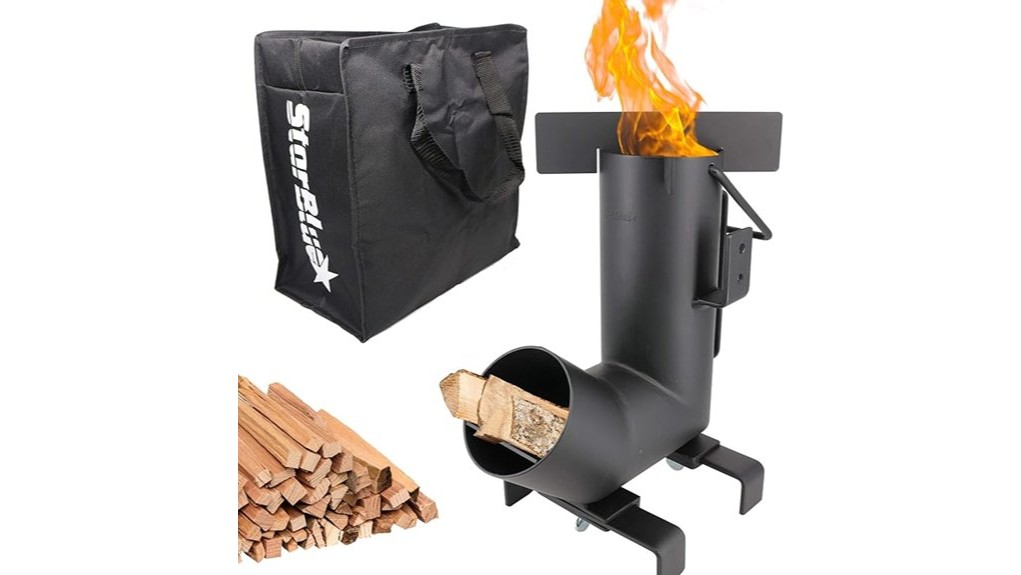
You’ll like the Starblue Camping Rocket Stove if you want a compact, wood-burning cooker that packs flat and boils a liter in about 6–10 minutes. It collapses for transport, uses small sticks or fire cubes, and its insulated chamber and flame ring focus heat for efficient simmering. Low-carbon steel and solid welds give dependable stability and durability, plus a carry bag and simple manual are included. Keep going to see setup tips, performance notes, and safety advice.
Some Key Takeaways
- Compact, collapsible low-carbon steel body offers durable, rust-resistant construction and convenient flat-packing for transport.
- Efficient insulated fuel chamber and focused flame ring boil 1 L water in about 6–10 minutes using small sticks.
- Cross stand and wide grate provide stable pot support on uneven ground for safe simmering and cooking.
- Performance depends on fuel size and draft; predictable long burns with ember management and optional fire starter cubes.
- Best for camping and emergencies—requires practice to feed fuel, wind can affect flame, follow safety and site selection tips.
How the Starblue Camping Rocket Stove Works and What’s Included
When you light the Starblue camping rocket stove, it channels air through its insulated fuel chamber to create a concentrated, efficient burn that uses small sticks and twigs instead of gas. You’ll get a collapsible stove, cross stand, wide grate, and carrying bag—parts pack flat for transport. Assembly instructions are simple: unfold the frame, drop in the grate, and lock the stand. You’ll notice the rust-resistant low-carbon steel feels sturdy and balanced for varied cookware. A brief manual covers maintenance and warranty details so you can register and keep proof for long-term use and support. Designed with compact, portable heat shields for safer operation in camp settings, it complements other stove safety accessories.
Real-World Performance: Heat, Fuel Efficiency, and Burn Time
Although it’s compact, the Starblue rocket stove puts out surprisingly steady heat that boils a liter of water in roughly 6–10 minutes under normal outdoor conditions, depending on wind and fuel size. You’ll notice focused heat distribution under your pot, with a compact flame ring that minimizes heat loss. Fuel efficiency is strong: small sticks and twigs sustain a steady simmer for extended cooking without constant feeding. Burn time depends on fuel chunk size and draft, but the large chamber stretches runs. Practice ember management—stoke gently, shift larger embers to sustain heat—and you’ll get predictable, efficient performance. For quick starts and consistent ignition, pair the stove with reliable fire starter cubes when packing for camping.
Durability and Design: Materials, Stability, and Portability
Because the stove’s body is built from rust-resistant low-carbon steel, you can expect a tough, long-lived tool that stands up to repeated outdoor use. You’ll notice solid welds and a compact frame that resist warping and corrosion. The cross stand and wide grate keep pots stable on uneven ground, so you won’t constantly readjust cookware. The fuel chamber’s robust edges handle stirring and cleaning without deformation. When you break it down, the collapsible panels pack flat for portable storage and the included bag makes transport straightforward. Overall, the design balances durability, stability, and convenient portability for outdoor use. If you also need reliable inflatables or accessories for your trip, consider compact camping air pumps to round out your gear.
Use Cases and Setup: Cooking, Packing, and Fuel Tips for Camping
Having a rugged, collapsible stove makes packing and cooking at camp straightforward, and you’ll find it handles a wide range of outdoor tasks. You’ll plan meals around quick-boil pots and simmering pans; meal planning cuts weight and fuel use. Pack the flat stove in its bag with tinder, a basic tool kit, and extra dry kindling. Choose site selection wisely: level ground, clear of overhangs and away from tents. Follow safety practices — maintain distance, control airflow, and fully extinguish embers. Store fuel securely and observe wildlife awareness by keeping scraps sealed to avoid attracting animals. Consider pairing the stove with butane canisters for compact, reliable fuel.
Should You Buy It? Pros, Cons, and Who It’s Best For
If you want a reliable, no-fuss camp stove that runs on sticks and packs flat, this rocket stove is worth serious consideration — it’s tough, efficient, and built for real outdoor use. You’ll like the low-carbon steel durability, stable cross stand, and large fuel chamber that burns small twigs cleanly. Pros: collapsible portability, long burn time, no gas needed. Cons: heavier than tiny can stoves, takes practice to feed fuel, and wind can affect flame. For budget buyers, a cost comparison often favors this for multi-use trips; user testimonials praise reliability for camping and emergencies. It’s best for practical outdoorspeople. If you’re weighing options for campfire gear, consider collapsible fire pits for camping as an alternative that also packs flat.
Some Questions Answered
Is a Fire Permit Required to Use This Stove in National Parks?
Usually yes — you’ll need to check campground regulations and permit requirements before using any stove in national parks. Rules vary by park, season, and fire danger level; some allow stoves without permits, others require a fire or campfire permit, and some ban open flames entirely. Contact the specific park office or check its website for current restrictions, permitted fuel types, and any required permits to avoid fines or closures.
Can It Boil Water to Make It Safe to Drink?
Yes — you can boil water to make it safe to drink using this stove. You’ll get a fast boil time thanks to efficient heat transfer and concentrated flame, so small twigs will do. Expect minimal smoke, which helps preserve water taste, though using a clean pot matters. You’ll still need to filter murky water first and boil for the recommended duration (rolling boil) to guarantee pathogens are killed.
Are Replacement Parts or Accessories Available Separately?
Yes — you can buy replacement components and accessory kits separately. You’ll find spare cross-stand parts, grates, and fuel-chamber pieces from the manufacturer or third-party sellers, plus accessory kits with carrying bags, pot supports, and maintenance tools. Check the seller’s parts list and compatibility notes before ordering. Keep receipts and photos for warranty claims, and you’ll extend stove life without guessing which piece fits.
How Loud Is the Stove While Burning Wood or Twigs?
It’s quiet in use; you’ll notice mostly the crackle of small sticks and twigs rather than loud mechanical noise. The stove’s design promotes quiet operation, blending with ambient noise like wind, birds, or conversation. You won’t hear a fan or gas hiss, just natural combustion sounds that stay low. In campsites or backyards, it won’t dominate the soundscape, so you can cook without creating intrusive noise.
Does It Produce Sparks That Could Start Wildfires?
No — it rarely produces loose sparks that spread, but you should still be cautious. The rocket design limits spark generation and focuses flames inward, and ember containment is good thanks to the deep fuel chamber and grate. You’ll still want to use it on bare ground or a fireproof pad, keep water nearby, avoid dry windy conditions, and never leave it unattended to minimize any wildfire risk.