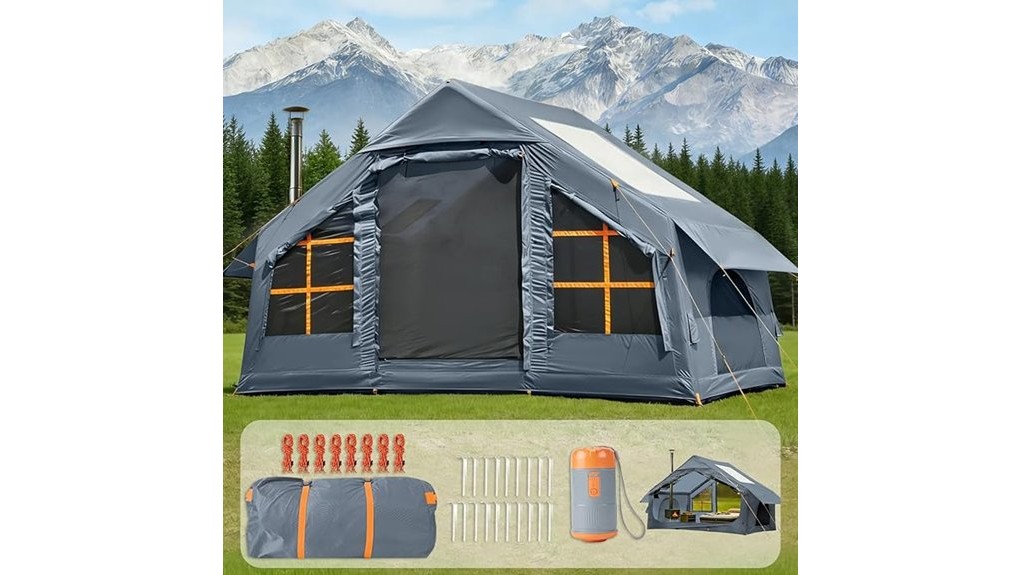
You’ll get a roomy, car-camp–ready inflatable tent that pops up in about five minutes with the included electric pump and gives full headroom for standing, cots, and a small table. Stake the footprint, attach the pump, inflate beams until firm, clip panels, and add guy lines; teardown is just as fast. It’s heavy for backpacking but durable 210D fabric with a 3000 mm rating resists rain and wind. Keep going to learn test results and setup tips.
Some Key Takeaways
- Inflatable tents set up in about five minutes using an included electric pump, eliminating pole assembly.
- Ensure ground is level, stake four corners, then inflate until beams are firm but not overinflated.
- Ventilation via doors, mesh windows, and a skylight reduces condensation and improves comfort.
- 210D Oxford fabric with 3000 mm waterproofing offers strong weather protection, but seams may need resealing.
- Best for car camping and family use; heavier weight and puncture risk make them less ideal for backpacking.
Quick Verdict: Setup Time, Capacity, and Who This Tent Suits
While you’ll appreciate that this inflatable tent inflates in about five minutes with the included electric pump, its real strength is the space: at 142 × 98 × 90 inches it gives adults full headroom and plenty of floor area for family gear. You’ll get genuine family capacity for sleeping and living; layout options fit cots, a small table, and dedicated gear storage corners. Quick teardown keeps breakdown simple at the end of your trip. Check weight considerations before hauling—packed weight is higher than a solo backpack tent, but practicality and space trade favor family outings and car camping. Consider the tent’s packed weight relative to your transport and trip type.
How to Inflate and Finish Setup in Five Minutes
Start by laying the tent footprint flat on level ground and staking the four corners so the floor won’t shift during inflation. Unpack the supplied electric pump, attach its hose to the main valve, and power on—watch pressure rise until beams are firm but not overinflated. Clip or zip body panels as you go, then install guy lines and use provided stakes plus additional anchor strategies—sandbags or deadman anchors on soft ground—to secure corners and wind points. Finish by checking zippers, staking vestibules, and performing basic pump maintenance: clean filter, store dry, and test before next use. For faster and more comfortable setup, consider using pop-up tent gear like quick-deploy frames that simplify pitching and improve stability.
Weatherproof Tests: Rain, Wind, Snow, and Seam Performance
Because real weather decides whether gear performs, you’ll want objective, repeatable tests for rain, wind, snow, and seams before trusting the tent on a trip. You check fabric durability with abrasion and UV exposure, then run a 3000 mm hydrostatic spray to confirm waterproofing and seam sealing effectiveness; reapply seam sealing where seepage appears. For wind load testing, anchor the inflated frame and measure deflection at staged gusts, noting airbeam recovery and zipper integrity. In snow trials, pack weight on the roof and assess thermal insulation performance and drainage. Record metrics, photos, and retest after repairs. Also test the tent with various footprint materials to ensure the groundsheet protects the floor from abrasion and moisture.
Living in the Tent: Ventilation, Headroom, HVAC Ports, and Comfort
If you plan to spend extended time inside, the tent’s generous 142 × 98 × 90 inch interior and full standing height make moving, changing, and organizing gear much easier than in typical dome tents. You get excellent standing clearance throughout, so packing and dressing are simple. Ventilation relies on two doors, four mesh windows, and a built-in skylight; use them strategically for airflow management to avoid condensation. For temperature control, the tent includes HVAC ports for AC and a stove jack for safe heating—both sealed when unused. Overall comfort is high: breathable mesh, configurable vents, and roomy layout reduce fatigue. This multi-room design also mirrors common spacious comfort features found in multi-room tent setups.
Value Assessment: Materials, Included Pump, Use Cases, and Buy-or-Skip Decision
Having covered comfort and ventilation, let’s look at what you get for the price: a heavy-duty 210D Oxford shell with a 3000 mm waterproof rating, an included electric air pump for the advertised 5-minute setup, and practical features like HVAC ports and a stove jack that broaden seasonal use. You’ll appreciate roomy dimensions and quick inflation, but weigh durability tradeoffs: inflatable beams simplify setup yet risk punctures and long-term seam wear. For value, factor intended use—weekend family trips, glamping, or four-season needs. Follow maintenance tips: clean, dry, patch promptly, and avoid abrasive surfaces to extend lifespan. Consider browsing rooftop tent gear to match accessories and mounting options to your vehicle and camping style.
Some Questions Answered
How Loud Is the Included Electric Air Pump During Inflation?
The pump is moderately loud during inflation; you’ll hear steady motor noise but it’s not painfully loud. Noise level is comparable to a small shop vacuum at a few feet away, and it runs for about 3–5 minutes per inflation cycle. Power draw is low, meant for portable use with a car adapter or household outlet. You’ll want to avoid inflating late at night near quiet campsites to keep disturbance minimal.
Are Replacement Inflatable Beams or Repair Kits Available?
Yes — you can get replacement beams and repair kits. You’ll usually find inflatable replacement beams and patch repair kits from the manufacturer or third-party sellers. Order matching beams by model to guarantee fit, and grab a PVC/TPU patch kit, adhesive, and valve tools for quick fixes. Keep a spare repair kit in your pack, follow patch instructions precisely, and test repairs before heading out to avoid surprises.
Can the Tent Be Machine-Washed or Spot-Cleaned Only?
You should spot-clean only; the tent isn’t machine washable. To protect fabric care and waterproof coatings, use mild soap, lukewarm water, and a soft brush for soiled areas. Rinse thoroughly and air-dry completely before packing. For the PVC door and windows, wipe gently to avoid scratches. For stubborn stains, use a specialized tent cleaner and test a small area first. Avoid bleach, hot water, and machine agitation.
Does the Tent Include Stakes and Guy Lines for Anchoring?
Yes — the tent includes stakes and guy lines so you won’t rely solely on air beams; stake necessity depends on conditions. You’ll use stakes for firm anchoring on soil and the supplied guy lines to tension the fabric in wind. For hard surfaces, you’ll use weighted anchors or sandbags instead. Always deploy the guy lines and stakes in gusty weather to stabilize the tent and protect seams and zippers.
How Heavy Is the Packed Tent for Car or Backpack Transport?
About 25–30 pounds when packed, so you can handle car transport easily but it’s bulky for long backpack hikes. You’ll get a lightweight carry feel for short carries to camp, though packed volume is fairly large because of the pump, poles, and fabric. Expect a duffel-sized package that fits trunks and rooftop carriers; use car transport or short portages rather than full backpacking trips for comfort and practicality.