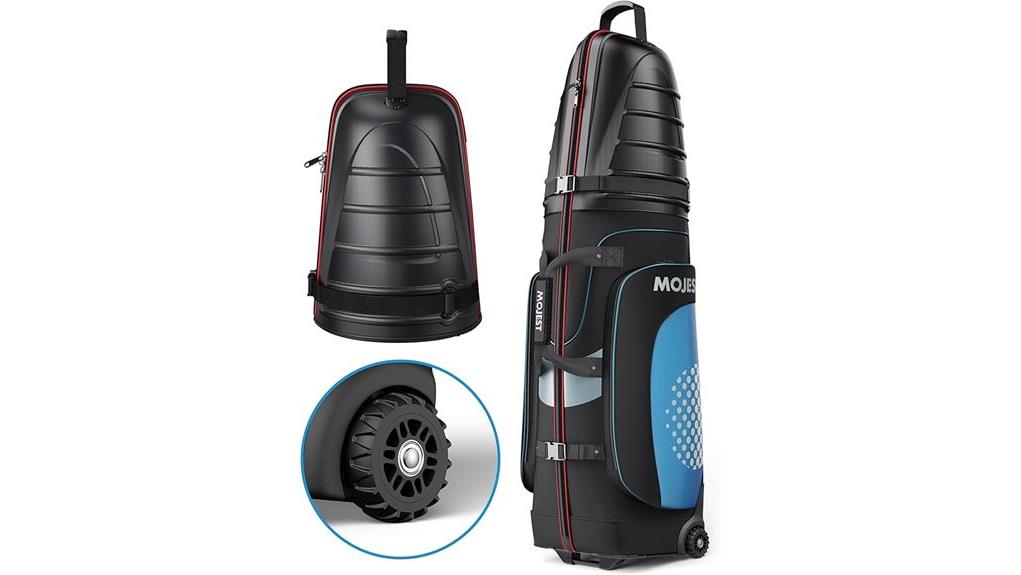
You’ll want a wheeled golf travel bag with ABS hard‑shell protection over club heads plus 1680D nylon sides, thick cushioning under the shell and in the base, and two fixing straps to immobilize clubs. Pick off‑road grade wheels, reinforced base materials and quality axles to survive rough tarmac and airline handling. Check 52″ capacity, top divider diameter, secure handles and shoulder strap for lifts. Keep zippers locked and pockets labeled, and more tips follow. turnway foldable golf travel bag details should also include lightweight construction for ease of transport and stylish design options to suit different preferences. It’s ideal to seek additional features like easy-access pockets for quick storage of essentials and a weather-resistant exterior to protect your gear in various conditions. Remember, investing in a quality travel bag can greatly enhance your golfing experience while traveling.
Some Key Takeaways
- Prioritize hard-shell ABS top with thickened cushioning and 1680D nylon sides for impact and moisture protection.
- Choose off-road grade wheels, reinforced bottom shell, and quality axles for durability and smooth airport handling.
- Verify 52″ length capacity, divider top diameter under 11″, and two fixing straps to immobilize a full club set.
- Test handles, shoulder strap, and rolling/handle comfort for ergonomic lifting and terminal navigation.
- Pack shoes in a side shoe bag, secure fragile items in padded pockets, and label with contact info for claims.
How to Pick an Airline-Ready Wheeled Golf Travel Bag Fast
Start by focusing on the three essentials: protection, mobility, and fit. You’ll evaluate cushioning and waterproofing first to shield clubs, then check capacity—52″ length and divider max—to guarantee your set fits. Prioritize off‑road wheels and reinforced bottoms for airport compatibility and smooth terminal navigation. Use the quick decision making approach: list must-haves, rule out mismatches, test roll and handle comfort. Confirm carrying options, secure straps, and compact storage for layovers. Choose a bag that balances robust protection with easy mobility so you’ll move through airports confidently and without last‑minute surprises. Consider investing in a premium hard-sided case for the best overall club protection and travel durability.
Protection and Materials Compared: ABS Shell vs 1680D Nylon
When you’re weighing protection options for airline travel, ABS hard-shell tops and 1680D ballistic nylon bodies serve different jobs: ABS gives rigid, impact-resistant coverage where clubs are most vulnerable, while 1680D nylon offers tough, abrasion- and moisture-resistant flexibility around the bag’s sides and base. You’ll rely on thickened cushioning under the ABS to absorb strikes; the nylon’s waterproofing keeps moisture and scuffs from reaching gear. Durability comparison favors ABS for blunt impacts and 1680D for wear and weather. Aesthetic differences matter too: hard-shell looks structured and premium, nylon reads utilitarian and low-maintenance. Choose based on your travel risks. Many golfers prefer cases designed specifically for golf club travel to balance protection and style.
Wheels, Mobility, and Reinforced Base: What Lasts Through Airports?
You’ll want wheels and a base that can take repeated knocks, rough tarmac, and long hauls without slowing you down. Choose off-road grade wheels for consistent wheel durability; they roll over uneven surfaces and reduce strain on bearings. Look for a reinforced bottom shell with wear-resistant materials and thickened cushion layers to provide measurable impact resistance at contact points. Durable construction and quality axles prevent wobble and failure during airport handling. Test wheels and base for smooth rotation and shock absorption before buying. That combo—robust wheels plus a reinforced base—gives reliable, long-term protection on trips. Consider also investing in a soft-sided travel case designed specifically for golfers with reinforced club compartments to keep shafts and grips secure.
Carrying, Capacity, and Fit: Straps, Handles, and 52 Bag Sizing
Although a tough exterior matters, how you carry the bag and how well it fits your gear determine daily convenience and travel reliability. You’ll appreciate reinforced top and rubber handles that prioritize handle ergonomics when lifting heavy loads; they reduce hand fatigue and improve control. Use the shoulder strap for short carries, but rely on multiple handles for awkward lifts. The 52″ sizing fits a full set plus cart bag; check divider top diameter—over 11″ may not fit. Two fixing straps and strap tensioning keep clubs immobilized during transit. This combo delivers predictable capacity, secure fit, and easier handling. Golfers who travel frequently will want gear designed specifically for golf travel bags to protect clubs and simplify airline transport.
Real-World Checklist: Packing, Storage, ID, and Maintenance Tips
Start by laying out what you’ll pack and where each item goes so you don’t scramble at the airport: secure clubs with the two fixing straps, place shoes in the separate shoe bag along the side, and tuck fragile items (rangefinder, extra grips, electronics) into padded pockets or between club heads cushioned by the thickened layer. Label your recognizable cardholder with contact info, photograph contents for claims, and lock zippers per airline rules. For storage fold to 22 x 8 x 15 inches. Maintain wheels and off-road treads, perform zipper lubrication, wipe waterproof fabric, and follow laundry care for removable straps. Choose a durable golf cart bag with reinforced stitching and sturdy wheels to match your travel needs, especially if you frequently fly with clubs and accessories like a golf cart bag.
Some Questions Answered
Are Golf Clubs Covered by Airline Baggage Insurance for Damage?
Yes — airlines can cover golf clubs under airline liability, but it’s limited. You’ll need to file damage claims promptly at the airport and keep your club receipts. Check the carrier’s policy for specific caps, deductibles, and required packaging standards. If you used a rugged travel bag with reinforced shell and wheels, mention it; documentation and photos strengthen damage claims. Consider supplemental travel insurance for higher-value sets.
Can I Take Batteries or GPS Devices in the Golf Bag?
Yes — you can usually pack batteries and GPS trackers in your golf bag, but you must follow airline battery restrictions. Carry spare lithium batteries in carry‑on only, protect terminals, and keep devices with installed batteries switched off. Heavy or built‑in batteries may need airline approval. Label any removable cells and secure GPS trackers so they won’t trigger alarms. Check your specific airline and country rules before travel.
Do International Flights Have Different Oversized Bag Fees?
Yes — international flights often charge different oversized bag fees. You should check each carrier’s international surcharges and weight policies before travel, because limits and fees vary by route and class. You’ll want to weigh and measure your bag, factor in potential extra charges for length or excess kilos, and confirm whether protective cases or specialty sports equipment get separate rules to avoid surprises at check-in.
How Early Should I Arrive to Check a Golf Travel Bag?
You should arrive at the airport at least 2.5–3 hours before departure to check in timing for a golf travel bag. Airlines often require extra processing for oversized luggage, so allow extra time for check-in, baggage drop, and security. If traveling internationally or during peak times, get there closer to 3–4 hours. Call your airline ahead to confirm requirements and avoid last-minute stress at the check desk.
Can I Ship a Golf Bag Separately Instead of Checking It?
Yes—you can ship a golf bag separately via a courier service instead of checking it. You’ll pack clubs in the padded, waterproof bag, secure straps and dividers, then book a carrier that handles oversized sports gear. Insure the shipment, track it, and allow extra transit time. Couriers often cost more but reduce airport hassle and damage risk; compare rates and delivery windows before you ship separately.