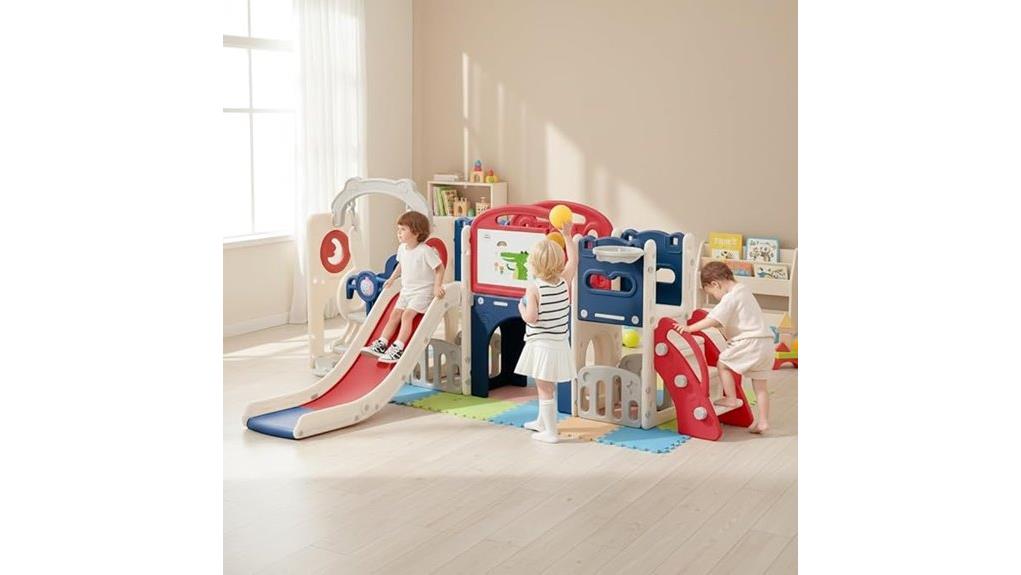
You’ll find 12‑in‑1 toddler playsets give swinging, sliding, climbing, crawling, a hoop and hideout for varied motion and social play, and they’re great for homes, daycares, or small playrooms when you pick sturdy, non‑toxic, slip‑resistant models. Check rounded edges, stable bases, weather‑resistant finishes, and age fit (2–6). Measure footprint and inspect assembly ease and warranties for long use. Keep supervising as skills grow, and keep going to get model picks, setup tips, and safety checklists.
Some Key Takeaways
- Confirm the included 12 features (swing, slide, climbing wall, tunnel, hideout, hoop, etc.) to match your child’s interests and space.
- Prioritize safety: non‑toxic materials, rounded edges, slip‑resistant surfaces, and stability tested against tipping.
- Match age range (typically 2–6 years) and adjustability (removable straps, height‑tolerant platforms) for longer usable life.
- Check durability: UV‑resistant plastics, powder‑coated/galvanized metals, corrosion‑resistant fasteners, and weatherproof finishes.
- Evaluate assembly, footprint, and value: required tools/time, safe clearance space, portability or storage options, and warranty level.
What 12-in-1 Toddler Playsets Actually Include and Who They’re Best For
When you look at a 12-in-1 toddler playset, you’re getting a compact, multi-activity station that typically combines essentials like a swing and slide with extras such as a climbing wall, tunnel, hideout, and a kid-sized basketball hoop—so it supports a range of play styles and skill levels. You’ll find modules arranged for climbing, sliding, swinging, crawling, throwing and imaginative play. It’s ideal if you want one versatile unit for ages 2–6 that fits indoors or outdoors. Expect creative configurations and optional themed accessories to keep interest high as your child grows and develops coordination, strength, and confidence. These sets are perfect for homeowners seeking small yard playsets that maximize fun in limited space and promote outdoor play.
Safety Features to Check: Materials, Edges, Stability, and Age-Appropriateness
After choosing a versatile 12-in-1 playset that fits your space and play goals, you’ll want to check the safety details before letting your child use it. Inspect materials for verified non toxic testing and durable, fade-resistant finishes. Run your fingers along edges to confirm rounded profiles and effective corner cushioning. Test stability by applying pressure to platforms and swings; the base should resist tipping. Make sure slip resistant surfaces on steps and slides to reduce falls. Match the set to your child’s age and abilities, and plan consistent parent supervision during play to keep activities safe and fun. Also perform a routine inspection using a playset inspection checklist to catch wear, loose hardware, and other hazards early.
How These Playsets Support Motor Skills, Balance, and Social Play
Because toddlers learn best through hands-on movement and social interaction, these 12-in-1 playsets give your child a variety of safe, age-appropriate challenges that build motor skills, balance, and cooperative play. You’ll watch them climb, crawl through tunnels, and balance on steps, improving coordination and core strength. Swinging and sliding refine timing and spatial awareness, supporting sensory integration as they process motion and touch. Group elements like the basketball hoop and hideout encourage turn-taking and verbal cues, so kids practice sharing and problem-solving. These cooperative challenges promote confidence and healthy peer interaction while keeping activities fun and developmentally targeted. Many homeowners choose durable playset monkey bars designed for backyard use to extend outdoor playtime and ensure longevity.
Size and Footprint: Choosing a Model for Small Playrooms vs. Backyards
If you’re deciding between models for a cozy playroom or a spacious backyard, start by measuring the available floor space and factoring in safe clearance for movement and slide exit zones. You’ll want compact measurements for tighter rooms—note height, width, and required buffer so swings and climbing elements don’t crowd furniture. For backyards, map a larger footprint that leaves open landing and running space. Use simple spatial planning: sketch dimensions, mark hazards, and imagine traffic flow. Choose a model that fits now and allows growth; modular designs can expand as your child develops without wasting space. Consider investing in durable materials and weather-resistant finishes for outdoor playsets to ensure longevity and safety for kids who enjoy outdoor spaces on their property, and review product categories when comparing options.
Weather Resistance and Durability: What Materials Last Outside
Once you’ve picked a spot that fits the playset, the next big question is how it’ll hold up against sun, rain, and rough play. Look for UV coatings on plastic components to prevent fading and brittleness from sunlight. Choose rot-resistant plastics and powder-coated metals; they resist rust and splintering better than untreated wood. Metal galvanization on frames adds a durable barrier against corrosion in wet conditions. You’ll want corrosion-resistant fasteners and sealed seams where water could pool. These features keep the 12-in-1 playset safe and usable through seasons, preserving appearance and structural integrity for years. For households with children, also consider choosing sealers and finishes labeled kid-friendly to ensure safer outdoor play areas.
Assembly and Maintenance: Time, Tools, and Simple Upkeep Tips
While assembling your 12‑in‑1 playset might seem intimidating, you’ll usually be done in an afternoon with just a few basic tools and a helper to hold parts steady. Plan realistic assembly time by reading the manual first and laying out parts. Keep a compact tool kit—screwdrivers, rubber mallet, adjustable wrench, and pliers—handy. After setup, establish a simple cleaning routine: wipe plastic surfaces with mild soap, rinse, and dry to prevent grime. Perform a seasonal inspection to check fasteners, wear, and sun damage, tightening or replacing parts as needed. Regular, quick upkeep keeps play safe and lasting. Consider keeping a supply of repair kits and replacement hardware for playset repairs so small issues can be fixed promptly and extend the life of the playset.
Portability and Storage: Moving, Folding, and Off-Season Storage Solutions
After you’ve got the playset assembled and on a routine of seasonal checks, think about where it will live when it’s not in use and how you’ll move it if needed. You’ll appreciate a design with compact folding sections or detachable parts that reduce bulk for indoor storage or car transport. Use lightweight dollies or furniture sliders to shift the set without straining your back. Store small pieces and hardware in labeled bags. For off-season protection, pick breathable seasonal covers and place the set on pallets or indoors to prevent moisture damage. Regularly inspect before redeploying to guarantee safety. Consider adding an insulated base or raised platform to keep the play area moisture-free and cozy throughout winter.
Comparing Features: Swing, Slide, Basketball Hoop, Climbing Wall, Tunnel, Hideout
Because each component supports different skills and play styles, comparing the swing, slide, basketball hoop, climbing wall, tunnel, and hideout helps you match the set to your child’s needs and your space. You’ll assess swing mechanics for safety and smooth motion; choose a swing height and restraint that fits motor skills. Check slide ergonomics—gentle slope, wide base, and splash-free landing—so your child slides confidently. Evaluate hoop placement for reachable shots and minimal interference with other features. Confirm tunnel visibility for supervision and breathability. The climbing wall and hideout should offer grip variety and cozy retreat space without creating blind spots. Many homeowners find that adding durable, weather-resistant belt swings creates a safe, long-lasting focal point for backyard play.
Age Range and Longevity: How a 2–6 Year Design Grows With Your Child
Having compared the playset’s components, you’ll want to take into account how a 2–6 year design actually adapts as your child grows. You’ll notice elements match common growth milestones: toddlers practice balance on low steps, then challenge coordination on the climbing wall and slide as they age. Adjustable features like removable seat straps, height-tolerant platforms, and configurable activity stations extend usable years without extra purchases. You’ll appreciate the compact footprint and sturdy build that suit indoor play early on and backyard adventures later. Plan progressions—supervise for safety as skills advance—and you’ll get practical, developmental value across those formative years.
Value for Money: Price Ranges, Warranties, and When to Splurge
When you weigh cost against features, a 12‑in‑1 toddler playset often represents strong value—especially if it packs durable materials, safety-certified design, and adjustable components that extend use from indoor playrooms to backyard seasons. You’ll find clear budget tiers: entry-level models cover basics, mid-range add weather-resistant finishes and extra activities, and premium sets offer heavy-duty construction and extended adjustability. Check warranty comparisons closely—look for multi-year coverage on structural parts and replacement policies for plastics. Splurge when durability and longer warranties reduce long-term replacement risk; save when short-term use or tight space limits justify a simpler option.
Best Use Cases: Daycare Centers, Multi-Child Households, and Indoor Setups
After weighing price and features, you’ll want to match a 12‑in‑1 playset to the specific setting where it’ll get the most use. For daycare centers, pick sturdy, easy‑clean models that handle heavy traffic and simplify daycare logistics like rotation and supervision. In multi‑child households, choose versatile setups with multiple activity zones so sibling scheduling becomes fair—one climbs while another slides. For indoor setups, prioritize compact footprint, non‑marking materials, and noise control so play stays contained. Across all cases, check age range, assembly ease, and durability so the playset fits your routine and keeps kids active safely.
Quick Buying Checklist: 8 Must-Have Checks Before You Purchase
Because you’re investing in something that should keep your child safe, active, and entertained for years, run through these eight quick checks before you buy a 12‑in‑1 playset. Check age suitability (2–6 years), sturdy construction, rounded edges, and non‑toxic materials—safety first reminders you shouldn’t skip. Verify weather resistance and fade‑proof finishes for outdoor use. Confirm the compact footprint fits your room or yard—use a space saving checklist to measure clearance and storage. Look for easy assembly, clear instructions, and modularity so it grows with your child. Finally, read reviews and check warranty coverage before committing.
Some Questions Answered
Can Adults or Older Siblings Safely Use or Sit on the Playset?
No, adults or older siblings shouldn’t sit on the playset; it’s sized and weight-tested for toddlers. You should always provide adult supervision when children play, and avoid using the set beyond its intended age and weight limits. If you want to test durability or let bigger kids play, perform careful weight testing first and supervise closely, but ideally choose equipment designed for older children or adults to prevent damage or injury.
Are Replacement Parts (Belts, Screws, Slide) Readily Available?
Yes — replacement availability is good for common parts like belts, screws, and the slide; you can order directly from the manufacturer or through major retailers. Check your warranty duration before buying, since some parts are covered for a specific period. If you need help locating a part, contact customer service with your model number; they’ll guide you through ordering spares or filing a warranty claim so you won’t be stuck without fixes.
Does the Playset Meet ASTM or EN Safety Certifications?
Yes — the playset meets recognized safety standards: it’s ASTM compliant and holds relevant EN certification for toddler equipment. You’ll feel reassured that materials, rounded edges, and structural testing follow those protocols. Check the included manual or product label for specific standard numbers and regional variants. If you’re buying from a retailer, ask for certification documents; the seller should provide proof to confirm compliance and give you peace of mind.
Can the Playset Be Customized With Additional Accessories?
Yes — you can customize the playset with a custom accessory or themed kits to match interests or seasons. You’ll find compatible add-ons like extra swings, sensory panels, or decorative themed kits that snap on or bolt securely. We’re careful to recommend only manufacturer-approved pieces so safety and stability stay intact. You’ll get practical options that keep play fresh while maintaining durability and the toddler-friendly design you trust.
What Is the Recommended Maximum Weight per Component?
You should follow a maximum load of 50 lbs per component to stay within safe component limits. That means each swing, slide seat, and climbing panel shouldn’t exceed 50 lbs at any time. You’ll want to check individual parts for stamped limits and distribute kids across components to avoid overload. If you’re unsure, contact the manufacturer for specific ratings and replacement parts so you can keep play safe and durable.