You’ll get a fast, non‑stabilized 68% calcium hypochlorite shock that quickly raises free chlorine to kill algae, bacteria, and organics without adding cyanuric acid. Use gloves, goggles, and a mask, adjust pH to 7.2–7.6, and dose by pool volume or label chart; never mix chemicals. It clears turbidity as the filter traps flocculated debris and may require retesting and re‑dosing. Keep storage cool and ventilated, and read full directions to learn specifics and alternatives.
Some Key Takeaways
- Fast-dissolving 68% calcium hypochlorite granules rapidly raise free chlorine to shock pools and fight algae and organic contaminants.
- Non‑stabilized formula avoids adding cyanuric acid, making it ideal for CYA-sensitive maintenance and heavy contamination events.
- Requires careful handling: gloves, goggles, mask, good ventilation, and never mix with other chemicals.
- Effective at clearing algae and improving clarity within 24–48 hours when dosed and filtered per label instructions.
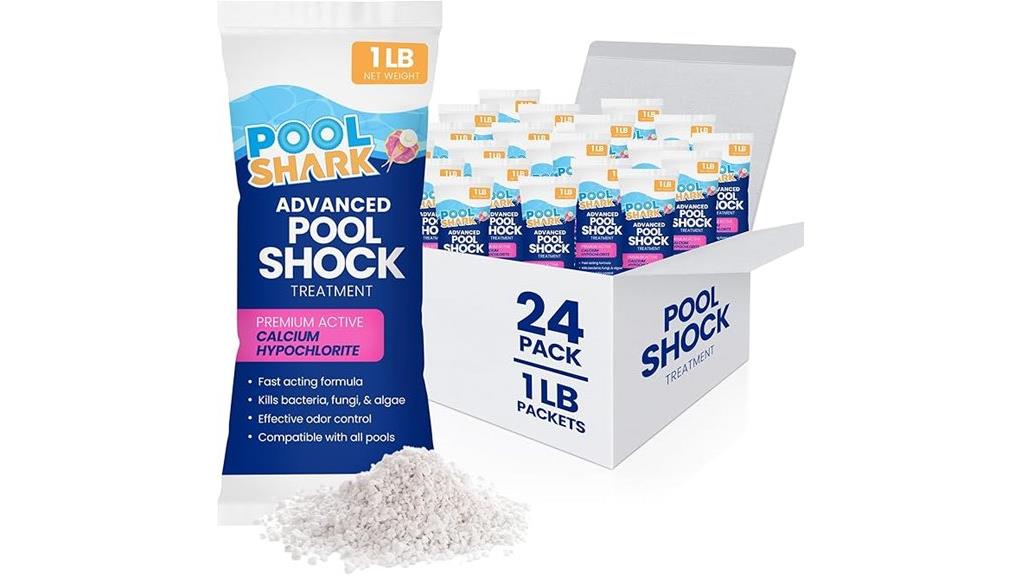
- Sold as 24×1 lb bags (UPC 659359191923, ASIN B0DJ3JR86D); compare per‑pound price, storage space, and seller policies before buying.
What Pool Shark 68% Calcium Hypochlorite Is and Who It’s For
Pool Shark 68% Calcium Hypochlorite is a fast-dissolving granular pool shock formulated to raise chlorine levels quickly and eliminate algae, bacteria, and organic contaminants; it’s a non‑stabilized calcium hypochlorite (68% active) designed to avoid cyanuric acid buildup. You’ll find it suited for operators who need rapid remediation: homeowners, pool service technicians, and facilities managers addressing cloudy water, algae blooms, or bacterial concerns. You’ll rely on it for routine pool maintenance and targeted interventions where strong oxidation is required. It’s not a sustained sanitizer or a replacement among chlorine alternatives for long‑term CYA control; use it strategically and sparingly.
How to Use Pool Shark Shock Safely and Get Fast Results
Before you start, read the label and gather safety gear—gloves, goggles, and a mask—so you can handle the granular calcium hypochlorite without inhaling dust or contacting skin. You’ll wear protection at all times and work in a well-ventilated area. Test pH and free chlorine, adjust pH to 7.2–7.6, then calculate dose using a dosing calculator or label chart based on pool volume. Broadcast granules slowly around the perimeter or pre-dissolve in a bucket of water if preferred; never mix with other chemicals. Run the pump for several hours and retest before swimming.
Real-World Performance: Effectiveness on Algae, Clarity, and Sanitization
Once you’ve handled dosing and safety, you’ll see how POOL SHARK 68% calcium hypochlorite performs in real conditions: it raises free chlorine quickly, oxidizes organic contaminants, and attacks visible algae colonies. You’ll observe measurable algae remediation within 24–48 hours when applied at recommended shock levels, especially with brushing and filtration. Expect rapid turbidity reduction as flocculated material is trapped by the filter. Monitor chlorine persistence; levels drop as it oxidizes organics, so retest and rechlorinate if needed. Microbial kill rate is high for common pool pathogens when contact time and concentration meet guidelines, but confirm with testing before reuse. Pool shark chlorine tablet benefits include prolonged water clarity and enhanced disinfecting power, making your pool experience more enjoyable. Their ease of use further simplifies maintenance routines, ensuring consistent water quality. Additionally, these tablets can aid in preventing the buildup of scale and corrosion, extending the life of your pool equipment.
Pros, Cons, and When to Choose Non‑Stabilized Calcium Hypochlorite
Although non‑stabilized calcium hypochlorite needs more careful handling than stabilized chlorine, it gives you fast, powerful oxidation without adding cyanuric acid, making it the preferred shock for heavy contamination events. You’ll gain rapid algae and contaminant removal, reduced stabilizer buildup risk, and improved filtration performance. Downsides include stronger handling precautions, potential calcium hardness impact, and the need for precise dosing to avoid overstabilization of hardness. Prioritize dosing accuracy, add granules to water per label, and avoid mixing with other chemicals. Choose non‑stabilized calcium hypochlorite when rapid, high‑strength oxidation is required and CYA control matters.
Price, Packaging, and Buying Considerations (24×1 Lb Bags, UPC, Alternatives)
Because you’re buying a bulk package, it’s important to factor unit cost, storage needs, and handling precautions into your decision: the Pool Shark 68% Calcium Hypochlorite comes as 24 one‑pound granular bags (total 384 oz), so check the per‑pound price against smaller packs or alternative shock types, confirm your ability to store 24 lb of non‑stabilized chlorine in a cool, dry, well‑ventilated area away from organics and acids, and verify seller details (UPC 659359191923, ASIN B0DJ3JR86D) and return policy before purchase. Compare retail availability, shipping options, bundle discounts, and local pickup to minimize transit risk. Make certain proper storage requirements and handling gear.
Some Questions Answered
Can Pool Shark Shock Be Mixed With Other Pool Chemicals?
You shouldn’t mix Pool Shark shock directly with other chemicals. You’ll avoid dangerous reactions by adding granular calcium hypochlorite separately and waiting between treatments. Check chlorine compatibility and avoid simultaneous addition with acids, algaecides, or stabilizers to prevent stabilizer interactions and hazardous off-gassing. Always dissolve or broadcast per label directions, add to deep water, and wait before adding other products. When in doubt, consult the product label or manufacturer.
How Should I Dispose of Unused Granular Calcium Hypochlorite?
You should never pour unused granular calcium hypochlorite down drains or mix it with other chemicals; instead, follow proper disposal steps. Contact your local waste authority for local regulations and hazardous waste collection. Keep product sealed in original container, label it clearly, and transport it to a designated disposal or household hazardous waste facility. If instructed, dilute and neutralize only under professional guidance; don’t burn or bury the material.
Is This Shock Safe for Vinyl or Fiberglass Pool Liners?
Yes — it’s generally safe for vinyl and fiberglass liners if you use it correctly. You’re advised to dilute granular shock in a bucket of water and pre-dissolve away from the pool, pour around the perimeter while the pump runs, and avoid dumping undissolved granules on the liner. Do a small surface testing on an inconspicuous area first. Follow label dosing, wear PPE, and keep swimmers out until chlorine levels return to safe range.
Can It Be Used to Superchlorinate a Saltwater Chlorine Generator System?
Yes — you can superchlorinate a saltwater chlorine generator system with this product, but be cautious. You’ll add fast-dissolving granular calcium hypochlorite to boost free chlorine quickly; it’s compatible with saltwater systems if you follow generator maintenance guidelines. Don’t overuse it, monitor chlorine and cyanuric acid, wait recommended turnover time before returning generator to service, and avoid contact with pool surfaces and equipment to prevent scale or corrosion.
What Precautions for Storing During Hot, Humid Weather?
Store it cool and dry: keep ventilation in the storage area and avoid sunlight to prevent heat buildup. Seal bags tightly in original packaging or plastic containers with desiccant, and elevate them off concrete. Don’t store near acids, fuels, or organic materials. Monitor temperature and humidity; if conditions become hot or muggy, move stock to an air-conditioned space. Post clear hazard signage and restrict access to trained personnel only.