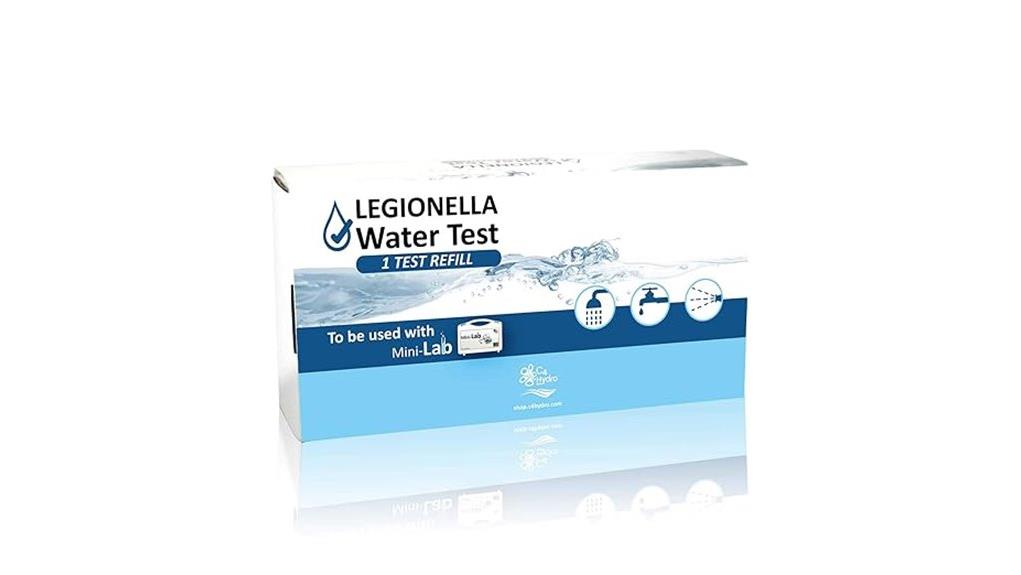
You can perform ISO-aligned, lab-grade Legionella screening at home with the C4Hydro Mini-Lab consumables kit; it detects down to about 1 CFU/mL and yields readable results from 48 hours. The kit includes sterile collection tools, reactive substrate cartridges, and single-use incubation seals, and it requires a Mini-Lab device plus strict aseptic technique. Results are reliable for routine surveillance but positives should be confirmed by an accredited lab. Keep reading to see step-by-step use and limitations.
Some Key Takeaways
- ISO-aligned C4Hydro test enables reliable home screening for Legionella pneumophila with Mini-Lab compatibility.
- Results are readable from 48 hours, enabling faster surveillance compared with typical lab turnaround.
- Sensitivity to 1 CFU/mL provides high detection capability for domestic hot water systems.
- Consumable kit includes sterile collection components, substrate cartridges, and incubation seals for single-assay use.
- Positive or regulatory-required confirmations should be sent to an accredited lab despite strong home-screening reliability.
Quick Verdict: Is the Legionella Water Test Kit Worth Buying?
Wondering if this kit delivers reliable home screening for Legionella? You’ll find clear strengths: ISO-aligned C4Hydro methodology, 48-hour readable results, and sensitivity to 1 CFU/ml support trustworthy detection for domestic hot water systems. In a cost comparison, initial outlay includes the Mini-Lab plus consumables, yet per-test consumable costs compare favorably with professional sampling and faster actionable data. User testimonials cite ease and rapidity; independent validation and method provenance add confidence. If you need routine, evidence-based screening and accept the Mini-Lab requirement, this kit offers a methodical, high-sensitivity option for proactive Legionella monitoring.
What’s in the Mini-Lab Consumables Kit and What You Need Beforehand
Before you run a test, make sure you’ve got the Mini-Lab set up and the consumables kit unpacked: the kit contains the reactive substrate cartridges specific to Legionella pneumophila, sterile sample collection components, reagent vials, disposable pipettes, incubation seals, and single-use labeling stickers—everything needed to process a single assay when used with the C4Hydro Mini-Lab. You’ll need the Mini-Lab device, a stable bench, and cool sample storage for transported specimens. Check accessory compatibility with other Mini-Lab assays if combining tests. Inspect seals and sterility indicators before use, note kit lot and expiration, and confirm you have single-assay disposables ready.
How the C4Hydro Test Works and How to Run It at Home (Step-by-Step)
Now that you’ve confirmed the Mini-Lab is set up and the consumables are intact, here’s how the C4Hydro Legionella test works and how you’ll run it at home. You’ll collect a representative water sample following sterile sample handling: flush, aseptic fill, label. You’ll filter or process the sample per kit instructions, deposit the substrate, and incubate in the Mini-Lab. The C4Hydro chemistry selectively reveals Legionella pneumophila colonies; read results from 48 hours onward. For result interpretation, compare colony presence and count to kit guidance to decide on follow-up actions. Document findings and repeat testing if indicated. A legionella testing starter kit review is a valuable resource for understanding the efficacy of the test. Users often share their experiences with the ease of use and reliability of results. It’s important to consider these insights when preparing to conduct your own water testing.
Performance: Sensitivity, Timing, Reliability, and How It Compares to Lab Tests
Although the C4Hydro consumables are designed for do-it-yourself use, their performance closely mirrors laboratory standards: the patented C4Hydro method follows ISO 11731 principles and reliably detects Legionella pneumophila down to 1 CFU/mL. You’ll read results from 48 hours onward, enabling rapid action. Sensitivity and low detection limits match regulatory methods; timing aligns with practical surveillance. Reliability is high when you follow protocol and maintain sterile technique, minimizing result variability. Compared to accredited labs you gain speed and convenience, while labs still offer confirmatory quantification and chain-of-custody for formal reporting.
Who Should Buy This Kit and Practical Buying/Use Recommendations
If you manage or own a hot water system, spa, jacuzzi, solar shower, or similar domestic installation and want rapid, lab-comparable screening, this kit is appropriate for you; it gives sensitive (1 CFU/mL) detection and readable results from 48 hours so you can act quickly. You should buy it if you’re a homeowner with vulnerable occupants, a maintenance professional, or traveling campers who use portable systems. Buy when you have Mini-Lab access, routine exposure risk, or delayed lab services. Follow the C4Hydro protocol exactly, document results, repeat testing after any corrective action, and send samples to a certified lab for confirmation when positive.
Some Questions Answered
Can I Reuse Any Consumable Parts From the Kit?
No — you shouldn’t reuse consumable parts. Reuse risks sample contamination and invalidates results because component sterilization isn’t guaranteed after first use. The kit’s reactive substrates and single-use items are designed for one assay to maintain sensitivity (down to 1 CFU/ml) and ISO-equivalent accuracy. To stay evidence-focused and safe, discard used consumables per instructions and replace with a new kit to avoid false negatives, cross-contamination, and compromised public-health decisions.
Is the Kit Safe to Ship Internationally With Hazardous-Material Rules?
Yes — you can ship it internationally, but you’ll need correct shipping classification and customs documentation. Treat the kit as non-infectious reactive consumables; declare material type, weight and part number (00 495 – US). Follow carrier and destination hazardous-material rules; some countries restrict biological testing items. Include safety data, sterility rating, and manufacturer details to expedite clearance. Verify regulations with your carrier and local customs before dispatch.
Do Results Require Professional Interpretation or Certification?
No — you don’t need professional certification to read results, but you should use provided interpretive guidance. The kit yields readable counts from 48 hours; its C4Hydro method aligns with ISO 11731 and is equivalent to regulatory labs. You’ll follow a simplified protocol and interpret thresholds per instructions. For regulatory reporting, outbreak investigation, or legal proof you’ll still need accredited laboratory confirmation and professional certification.
How Should I Store Unused Kits and What Is Their Shelf Life?
Store unused kits in cool storage, away from light and moisture, ideally refrigerated at manufacturer-recommended temperatures. Keep them sealed in original packaging and avoid freezing or temperature swings. Track expiration dates visibly and practice expiration tracking by logging lot numbers and purchase dates. Use kits before the printed expiry; discarded kits past expiration may yield unreliable results. Follow any additional storage instructions supplied with the kit for best performance.
Can the Kit Detect Non-Pneumophila Legionella Species?
No — the kit’s species coverage targets Legionella pneumophila specifically; it’s validated and designed for that species. You’ll rely on its detection limits (down to 1 L. pneumophila per ml) for sensitivity, but it isn’t validated for non-pneumophila Legionella. If you need broader species identification, you should use a lab method or a different assay validated for multiple Legionella species to guarantee accurate detection and regulatory equivalence.