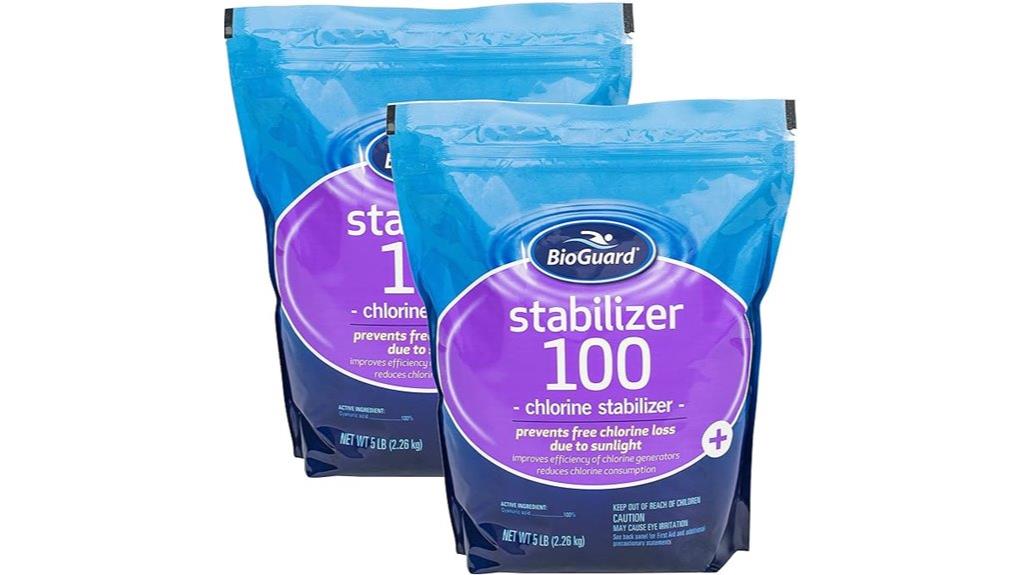
Yes — when you dose BioGuard Stabilizer 100 to the recommended 30–50 ppm, its cyanuric acid binds free chlorine and appreciably slows UV-driven photodegradation, so you’ll see measurable chlorine savings (typically 20–50% depending on sun and bather load). It forms a reversible stabilized complex that protects residual chlorine without permanently deactivating it, but you must monitor CYA to avoid reduced biocidal kinetics. Keep incremental dosing, test after each addition, and continue for practical dosing, monitoring, and cost details.
Some Key Takeaways
- BioGuard Stabilizer 100 supplies cyanuric acid that binds free chlorine and significantly slows UV-driven chlorine loss in outdoor pools.
- When dosed to the recommended 30–50 ppm range, it typically reduces chlorine consumption by about 20–50% depending on sun and bather load.
- The stabilizer forms a reversible chlorine-cyanurate complex that protects chlorine from photodegradation while allowing active sanitizer equilibrium.
- Proper dosing requires testing CYA and chlorine, incremental granular additions through the skimmer, and retesting to avoid overshoot.
- It’s a convenient 5 lb granular product suited for residential and small commercial pools to lower chlorine use and maintenance frequency.
Does BioGuard Stabilizer 100 Actually Preserve Chlorine?
Yes — BioGuard Stabilizer 100 preserves chlorine by supplying cyanuric acid, a proven UV shield that binds with free chlorine and slows its photolytic breakdown; when dosed to recommended levels for outdoor chlorinated pools, it reduces chlorine loss from sunlight, extending residual chlorine life and lowering consumption. You’ll see measurable chlorine binding that stabilizes free chlorine concentration under direct sun. Apply granular, fully soluble product slowly through the skimmer to achieve target cyanuric acid levels without overshooting. This sunlight protection lowers dosing frequency and operational cost. Follow manufacturer dosing guidance and monitor stabilized chlorine and cyanuric acid to maintain peak protection.
How Cyanuric Acid Works and Why It Matters for Outdoor Pools
Because cyanuric acid binds reversibly with free chlorine, it forms a stabilized chlorine complex that absorbs ultraviolet energy and slows photolytic breakdown, so you retain effective disinfectant levels in outdoor pools. You’ll see stabilizer chemistry drive a dynamic equilibrium: free hypochlorous acid and bound chlorinated isocyanurates interconvert, reducing instantaneous photodegradation while allowing available chlorine to act. This controlled binding provides UV protection without permanently deactivating sanitizer, but you must monitor cyanuric acid concentration to avoid diminished biocidal kinetics. Properly managed, cyanuric acid optimizes outdoors pool disinfection efficiency, extending chlorine persistence under solar exposure.
Real-World Performance: Chlorine Savings, Dosing, and Results
When you add BioGuard Stabilizer 100 to an outdoor chlorinated pool at recommended levels, it substantially slows chlorine photodegradation so you use noticeably less chlorine over time; typical savings range from 20–50% depending on sunlight exposure, bather load, and initial cyanuric acid concentration. You’ll measure savings via routine chlorine monitoring and residual trending. Dose granular, soluble cyanuric acid incrementally to reach target CYA (usually 30–50 ppm); avoid overshooting. Expect lower weekly chlorine demand, longer residual stability, and reduced chemical costs. Implement seasonal adjustment of target CYA and dosing based on temperature, usage patterns, and measured decay rates.
How to Apply BioGuard Stabilizer 100 Safely and Effectively
Although cyanuric acid is simple to add, you should dose and apply BioGuard Stabilizer 100 deliberately to avoid overshooting target CYA and to protect equipment; start by testing your pool’s current cyanuric acid and free chlorine levels, calculate the exact pounds required to reach 30–50 ppm for your pool volume, and plan incremental feedings. Wear appropriate personal protective equipment when handling the granular product. Feed slowly through the skimmer with pump running to guarantee rapid dissolution and even distribution. Retest after each increment, document adjustments, and follow label instructions and local regulations compliance for storage, disposal, and transport.
Is It Worth Buying? Cost, Packaging, and Who Should Use It
If you manage an outdoor chlorinated pool and want to preserve chlorine efficacy while cutting chemical spend, BioGuard Stabilizer 100 offers a straightforward, cost-effective solution. You’ll get granular, totally soluble cyanuric acid in 5 lb containers (pack of 2 available), simplifying dosing and storage. In a price comparison it’s competitive versus bulk stabilizers when factoring convenience and reduced chlorine purchases. User demographics: ideal for residential pool owners and small commercial operators who need reliable UV protection without complex chemistry. You should use it if you want to lower chlorine consumption, streamline maintenance, and apply product slowly via the skimmer for best results.
Some Questions Answered
Can Stabilizer 100 Be Used in Indoor Pools?
Yes — you can use Stabilizer 100 in indoor pools, but you’ll monitor cyanuric acid levels carefully. You’ll avoid over‑stabilization that reduces disinfectant efficiency. Make sure indoor ventilation controls condensation and prevents buildup of stabilizer residues on surrounding materials. You’ll feed the granular product slowly through the skimmer per instructions, test total chlorine and CYA regularly, and adjust dosing to maintain effective free chlorine while protecting pool finishes and air quality.
Does It Affect Pool Water pH Levels?
No, it won’t noticeably change your pool pH. You’ll find BioGuard Stabilizer 100 (cyanuric acid) provides pH buffering capacity but is a weak acid with minimal acid interaction at typical dosing, so it doesn’t drive significant pH shifts. You should still monitor pH routinely, because cumulative additions or other chemicals can alter balance. Adjust with standard acid or base treatments if readings drift outside the 7.2–7.8 range.
Is It Safe for Saltwater Chlorinated Pools?
Yes — you can use it in saltwater chlorinated pools. Saltwater compatibility is maintained because the product supplies cyanuric acid, which stabilizes free chlorine without introducing salts. You should monitor cyanuric acid levels to avoid over-stabilization, which can reduce disinfection efficiency. Also check equipment regularly for corrosion risk; while the stabilizer itself isn’t highly corrosive, salt systems and metals remain susceptible, so proactive maintenance is recommended.
How Long Does One 5 Lb Container Typically Last?
A single 5 lb container typically lasts a medium residential pool one to two seasons, depending on stabilizer dosing and pool size. You’ll add small increments through the skimmer until cyanuric acid reaches target ppm, then monitor maintenance intervals every 4–8 weeks. For 15–20 ppm target in a 15,000–20,000 gallon pool expect roughly one season; larger pools or higher targets will consume more and shorten duration.
Are There Environmental Disposal Concerns for Leftover Product?
Yes — you should handle leftovers carefully. Cyanuric acid can contribute to environmental impact if overapplied; avoid dumping granules into storm drains or soil where chemical runoff can occur. You’ll store unused product sealed and follow local hazardous-waste guidelines for disposal. If you must discard treated water, neutralize and dilute per municipal rules or take the product to a household hazardous-waste facility to prevent aquatic buildup and regulatory violations.