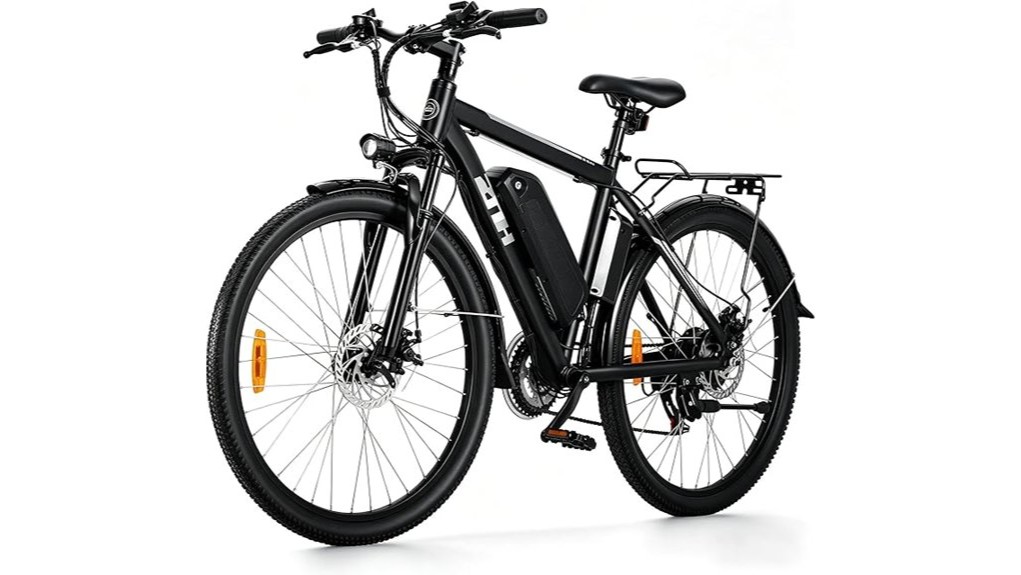
You’ll get a UL2849-certified, commuter-friendly fat‑tire e‑bike with a removable 48V 13Ah (624Wh) pack and a 750W peak (up to 1000W advertised) geared hub motor that favors low‑end torque over top speed. It uses a 21‑speed derailleur drivetrain, mechanical dual discs, and an aluminum 26″ frame with basic suspension. Expect about 20 MPH legal top speed, up to ~50+ miles per charge in eco use, solid stability, and utility for commuting; continue below for detailed specs and tradeoffs.
Some Key Takeaways
- ZNH models use a 750W peak (sometimes labeled 1000W) geared hub motor offering strong low-end torque and ~20 MPH legal top speed.
- Removable 48V 13Ah (624 Wh) battery with onboard BMS typically delivers up to ~50+ miles depending on assist, rider weight, and terrain.
- 21-speed derailleur drivetrain and mechanical dual-disc brakes provide reliable, budget-friendly shifting and stopping but lack premium refinement.
- Fat 26″ tires and aluminum frame yield stable, commuter-friendly handling and light off-road capability, but weight limits aggressive trail use.
- Good beginner/utility choice for commuters and heavier riders; resale depends on warranty and brand recognition.
Quick Verdict: Is the ZNH 750/1000W Bike Worth Buying?
Although it won’t replace a high-end eMTB, the ZNH 750/1000W delivers solid value for beginner riders who want a versatile, commuter-friendly fat-tire electric bike. You get a UL2849-certified platform with practical features—removable 48V 13Ah battery, fat tires, 21-speed gearing—that suit mixed-use commuting and light trail duty. For your evaluation, focus on component durability and documented long term reliability; expect average wear rates given aluminum frame and mechanical discs. Resale value projections are modest: mid-range depreciation tied to warranty length and brand recognition. If you need affordable, competent entry-level eMTB functionality, it’s worth considering. Gear up for epic outdoor rides on your adult ebike with focus on outdoor activities and the right accessories.
Detailed Specs and Components (Motor, Battery, Drivetrain, Brakes, Frame)
When you inspect the ZNH 750/1000W, its core hardware centers on a 750W peak brushless geared hub motor paired with a removable 48V 13Ah (624 Wh) lithium pack, a 21-speed derailleur drivetrain, mechanical dual-disc brakes, and a 26-inch aluminum-alloy frame with fat tires and front suspension (dual-suspension noted in some specs). You’ll find motor tuning limited to controller settings and throttle responsiveness; battery management relies on the removable pack and onboard BMS for cell balancing and protection. Gear shifting uses a trigger shifter and standard derailleurs. Brake modulation is mechanical, predictable but less refined than hydraulic systems. Riders who take their ebikes off-road should carry essential ebike toolkits for basic repairs and adjustments during outdoor rides.
Real-World Performance: Speed, Range, Handling, and Off-Road Use
Typically, you’ll see the ZNH’s 750W hub motor deliver strong low-end acceleration and maintain a legal top speed around 20 MPH on flat ground, with throttle or pedal-assist modes providing predictable, immediate response. You’ll notice range up to about 50+ miles depends on assist level, rider weight, and terrain; the 624 Wh battery supports extended rides but monitor battery longevity with high-power use. Handling is stable thanks to fat 26″ tires and aluminum frame; steering feels damped, suited to beginners. Off-road, suspension and gearing offer competent terrain adaptability on trails and gravel, though heavy weight limits aggressive technical riding. The bike is well-suited for riders who enjoy outdoor activities and need durable gear for all-terrain ebike adventures.
Assembly, Comfort, Accessories, and Daily Usability
You’ll get the ZNH about 90% pre-assembled, so final setup is straightforward: attach the front wheel, handlebar, pedals, and seat, connect the battery and wiring harness, then adjust brakes and derailleur before your first ride. Follow assembly tips: torque axle nuts, align disc rotors, index the 21-speed drivetrain, and secure wiring clamps to prevent chafing. The aluminum frame, fat 26″ tires, and suspension provide baseline comfort; consider comfort upgrades like a padded saddle, ergonomic grips, and suspension tuning for longer rides. Included accessories (fenders, rear rack, headlight) improve daily usability for commuting and light touring. This setup is well-suited for touring e-bikes and outdoor riding adventures.
Who Should Buy the ZNH and How It Compares to Alternatives
After setup and a few short rides to fine-tune comfort and controls, consider whether the ZNH fits your needs based on power, range, and use case. You’ll want this if you need a robust commuter alternative with fat tires, 750W peak motor, and a 48V 13Ah removable battery delivering up to 50+ miles in ideal conditions. It’s suitable for beginner riders, heavier loads, and family outings with the rear rack. Compared to lightweight city e-bikes, the ZNH sacrifices nimbleness for torque and carrying capacity. If you prioritize agility, longer warranty, or lighter weight, evaluate other models first. For riders who frequently carry gear or kids, pairing the ZNH with a sturdy ebike rear rack designed for heavy loads improves utility and safety.
Some Questions Answered
Is the Battery Airline-Safe for Travel or Shipping Internationally?
No, the battery isn’t airline-safe to check; you’ll need to follow battery restrictions for air travel and most carriers. The 48V 13Ah (624 Wh) removable lithium pack exceeds many airlines’ carry-on limits without airline approval. For shipping internationally, declare capacity, use approved packaging, and comply with hazardous‑materials rules. Packing tips: remove battery, ship with terminals insulated, use original or UN‑certified packaging, and verify carrier policies and export/import rules.
Can the Bike Be Legally Ridden in Helmet-Required E-Bike Zones?
Yes — you can ride it in helmet-required e-bike zones if you wear an approved helmet and follow local regulations. The ZNH’s 750W peak motor and 20 MPH top speed may class it differently across jurisdictions, so you’ll need to verify helmet laws and e-bike classifications where you ride. Carry documentation (specs, UL2849) if enforcement is strict, and comply with other local rules like age limits, speed caps, and permitted routes.
Are Replacement Batteries or Upgrade Options Available?
Yes — you can get replacement batteries and aftermarket upgrades for this model. You’ll replace the 48V, 13Ah removable lithium pack with OEM or compatible third-party units sized to the frame and UL2849 safety requirements. Aftermarket upgrades include higher-capacity batteries, improved chargers, and performance controllers, but you’ll need to confirm connector compatibility, mounting dimensions, and warranty implications. Have a qualified technician install upgrades to guarantee safety and system integrity.
Does the Bike Support Installing a Child Seat or Trailer Hitch?
Yes — you can fit a child seat or trailer hitch with caution. The rear rack and 330 lb max capacity let you mount many child seat models or attach a bike trailer hitch, but you’ll need a heavy-duty rack adapter or frame-mounted hitch rated for the bike’s weight and 67 lb bike mass. Verify compatibility with the aluminum alloy frame, fat-wheel 26″ axle spacing, and the mechanical disc brake clearance before installation.
What Maintenance Schedule Extends the Motor and Battery Lifespan?
Perform routine inspections monthly: check battery charge cycles, terminals, mounting, motor noise, wiring, and brake/gear function. Charge battery after each ride if depth-of-discharge is high; avoid full depletion. Follow charging cycles and use manufacturer charger. For seasonal storage, store battery at ~50% charge in a cool, dry place and recharge every 3 months. Service drivetrain and suspension annually, and address unusual motor heat or voltage drops immediately.