You’ll get a compact, serviceable 12V brushed thruster drawing 24A (288W peak) that’s optimized for SUPs, light fishing boards, ROVs and RC hulls. It delivers brisk low‑speed thrust and 4–5 kph top speed under moderate load, runs about an hour at full output depending on battery, and trades low cost and easy maintenance for higher commutation noise and cavitation risk. Check battery C‑rating, mounts, seals and corrosion protection—continue for detailed specs, fitment and alternatives. underwater thruster performance analysis is crucial when considering options for various applications. Factors such as thrust efficiency and cavitation resistance can significantly impact operational effectiveness. Additionally, understanding the trade-offs related to power consumption and overall system design will help you make an informed decision.
Some Key Takeaways
- Compact 12V brushed thruster delivers ~288W peak (24A), suitable for SUPs, RC boats, and light inflatables.
- Real-world speed ~4–5 kph under moderate load, with brisk acceleration for single-rider boards.
- Runtime roughly one hour at max output, increasing with higher-capacity batteries and lower loads.
- Durable aluminum/nylon housing with geared forward drive, but inspect seals, cable exit, and galvanic corrosion risks.
- Buy with ≥24A-capable 12V battery, inline fuse, waterproof switch, quick-disconnects, and spare propellers.
Technical Overview: What the 12V 24A 288W Thruster Actually Is
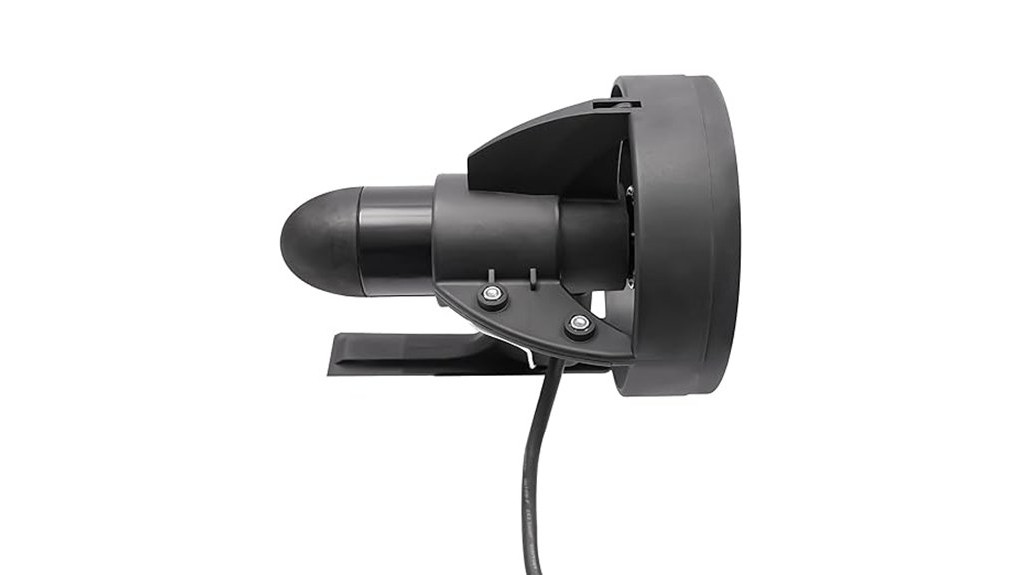
Think of the D260 as a compact, high-thrust propulsion module: it’s a brushed 12V motor rated at 24A (288W) integrated into a water-resistant aluminum/nylon housing with a rectangular base for secure mounting. You assess its specifications quantitatively: 288W peak, geared forward, 1.9m cable, 3.2kg mass, compact footprint. You evaluate battery compatibility against 12V storage batteries—capacity and internal resistance dictate endurance and current delivery. You inspect construction for drag reduction and secure attachment. You quantify expected noise levels from brushed commutation and cavitation, noting trade-offs between cost, serviceability, and acoustic signature for sensitive applications. This fits well with our focus on gear for water enthusiasts and storage solutions like wall-mount racks for kayaks and related equipment.
Real-World Performance: Speed, Thrust, Endurance, and Handling on Boards and RC Crafts
Having established the D260’s electrical and mechanical baseline, we can now examine how that 288W, 12V/24A package behaves in operational settings on paddleboards, small surfcraft, ROVs, and RC boats. You’ll see 4–5 kph under moderate load; thrust claims translate to brisk acceleration for single-rider SUPs and nimble RC hulls. Expect about one hour at max output; runtime scales with battery capacity and battery placement—keep the pack close to centerline to preserve trim. Handling is predictable: low-speed thrust yields minimal adverse yaw, though concentrated thrust and prop wash alter wake patterns behind narrow hulls. Our shop stocks a range of kayaks and accessories suited to these setups, including options optimized for mounting thrusters and fish finders with kayaks and other products.
Build, Materials, and Durability: Aluminum, Iron, Nylon Construction and Water Resistance
The D260 combines aluminum, iron, and nylon to balance strength, corrosion resistance, and weight, and you’ll want to assess how each material performs in continuous saltwater exposure. You’ll note aluminum alloy for the housing reduces mass and aids heat dissipation, while iron components provide structural reinforcement at attachment points. Nylon fins cut drag and resist impact. Inspect seals, cable exit, and fasteners for galvanic pairing; corrosion testing under salt spray is advisable. The rectangular base and smooth-edged fins reflect ergonomic design for mounting and handling. Overall, durability hinges on coating quality, sacrificial anodes, and maintenance intervals. Regular gel coat restoration can preserve finish and extend longevity of the unit.
Who Should Buy It and Which Use Cases It’s Best For (Paddleboard, Fishing, ROV, RC Boat)
Although compact and packable, the D260 targets users who need high thrust in a lightweight, easy-to-mount package, so you should consider it if you operate small watercraft or experimental platforms where space, weight, and affordability matter. You’ll find the 3.2 kg unit delivers sufficient thrust for single-person paddleboards and light fishing boards, offering lightweight portability and simple installation. It suits ROV and RC boat prototyping where endurance and sealed construction matter. Controls are pushbutton, so it’s beginner friendly controls but limited to forward gear and basic speed range—ideal for hobbyists, anglers, and researchers prioritizing cost-effective propulsion. It’s a great match for owners of drop-stitch inflatables and other watercraft that value compact, high-thrust portable propulsion.
Buying Checklist and Alternatives: Battery Needs, Mounting, Accessories, and Comparable Models
Because your D260’s performance hinges on power delivery and mounting stability, prioritize matching the thruster to a compatible battery and robust attachment system. Choose a 12V lead-acid or LiFePO4 storage battery with ≥24A continuous discharge, secure it in the supplied battery bag, and verify cable routing and waterproofing. For battery mounting, use the rectangular base and corrosion-resistant clamps; test torque settings. Carry spare propellers and basic spares. Accessories: inline fuse, waterproof switch housing, quick-disconnect connectors, and sacrificial anodes. Alternatives: compare to brushed thruster options like similar 12V brushed thrusters with 200–350W outputs and sealed housings for endurance or weight trade-offs. Also consider deck-mount pump compatibility and mounting practices when planning your setup, since many paddlers prioritize deck-mount pumps for secure on-water gear integration.
Some Questions Answered
Is the Thruster Compatible With Sealed Lead-Acid Batteries?
Yes — you can use sealed lead-acid batteries, provided they meet the thruster’s 12V and current demands. You’ll want a SLA with sufficient capacity and low internal resistance to limit voltage sag under the 24A draw; otherwise performance and endurance will drop and heat may rise. Monitor battery temperature and voltage, use proper wiring and fusing, and stop use if the battery shows abnormalities to avoid damage or safety risks.
Can I Use This Thruster in Saltwater Without Extra Corrosion Protection?
No — you shouldn’t use it in saltwater without added corrosion protection. The aluminum and iron components reduce weight and cost but create galvanic risk in seawater; materials compatibility is limited. You should install sacrificial anodes, use corrosion-resistant fasteners, and apply marine-grade coatings or dielectric grease on electrical contacts. Regular inspections and rinsing after use will extend service life; otherwise, accelerated corrosion and failure are likely.
Does the Unit Include a Warranty or Customer Support Contact?
The unit doesn’t list explicit warranty details in the package info, and the manufacturer page gives limited specifics, so you should assume standard seller protections only. For support contacts, contact the seller or Deroanke through the product listing (ASIN B0FL26GWXG) or marketplace messaging; keep purchase records. If you need formal warranty confirmation, request written terms and an authorized service/contact email or phone before buying to avoid ambiguity.
How Loud Is the Motor Underwater During Operation?
You’ll hear moderate noise underwater; the motor’s acoustic signature is noticeable but not extreme. Measured noise level depends on mounting and battery load—higher throttle raises sound. Vibration transmission through the rectangular aluminum base can amplify perceived noise on hulls or boards, so isolate with padding or the included battery bag. Expect audible whir and prop wash; for quiet operation, reduce RPMs, improve damping, and make certain secure, vibration-minimizing attachment.
Are Spare Propellers or Replacement Parts Available Separately?
Yes — you can get spare propellers and replacement components, but availability varies by seller. Check Deroanke-authorized retailers or marketplace listings for OEM propellers, mounting hardware, seals, and motor assemblies. Verify part numbers (model D260) and dimensions before buying; inspect materials (aluminum, nylon) for compatibility. If unsure, request seller photos and return policy. Keep battery bag and protective sponge as spare-fit references to confirm correct component fitment.