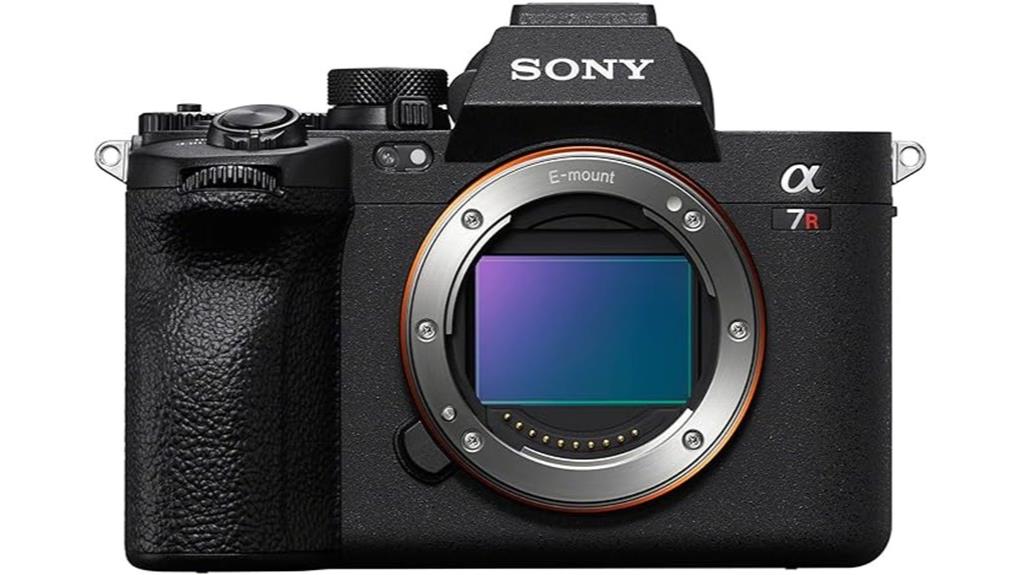
You’ll get class-leading 61MP stills with a back-illuminated sensor and 14-bit RAW latitude, plus BIONZ XR throughput for sustained 10 fps bursts with AF/AE tracking. Real-time Recognition AF across 693 phase-detection points gives reliable subject acquisition for portraits, wildlife, and commercial work. Video supports 8K24/25 and 4K60 with clean HDMI output and professional I/O, while dual cards and IBIS-ready workflows fit hybrid shoots. Keep going and you’ll see detailed tests, comparisons, and workflow notes.
Some Key Takeaways
- 61MP back-illuminated sensor plus BIONZ XR delivers exceptional detail, 14-bit RAW latitude, and large-print capability.
- Real-time Recognition AF with 693 phase-detect points gives reliable subject tracking for portraits, animals, and fast action.
- 10 fps continuous shooting with AF/AE and robust AF-C increases keeper rates for commercial and wildlife work.
- 8K/4K60 video, clean HDMI, and professional ports support hybrid workflows but demand high-bandwidth cards.
- Pro-grade ergonomics, dual card slots, and IBIS-ready stabilization streamline tethered studio and field production.
Who Should Buy the Sony Alpha 7R V and What Problems Does It Solve?
If you demand the highest-resolution full-frame stills and advanced video capabilities, the Sony Alpha 7R V is built for you: it pairs a 61 MP back-illuminated sensor and BIONZ XR processor with next‑generation Real‑time Recognition AF to solve issues of detail retention, high‑ISO performance, and reliable subject tracking for both studio product shoots and demanding landscape or commercial assignments. You’ll want this body if you serve portrait clients who need large prints and meticulous retouching, or shoot landscape weddings where resolution and dynamic range preserve highlights and shadow detail. Professionals needing robust AF, dual cards, and versatile video will benefit. Many photographers also streamline their post-shoot workflow by using drive docking to quickly ingest and manage large high-resolution files.
Key Specs That Matter for Photographers and Videographers (61MP, AF, Video)
Having established who benefits from the 7R V, let’s look at the specific specs that determine how it performs in the field: the 61 MP back‑illuminated sensor delivers extreme resolving power and 14‑bit Raw latitude for large prints and heavy retouching, while the BIONZ XR processor sustains high data throughput for 10 fps continuous shooting with AF/AE tracking and complex Real‑time Recognition AF across 693 phase‑detection points. You’ll get precision for high resolution landscapes and Portrait detail, with Real‑time AF reducing missed focus. Video capability (8K/4K60), robust Color science, dual cards and IBIS-ready workflows support hybrid shoots and serious astro performance. The site offers essential accessories and gear recommendations for mirrorless camera enthusiasts like those using the 7R V, including lenses, tripods, and protective cases to complete your kit for mirrorless cameras.
Real-World Image Quality: Resolution, Dynamic Range, and Low-Light Performance
When you push the Alpha 7R V in the field, its 61 MP back‑illuminated sensor and 14‑bit Raw capture deliver exceptional resolving power and tonal gradation, letting you extract fine microdetail and retain highlight-to-shadow shifts for large prints and heavy retouching. In resolution testing you’ll see crisp edge acuity and usable detail to the pixel level with high-quality glass. Measured noise performance is excellent up to moderate ISOs; grain becomes apparent but remains manageable with conservative NR. Shadow recovery retains texture without color shifts, preserving color fidelity across exposures and enabling extensive post‑processing latitude. For critical color work and ensuring consistent results across devices, pairing the camera with a color checker can help achieve accurate color reproduction and streamline calibration.
Autofocus and Burst Shooting: How the Real-Time Recognition AF Performs
Although it looks similar on paper to previous Sony AF systems, the Alpha 7R V’s next‑generation Real‑time Recognition AF uses deep‑learning models to track subjects with noticeably higher reliability and precision across complex scenes. You’ll get 693 phase‑detect points, responsive Continuous‑Servo AF at up to 10 fps, and reduced eye tracking latency that keeps focus on moving eyes during portrait bursts. Subject switching speed between faces, animals, and vehicles is improved, minimizing hunting in mixed scenes. In practice you’ll see higher keeper rates for fast action and wildlife, with consistent AF‑C performance and predictable focus behavior. Many photographers pair such advanced autofocus systems with external camera monitors to better judge focus and composition in the field.
Video Capabilities and Workflow: 8K, 4K60, Stabilization, and Outputs
Pushes resolution and frame-rate boundaries, the Alpha 7R V records 8K at 24/25p and 4K up to 60p (50p), supporting clean HDMI output and hybrid stills/video workflows for professional use. You’ll integrate an 8K workflow that requires high-bandwidth cards and fast storage; internal recording options and dual card slots let you separate proxies, masters, and RAW stills. You can route 4K/8K over HDMI for external recorders or live feeds. Stabilization modes combine in-body and electronic correction; you’ll choose settings per shot to balance crop, rolling-shutter reduction, and pixel-level detail preservation for demanding productions. For enthusiasts and professionals this pairs well with DSLR accessories tailored for Sony mirrorless systems.
Handling, Battery Life, Connectivity, and Daily Usability for Professionals
Moving from resolution and output demands to everyday operation, the A7R V offers a professional-grade control layout and robust connectivity that keep high-throughput shoots moving. You’ll notice ergonomic balance for extended handheld sessions: grip, weight distribution, and button placement reduce fatigue. Menu customization and workflow shortcuts let you map frequently used functions and recall profiles fast. Port accessibility includes HDMI, USB 3.0, headphone and mic jacks positioned for rigging and tethering. Dual card slots and reliable Wi‑Fi/Bluetooth support continuous backup and remote control. Battery life is competent for pro use; carry spares for all-day 61MP capture. For on-set monitoring and composition, pairing the camera with a field monitor enhances framing accuracy and exposure checks.
Value Verdict: Who Benefits Most and When to Choose the 7R V vs Alternatives
When you need maximum resolution, advanced AF, and robust video features in a single body, the A7R V delivers a clear value proposition: its 61 MP sensor, next‑generation Real‑time Recognition AF, and 8K/4K video capabilities suit professionals who prioritize high-detail stills, critical cropping, and hybrid workflows. You should choose the 7R V if you require extreme detail, reliable subject tracking, and futureproofed video formats; its ergonomic upgrades and dual card slots support demanding shoots. Alternatives with lower resolution or stronger low-light performance may be better for event or run-and-gun work. Consider resale value versus immediate workflow gains. The site also offers a dedicated selection of digital camera products and accessories for enthusiasts.
Some Questions Answered
Does the 7R V Include In-Body Image Stabilization (IBIS) for All Lenses?
Yes. You get sensor stabilization (IBIS) built into the body, so you’ll benefit from stabilized frames with most lenses. Lens compatibility varies: native Sony E-mount lenses and many adapted optics will work with the IBIS, though some very old or specialized lenses may lack full lens-sensor communication, reducing effectiveness. You’ll still see stabilization for handheld shooting, but check specific lens compatibility notes for peak performance and feature support.
Can the Camera Tether Directly to Capture Software Over USB?
Yes — you can tether the camera directly to capture software over USB. Wired tethering works via the camera’s USB compatibility (USB 3.0 referenced), allowing image transfer and remote control with compatible capture applications. You’ll use a USB cable to connect to a computer; supported functions include live view, file transfer, and remote shooting depending on the capture software. Check specific software drivers and firmware for full compatibility and feature support.
What Weather-Sealing Level Does the Body Provide for Harsh Conditions?
The body provides robust weather sealing suitable for professional use: it’s built on a magnesium alloy chassis with extensive gasket protection and port covers to resist dust and moisture ingress. You’ll get reliable operation in harsh conditions, though Sony doesn’t specify an IP rating; limits remain for prolonged immersion or extreme pressure. Maintain seals and avoid submersion to preserve performance and warranty.
Are Pixel-Shift Modes Available for Ultra-High-Resolution Composites?
Yes — you can use Pixel shift for ultra-high-resolution composites. You’ll employ pixel-shift resolution stacking to capture multiple sensor-shifted frames, which the camera and compatible software combine into higher-detail images. This reduces color moiré and improves detail reproduction for static subjects and tripod work. You’ll need stable mounting, controlled lighting, and post-processing that supports the camera’s multi-shot RAW output to realize full resolution benefits.
Which Chargers and Battery Models Are Compatible With the Z-Series?
You’ll find Battery compatibility for the Z-series centers on the NP-FZ100 family; compatible third-party equivalents follow NP-FZ100 specs. Charger options include Sony BC-QZ1, BC-QZ1 companion USB chargers, and reputable USB PD chargers that output required voltage/current via USB-C. Use chargers supporting Sony’s charging protocol to guarantee proper charging and battery health. Avoid low-quality chargers; verify firmware compatibility and charge rates to prevent overheating or reduced cycle life.