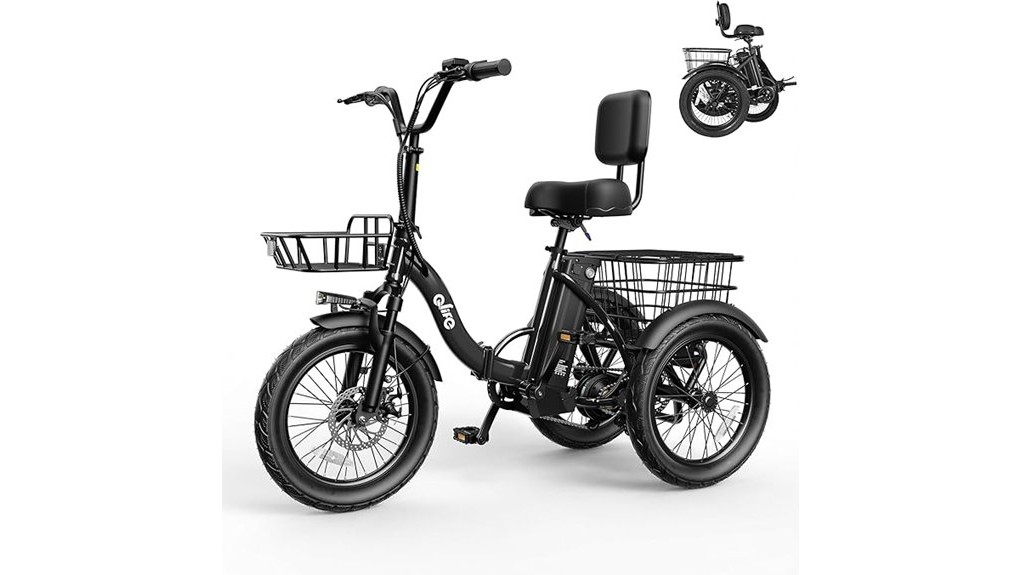
If you want a comfort-first, cargo-ready folding e-bike, the Qlife Triker is worth a close look: it uses a 1200W peak motor for brisk acceleration, a 48V/499Wh removable battery with a claimed 50-mile range, and disc brakes with a rear differential for stable handling. It’s best for errands, commuting, and accessible rides rather than speed chasing, though weight and mid-range battery limits matter — keep going to see detailed performance, comfort, and purchase checks. the qlife triker performance and features make it an inviting choice for those seeking reliability and ease of use. With its user-friendly design, riders can enjoy a smooth journey even on bumpy terrain. Additionally, the ample cargo space allows for convenient transport of essentials, making it an ideal companion for daily tasks.
Some Key Takeaways
- Comfortable, commuter-focused folding trike with step-thru frame and built-in cargo rack for errands and accessible leisure rides.
- 1200W peak motor gives brisk acceleration but maxes at about 18 MPH with occasional motor whine under heavy load.
- 48V 10.4Ah (499Wh) removable battery claims up to 50 miles, though real-world range often falls shorter with heavy assist or cargo.
- Disc brakes, rear differential, and 20-inch tires deliver predictable stopping and stable handling; steep grades reveal modest frame flex.
- Practical daily features include quick folding, good cargo capacity, removable battery, and portability, balanced against notable weight.
Quick Verdict : Who the Qlife Triker Is Best For
While you’re drawn to stability and practical utility, the Qlife Triker suits riders who prioritize comfort, cargo-carrying, and easy mounting over speed. You’ll appreciate its commuter friendly design: foldable frame, built-in cargo rack, and large tires that smooth city streets and light trails. If you need straightforward operation, step-thru geometry and clear controls support senior accessibility features without gimmicks. You won’t choose this for sport riding; instead you’ll favor predictable handling, reliable stopping, and multiple ride modes that aid varied traffic conditions. Overall, it’s a utilitarian, low-stress option for errands, commuting, and accessible leisure rides. Its built-in rack makes it easy to pair with ebike rear racks designed for extra cargo capacity.
What’s Under the Hood : Key Specs That Matter (Motor, Battery, Brakes)
How does the Triker deliver on power, range, and stopping power? You get a 1200W peak brushless motor that supplies strong acceleration and an 18 MPH top speed; assess motor noise as modest for its class, with occasional whine under heavy load. The 48V 10.4Ah (499Wh) removable battery supports up to 50 miles and simplifies charging; evaluate battery longevity by tracking charge cycles and storage practices. Disc brakes provide predictable stopping power, while a rear differential and 20-inch tires add stability. Overall, specs are practical and balanced—suitable for urban commutes and light trails without overstating capabilities. Consider pairing the Triker with an ebike range extender for longer outdoor adventures.
Real-World Ride Tests : Speed, Range, Hill Performance, and Comfort
Start by riding the Triker on a mixed route that mirrors your typical commute to gauge real-world speed, range, hill performance, and comfort. You’ll hit the 18 MPH top speed on flat stretches with brisk acceleration from the 1200W peak motor; expect slight range variance versus the 50-mile claim under higher assist and heavier loads. Climbs stay manageable—motor torque and low gearing hold speed, though steep grades reveal modest frame flex under load. Seat vibration is noticeable on rough pavement; suspension tuning is basic but effective. Wind noise rises at top speed, and overall comfort is competent for urban use. This bike fits well with riders who want to gear up for off-road ebike adventures.
Practical Features for Daily Use : Folding, Cargo Rack, Tires, and Portability
You’ll appreciate how the Triker’s practical touches come together for everyday errands and short trips. You can deploy the folding mechanism quickly; hinge points feel solid and locks are intuitive, reducing setup time for transit. The built-in cargo rack supports groceries and small loads, and stated cargo capacity aligns with similar utility e-bikes. Large 20-inch tires provide predictable tire traction on pavement and light trails, aiding comfort and grip. Portability features — removable battery, step-thru frame, and compact folded footprint — make storage and vehicle loading manageable. Measures are practical, functional, and suited to daily urban use. Compact designs like the Triker are especially appealing to outdoor adventure riders seeking versatile, space-saving e-bike solutions.
Pros, Cons, and Buying Checklist : Price Considerations and Final Recommendation
Having covered practical everyday features, let’s assess whether the Triker delivers value for money and what to watch for before you buy. You get strong 1200W acceleration, 50‑mile range, folding convenience and cargo utility — clear pros if you need stability and cargo capacity. Cons: weight, limited top speed (18 MPH) and a mid‑range battery that may struggle under heavy loads. Check warranty terms, service network and available financing options. Final checklist: confirm rider fit, test fold/portability, inspect brakes/tires, verify battery condition and compare total cost versus competitors before committing. Consider adding compatible cargo rack extensions to expand carrying capacity and tailor the Triker for longer outdoor adventures.
Some Questions Answered
Is There a Warranty and What Does It Cover?
Yes — you’ll get a manufacturer warranty, typically limited coverage that protects against defects in materials and workmanship for a set period. You’ll need to register the bike and keep proof of purchase. The warranty usually excludes normal wear (tires, brake pads), damage from misuse, and unauthorized modifications; battery and electrical components may have shorter coverage. Always review the exact terms, claim process, and any required maintenance to keep coverage valid.
How Long Does the Battery Take to Fully Charge?
A full charge takes about 4–6 hours with the stock charger. You’ll preserve battery lifespan by avoiding full discharges and extreme temperatures; charging etiquette recommends topping up after shorter rides and storing at ~50% if not used long-term. Charge times vary with charger output and battery condition, so expect slower charging as the 48V 10.4Ah pack ages. Monitor charge cycles to assess long-term performance and replacement timing.
Are Replacement Parts and Service Readily Available?
Yes — you’ll generally find replacement parts and service accessible. Check local dealers for warranty work, diagnostics, and OEM components; they’ll handle battery swaps, brake servicing, and drivetrain repairs. Aftermarket suppliers broaden options for tires, racks, and some electrical parts if OEM items are scarce. You’ll want to confirm stock and turnaround times before buying; complex motor or controller faults may still require authorized service to make certain proper diagnostics and safe repairs.
Can Two People Ride It (Tandem or Passenger Capacity)?
No, it’s not designed for two riders; you shouldn’t use it as a tandem. You can carry a passenger-sized load on the rear rack if you respect the bike’s weight limit and balance constraints. The step-thru frame, foldable design, and 20-inch tires favor single-rider stability. Riding with two people risks overloading the motor, battery range, braking system, and rear differential, so stick to solo use or light cargo only.
Is Theft Protection or an Integrated Lock Included?
No, an integrated lock? No — the bike doesn’t include a built-in locking mechanism. You’ll need to add external locks for secure parking. Check for gps tracking options separately; the manufacturer doesn’t list built-in GPS. Analytically, use a heavy-duty U-lock or chain and consider an aftermarket GPS tracker with discreet mounting and battery life suited to your riding patterns. This combination gives clearer theft protection than relying on frame features alone.