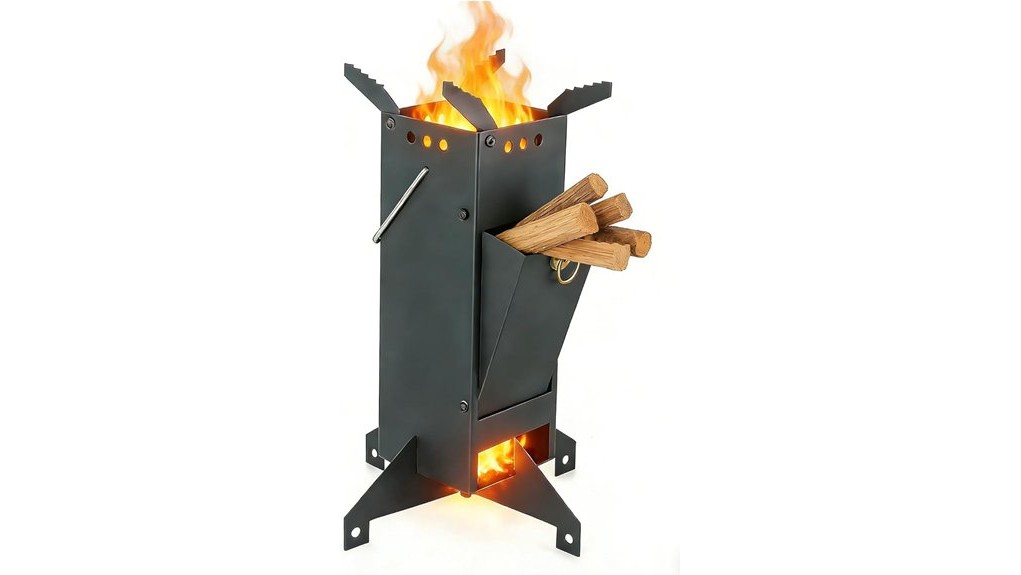
You’ll get a compact, fuel‑efficient rocket stove that boils a liter in minutes and runs on twigs, charcoal, or small wood, making it ideal for camping, backcountry shelters, and emergency backup when space and fuel economy matter. It folds tool‑free, weighs about 5.6 lb, and uses rugged coated steel with reinforced brackets for stability. Expect intense single‑pot heat, low fuel use, and simple maintenance; keep it dry and oiled. Keep going and you’ll find full performance, pros, cons, and care tips.
Some Key Takeaways
- Ultra-portable rocket stoves excel for camping and emergencies, offering compact, low-weight cooking and efficient heat from small natural fuels.
- Expect quick boil times and low fuel use thanks to insulated combustion chamber and chimney-driven airflow for concentrated, intense heat.
- Durable low-carbon steel construction with high-temp coating provides ruggedness, though coating can chip and steel may discolor over time.
- Limited cooking surface and single-burner layout suit solo or small-pot meals but not full camp kitchens or large cookware.
- Maintain by removing ash from the inclined chamber, drying thoroughly, and lightly oiling joints to prevent rust and hinge wear.
Which Situations Is This Portable Rocket Stove Best For?
In outdoor trips where fuel sources are limited or you need reliable heat, this portable rocket stove shines. You’ll rely on it for camping, backcountry shelters, and emergency power outages where wood’s abundant and fuel logistics are minimal. You can boil, fry, or grill at campsites and use it for controlled indoor grilling in well-ventilated spaces or off-grid cabins with proper ventilation. Its foldable, light design makes carrying and setup quick; the inclined chamber and chimney effect cut fuel use and ash buildup. You’ll appreciate the sturdy steel build and simple maintenance when you need dependable, efficient heat. Perfect for campfire cooking enthusiasts who want essential, portable gear for versatile outdoor meals and campfire cooking.
Quick Verdict: Should You Buy the Portable Rocket Stove?
While it won’t replace a full-size camp kitchen, this portable rocket stove is a smart buy if you need a lightweight, efficient heat source for camping, emergency prep, or off-grid cooking. You’ll get reliable boil times, simple fuel use, and easy cleaning—good for hikers, prepper kits, or backyard backup. Consider safety considerations: use on stable, non-flammable ground, keep wind and sparks in check, and supervise children. Pack it for seasonal storage after cleaning and drying to prevent rust. If you prioritize compact efficiency and low-fuel operation over full-featured rigs, buy it. They pair well with fire starter cubes to simplify ignition and extend cooking sessions.
Design, Materials, and Portability That Matter (Folding, Weight, Durability)
Because you’ll likely carry this stove in a pack or toss it in a trunk, its folding design and 5.62‑lb weight matter as much as the steel it’s made from: the low‑carbon steel with a high‑temp fireproof coating gives you rugged durability without excessive bulk, reinforced brackets and a raised non‑slip base keep it stable on uneven ground, and the compact folded footprint (about 4.7 × 4.7 × 12.2 in) lets you stash it quickly; overall, the build balances portability and longevity so you can set up fast, run efficient burns, and pack it away without worrying about fragile parts.
You’ll appreciate the compact design and clever folding mechanism that snaps into place without tools, delivering real weight savings for backpacking or car camping. The coating adds corrosion resistance for wet conditions, and reinforced joints resist wear from frequent setup. For practical use, the stove feels intentionally engineered: light enough to carry, stiff enough to hold cookware, and tough enough to handle rough handling on trail and campsite. Many campers prefer collapsible fire pits and stoves because of their packability and space-saving convenience.
Real-World Performance: Fuel Use, Heat Output, Cooking and Heating Tests
When you fire this rocket stove up, you’ll notice how efficiently it turns small, natural fuels into usable heat—twigs, charcoal, and wood ignite quickly and the chimney effect channels flames for a concentrated, steady output that boils water and sears pans faster than a flat‑burning fire. In trials you’ll see low fuel consumption thanks to the insulated combustion tube and inclined chamber that feeds embers. Flame consistency holds under varying loads, cutting boil times to a few minutes for a liter. Heating radius is limited but intense—good for single‑pot cooking and localized warmth without wasting fuel. This makes it a great choice for campers looking for compact, efficient camp stove gear that performs in the outdoors.
Pros, Cons, Maintenance Tips, and Who Should Skip It
If you want a lightweight, efficient camp stove that runs on twigs and charcoal and folds down to pocket size, this rocket stove delivers—fast boil times, concentrated heat, and very low fuel use. Pros: ultra-portable, rugged carbon-steel build, versatile cooking and emergency use, easy tilt and strong load-bearing door. Cons: steel can discolor and chip coating with heavy use; small cooking surface limits large pots. Maintenance tips: clean ash via inclined chamber, dry thoroughly after use, apply light oil to prevent rust, inspect brackets and hinges. Who should skip it: car campers wanting full-range burners or rust-prone coastal users. Check warranty claims promptly. Rocket-style combustion also enhances fuel efficiency and reduces smoke rocket stove basics.
Some Questions Answered
Does It Come With a Warranty or Guarantee From the Manufacturer?
Yes — the manufacturer offers a manufacturer warranty; you’ll find guarantee details from the seller. Check the product listing or contact YIMING7 for specific coverage, length, and claim instructions. You’ll want to confirm what’s covered (defects, finish, parts) and any exclusions or required proof of purchase. Keep documentation and photos if you need a claim. If you buy from a retailer, their return policy can supplement the warranty.
Are Replacement Parts or Accessories Available to Buy Separately?
Yes — you can buy spare components and some custom accessories separately. Check the seller or manufacturer (YIMING7) for replacement panels, brackets, and door parts; retailers and outdoor shops often stock grates, carrying cases, and add-on racks. You’ll want to confirm fit for your Model 2 before ordering. Keep photos and part numbers handy, and contact seller support for warranty-compatible parts or to request specific custom accessories if stock isn’t listed.
Is Assembly Safe for Children or Should Adults Only Handle Setup?
Adults should handle setup; don’t let children assemble it. You’ll need tools-free, quick folds, but child supervision is required during nearby use. Small parts and folded components present choking hazards for young kids and fingers can get pinched during assembly. Keep kids at a safe distance, store small pieces out of reach, and explain stove safety before use. Always verify stability and hot surfaces before allowing any child near the stove.
Can It Be Used Safely Indoors With Proper Ventilation?
No—you shouldn’t use it indoors except in well-ventilated, controlled situations; indoor safety is limited. You’ll need ventilation requirements: direct chimney or exhaust to outside, ample fresh-air intake, and working CO and smoke detectors. Never run it in an enclosed living space, near combustibles, or unattended. Treat it as an emergency or temporary heater only, and follow local codes. When in doubt, use outdoors for safer operation.
What Cookware Sizes Fit Securely on the Stove Top?
You can fit small pots and medium-size pans securely; large skillets work if centered and not overloaded. The stove’s flat top and raised non-slip base stabilize cookware up to about 10–12 inches across; heavier, oversized pans may tip when tilted or on uneven ground. Use the built-in wood rack to keep fuel clear, balance cookware over the central burn area, and adjust fuel load to maintain steady flame for safer, even cooking.