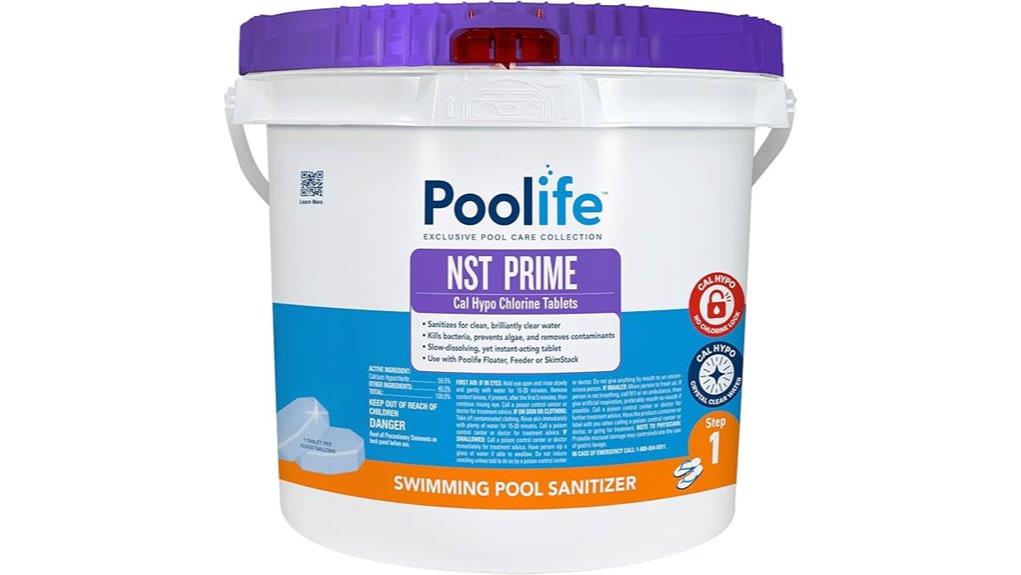
You’ll find Poolife NST Prime tablets deliver slow‑dissolving cal‑hypo chlorine that keeps free chlorine reliably around 1–4 ppm without adding cyanuric acid. They’re designed for feeders, floaters, or skimmer dosing and prioritize controlled dissolution to reduce shocks and residue. They work well with salt systems, but you’ll need to monitor pH, alkalinity, calcium and CYA and handle cal‑hypo safely. If you want predictable, low‑maintenance sanitization, keep going to see detailed usage and performance notes.
Some Key Takeaways
- Slow‑dissolving cal‑hypo tablets provide steady free chlorine, helping maintain 1–4 ppm with fewer shock cycles.
- Non‑stabilized formula prevents cyanuric acid buildup, preserving salt‑system performance and avoiding CYA accumulation.
- Works well in NST feeders, floaters, or skimmers; feeders offer the most consistent, adjustable dosing.
- Drawbacks: may need more frequent dosing in high UV, can raise calcium hardness, and requires careful handling.
- Recommended for hands‑off, low‑CYA sanitation; avoid if you need stabilized chlorine or have environmental/handling concerns.
What Poolife NST Prime Tablets Are and How the Cal‑Hypo Formula Works
Discover how Poolife NST Prime Tablets deliver steady, hands‑off sanitation: they’re slow‑dissolving tablets made from calcium hypochlorite (cal‑hypo), a non‑stabilized chlorine source that releases free chlorine without adding cyanuric acid (CYA). You’ll see that tablet chemistry prioritizes controlled dissolution, supplying consistent oxidizing power while preventing CYA buildup that impairs chlorine stability. Cal‑hypo functions as both sanitizer and pool oxidizers agent, attacking organics and pathogens to maintain 1–4 ppm free chlorine. Data-driven formulation reduces shock frequency and limits residue accumulation. If you want measurable, low‑maintenance sanitation, these tablets offer predictable dosing with documented effects on water quality.
How to Use NST Prime Tablets: Feeders, Floaters, and Skimmer Methods
Start by choosing the delivery method that matches your pool setup and maintenance goals: NST feeders give steady, adjustable dosing for hands‑off control; floaters offer simple, low‑effort release; and adding tablets to the skimmer provides a quick, direct dose for periodic treatment. For feeders, confirm correct feeder placement near return lines, calibrate flow, and monitor residual chlorine to maintain 1–4 ppm. With floaters, follow floater maintenance: keep vents clear, use in calm conditions, and replace tablets before they fully disintegrate. For skimmer dosing, add tablets sparingly, run the pump, and test chlorine frequently to avoid spikes.
Sanitization Performance: Chlorine Levels, CYA Prevention, and Practical Results
After choosing your delivery method, you’ll want to verify how Poolife NST Prime Tablets actually manage chlorine residuals and CYA over time. You’ll measure free chlorine daily, aiming 1–4 ppm; tablets deliver steady release via slow-dissolving cal-hypo chemistry that supports chlorine stability without adding stabilizer. Because the formula is non-stabilized, you’ll avoid CYA accumulation—regular CYA monitoring every few weeks confirms levels remain low. Practically, users report consistent residuals with fewer shock cycles and effective bacterial control. Track pH and total alkalinity alongside chlorine to isolate sanitizer performance; document readings to quantify tablet dissolution rate and adjust dosing method.
Compatibility and Equipment Care: Pools, Salt Systems, and Maintenance Impact
When you use Poolife NST Prime Tablets, they’re compatible with NST feeders, floaters, and direct skimmer addition and won’t interfere with salt chlorine generators because the tablets are non-stabilized calcium hypochlorite; this means you can dose manually or automate with a feeder/floater while avoiding cyanuric acid buildup that would otherwise impair salt-system output. You’ll find predictable chlorine release reduces shock frequency and stabilizer accumulation. That steady dosing supports salt compatibility and protects cell efficiency. Routine use lowers corrosive spikes, aiding equipment longevity for pumps, heaters, and liners. Follow manufacturer dosing and monitor free chlorine to maintain peak performance.
Pros, Cons, and Who Should (or Shouldn’t) Buy Poolife NST Prime Tablets
Having covered compatibility and equipment care, let’s look at clear, evidence-based pros and cons so you can decide if Poolife NST Prime Tablets fit your pool program. You’ll gain reliable, slow-dissolving calcium hypochlorite delivery that maintains chlorine 1–4 ppm, reduces shock frequency, and limits cyanuric acid buildup—improving chemical stability and equipment longevity. Downsides: non-stabilized formula requires regular monitoring and potentially more frequent dosing in high UV conditions; cal-hypo can raise calcium hardness and must be handled safely. Buy if you want hands-free, low-maintenance sanitation without CYA buildup. Don’t buy if you need stabilized chlorine or want minimal environmental impact.
Some Questions Answered
Are These Tablets Safe to Handle Without Gloves?
You shouldn’t handle them without gloves; they can cause skin irritation if they contact your skin. Use chemical-resistant gloves when loading feeders, floaters, or adding tablets to a skimmer. Rinse immediately with water if contact occurs. Store tablets in a cool, dry place away from moisture and incompatible materials—proper storage minimizes decomposition and accidental exposure. Follow label instructions and keep them out of reach of children and pets for safety.
How Long Is the Product Shelf Life Unopened?
Unopened, the product generally retains potency for about 2–3 years if proper expiration dating isn’t printed. You should rely on any manufacturer expiration dating on the package; absent that, assume a 2–3 year shelf life. Store it in cool, dry, ventilated conditions away from moisture, heat and organic materials. Good storage conditions minimize degradation of active calcium hypochlorite and preserve sanitizing effectiveness until the stated expiration.
Can I Ship These Tablets to States With Strict Pool-Chemical Regulations?
You can ship these tablets to some states, but you’ll need to check shipping restrictions and hazardous classification first. Because they contain calcium hypochlorite, carriers may treat them as hazardous and impose limits or forbid ground/air transport. Verify federal DOT rules and individual state regulations, confirm carrier policies, and use approved packaging and labeling. Contact Poolife or your shipper for documentation to guarantee compliance before dispatch.
Do Tablets Leave Any Residue or Staining on Pool Liners?
Generally you won’t see surface discoloration or staining if you use tablets properly. They’re slow-dissolving calcium hypochlorite, so avoid placing tablets directly on vinyl liners or concentrated spots; direct contact can cause localized chemical buildup and discoloration. Use an NST feeder, floater, or dissolve in the skimmer per instructions, maintain 1–4 ppm free chlorine, and test regularly. Following manufacturer guidance minimizes residue, staining, and equipment or surface harm.
Is This Product Covered by the Manufacturer Warranty?
Yes — the product carries a voluntary 30-day manufacturer warranty. You’ll find coverage details in the seller or Poolife documentation; the warranty typically covers defects and allows returns within the 30-day window subject to terms. You should document purchase date and condition, retain receipts, and contact Poolife or the retailer for claims. Verify specific exclusions, shipment damage policies, and whether proof of proper use is required to confirm eligibility.