You’ll find the Polaroid Gen 2 Now I‑Type is a rechargeable, twin‑lens autofocus instant camera that pairs i‑Type/600 film (ISO 800–3200) with sharper center‑to‑edge rendering and reliable exposure compensation. The Red Bundle gives immediate value with two 8‑shot film packs, USB charging, strap and cleaning cloth. Autofocus is brisk in good light, flash metering balances mixed scenes, and double‑exposure plus a 9‑second timer enable controlled composites—keep going and you’ll get full performance and use details.
Some Key Takeaways
- Rechargeable Polaroid Gen 2 Now I‑Type delivers authentic instant prints with compatibility for i‑Type and 600 film (ISO 800–3200).
- Twin‑lens autofocus improves center‑to‑edge sharpness and subject separation at portrait distances.
- Automatic exposure and accurate flash metering yield balanced highlights, though flash can flatten close subjects.
- Creative tools include double‑exposure mode and a 9‑second self‑timer for composite and staged shots.
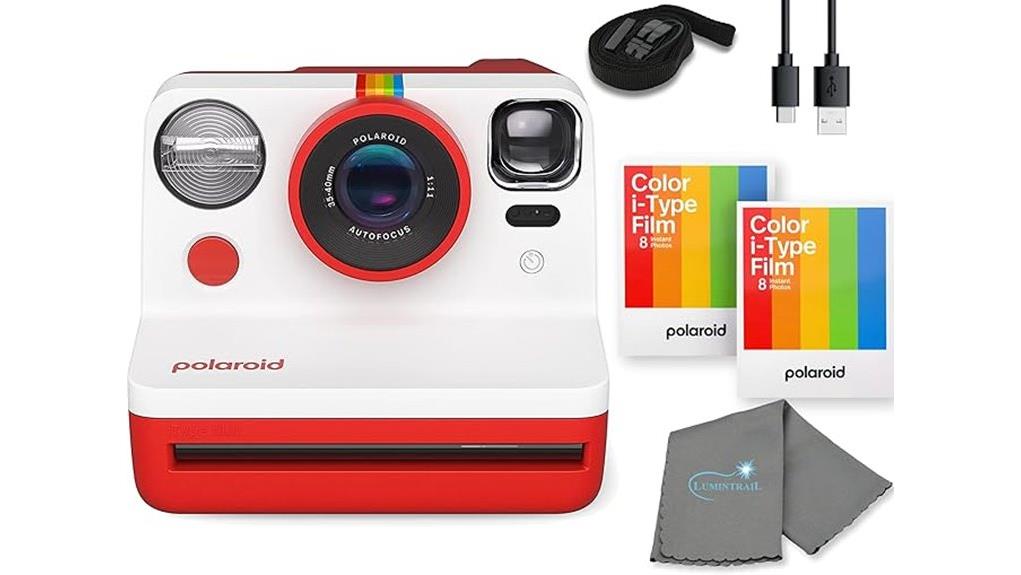
- Red Bundle includes camera, USB cable, neck strap, cleaning cloth, and two 8‑shot film packs for immediate shooting.
Hands‑On Verdict: Should You Buy the Polaroid Gen 2 Now I‑Type?
If you care about instant results and tactile, frame‑ready prints, the Polaroid Gen 2 Now I‑Type delivers: its rechargeable system and compatibility with i‑Type/600 film let you shoot up to ISO 3200 scenes, the twin‑lens autofocus produces sharp subject separation across near and mid distances, and built‑in exposure control plus an accurate flash keep highlights and shadows balanced in mixed lighting. You’ll appreciate measured controls: reliable autofocus, repeatable exposure, double‑exposure for layered compositions, and a 9‑second self‑timer for precise framing. It’s ideal for creative workshops and projects chasing vintage aesthetics, offering predictable results and compact portability. The camera is a strong choice for film‑camera enthusiasts who value authentic analog processes and related gear like film cameras and accessories.
What’s in the Red Bundle and How Much Photo Value You Get
The Red Bundle puts a ready-to-shoot kit in your hands: a red Polaroid Now Gen 2 camera, USB charging cable, neck strap, Lumintrail cleaning cloth, and two Color i‑Type film packs (16 shots total—8 per pack). You’ll inspect bundle contents: camera body (5.9 x 3.7 x 4.4 in), charging cable, wearable strap, microfiber cloth, and sealed film cartridges. That hardware lets you capture instant frames immediately; two film packs equate to 16 exposures, defining upfront photo value. Calculate cost-per-photo against standalone film: the bundled 16 shots lower initial entry cost and provide immediate shooting flexibility without separate purchases. This bundle is ideal for photographers who want to capture moments anywhere without needing extra accessories.
Image Quality and Performance: Autofocus, Exposure, Flash, and Film Results
Because the Gen 2 pairs a 2‑lens autofocus system with automatic exposure control, you'll get more consistently sharp, well‑exposed frames than with earlier Polaroid point‑and‑shoots. You’ll notice improved lens sharpness across the frame, especially center-to-edge at typical portrait distances. Focus speed is brisk for an instant camera; the dual lenses lock quickly in good light but slow slightly in low light. Automatic exposure and accurate flash produce reliable color accuracy and balanced highlights, though flash can flatten contrast on close subjects. Film grain remains prominent at ISO 800–3200, adding classic texture while limiting fine detail resolution. For best results, keep lenses clean with a dedicated solution to maintain crystal clear shots.
Features That Matter: Double Exposure, Self‑Timer, Battery, and Compatibility
When you engage the Gen 2's double‑exposure mode, the camera records two exposures onto a single frame by holding the shutter mechanism open between shots, letting you blend motion or layered compositions with predictable overlap and minimal ghosting. You trigger a 9‑second self‑timer for staged placement, then fire twice to composite motion trails or foreground/background layers. The rechargeable battery life supports dozens of packs before recharge; monitor charge via LED. Use exposure compensation to protect highlights when stacking exposures. Compatibility with i‑Type and 600 film preserves ISO 800–3200 response and yields consistent color and grain across paired frames. For shooting in wet conditions or out on the water, consider using a waterproof housing to protect your camera and maintain full functionality, especially for longer sessions with the Gen 2's rechargeable battery.
Who This Camera Is Best For : Alternatives and Final Recommendation
If you prioritize hands‑on, image‑centric controls and want predictable creative effects, you'll find the Polaroid Now Gen 2 well suited: its dual‑lens autofocus and precise exposure control deliver sharp, well‑exposed frames while the double‑exposure and 9‑second self‑timer let you compose layered or long‑delay scenes with minimal ghosting. You’ll want this if you value tactile shooting, reliable flash metering, and pocketable dimensions for event documentation. For beginners guide readers, it’s forgiving yet instructive. Alternatives: Fujifilm Instax Mini for cheaper film, Lomography for experimental tools. As gifting ideas, the Red Bundle with two film packs is ready to shoot. Consider also adding compact mirrorless camera accessories to complement your instant‑film setup.
Some Questions Answered
How Long Does a Full Battery Charge Last by Number of Shots?
A full charge typically gives you about 60–90 shots, so you can expect a battery lifespan measured in that shot count range. You’ll see variation depending on flash use, temperature, and double‑exposures. If you use flash heavily or lots of autofocus cycles, expect closer to 60 shots; minimal flash and occasional use can push toward 90. Carry a USB charger for reliable top‑ups during outings.
Can You Use Third‑Party Straps or Accessories With the Camera?
Yes — you can use third party straps; accessory compatibility is straightforward. You'll attach any strap with a standard lug or loop to the camera's strap eyelet, ensuring the connector width and weight rating match the camera (light instant body). Visually inspect connectors for secure fit and abrasion. For other accessories, verify mounting dimensions, USB charging port clearance, and rolling-shutter clearance so lenses, flashes, or grips don't obstruct the viewfinder or autofocus.
Is the Camera Compatible With Polaroid Originals I‑Type Color Film?
Yes — you can use Polaroid Originals i‑Type Color film. You’ll load i‑Type cartridges into the mail slot; film compatibility is native and exposure metering is tuned for i‑Type’s ISO 800 base. Pay attention to film thickness when switching between i‑Type and older 600 packs: mechanical spacing and focus calibration assume standard instant film thickness, so inconsistent thickness can shift focus slightly or affect flash timing. Always handle packs by edges.
How Long Does It Take for a Photo to Fully Develop?
You’ll see a visible image within 60–90 seconds, but full development typically takes 10–15 minutes depending on film chemistry and ambient temperature. Cooler temps slow chemical reactions, extending development to 20–30 minutes; warmer conditions speed it up to the lower end. Avoid shaking; keep the photo face down in subdued light for even emulsion settling. The film chemistry and temperature determine final contrast, color saturation, and grain.
Can I Disable the Flash Completely for Low‑Light Shots?
Yes — you can disable flash. You’ll toggle flash off using the camera’s flash control so it won’t fire in low light; exposure then relies on the automatic system unless you use manual exposure techniques like bracketing with the double‑exposure feature or increasing scene brightness. Visually, expect longer development shadowing and softer edges; keep camera steady or use a tripod and the self‑timer to avoid rolling shutter blur and blur from handshake.