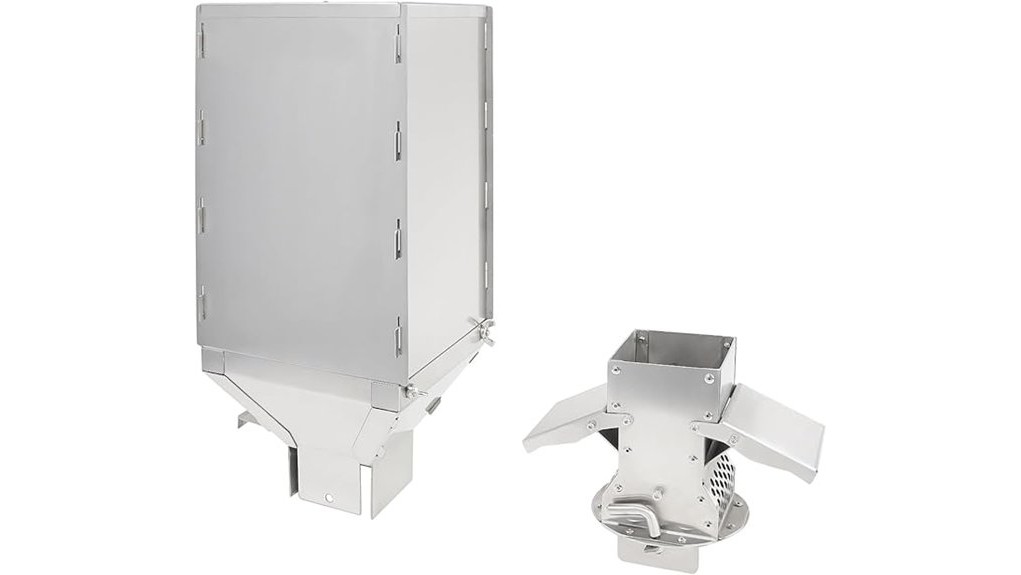
You’ll get a compact black-steel pellet stove with a front-loading bin and particle burner that’s built for tent cooking and small-space heating. You load wood pellets, light the burner, and control flame and temperature with vents and the chimney draft. The heat-resistant top works for pans and kettles, legs fold for transport, and viewing windows let you monitor the burn. It’s efficient and practical for campers and preppers—keep going to see setup, safety, and performance details.
Some Key Takeaways
- Front-loading black steel pellet bin stove offers compact, portable heat and cooktop functionality ideal for small tent camping and emergency use.
- Particle burner provides controlled, efficient combustion with adjustable air vents and integrated chimney for draft regulation.
- Durable, weatherproof construction with foldable detachable legs ensures stable setup, easy transport, and season-to-season use.
- Visible flame through viewing windows and adjustable vents give predictable cooking temperatures and pellet consumption control.
- Limitations include moderate heat output, reliance on pellet fuel, routine ash cleanup, and size constraints for larger tents.
How the SOTECH Pellet Bin Works and What’s in the Box
Start by filling the front-loading pellet bin with wood pellets, light the particle burner, and adjust the air vents to get the burn you want—this stove pulls air through an efficient ventilation system and channels smoke out the integrated chimney while the heat-resistant top doubles as a cooktop. You’ll unpack a pellet bin, detachable legs, chimney pipe, particle burner, and fasteners. Follow clear assembly steps: attach legs, secure burner, connect chimney, test venting. For use, load pellets, monitor through viewing windows, and fine-tune vents. Maintenance tips: empty ash, check bolts, clean chimney, and store dry to prolong life. Catalytic heaters are an effective option for conserving fuel and providing steady warmth in enclosed outdoor spaces like tents, especially when used with proper ventilation and safety practices such as staying warm outdoors.
Real-World Setup and First-Use Checklist for Tent and Campsite Cooking
Once you’ve assembled and tested the pellet bin, set it up at your campsite with safety and cooking workflow in mind: pick a level, non-flammable surface clear of overhangs, position the stove so the chimney vents away from tents and gear, and stake or brace the legs on uneven ground. Check site selection for wind, drainage, and proximity to water. Gear checklist: pellets, lighter/matches, gloves, small shovel, fire extinguisher, cooking pot, chimney sections, ash tool, spare gaskets. First use: load minimal pellets, light carefully, monitor smoke and stability, adjust vents for steady burn, and keep kids/pets away. Consider carrying a campfire safety fire blanket to quickly smother unintended flames or embers.
Heat, Burn Control, and Cooking Performance With Wood Pellets
When you load quality wood pellets and set the vents, the SOTECH pellet bin delivers a steady, controllable heat source that’s easy to tune for cooking or warmth. You’ll use temperature control via the adjustable air vents and chimney draft to reach simmer or boil quickly. Flame modulation is intuitive — open vents for a hotter, shorter burn or close slightly for low, even heat. The flat top yields consistent cooking efficiency for pans and kettles. Track pellet consumption by timing refill intervals; efficient burns stretch fuel while aggressive settings increase consumption. You’ll find predictable performance with minimal fuss. This makes the unit a practical choice for campers who want reliable heat in their tent and easy integration with tent heater setups.
Durability, Portability, and Safety Features for Outdoor Use
Because it’s built from durable black steel and reinforced with heat-resistant bolts, the SOTECH pellet bin stands up well to rough outdoor use and repeated heating cycles. You’ll appreciate the weatherproof coating that sheds moisture and resists rust, keeping the stove reliable season after season. Quick fold legs lock solidly for stable cooking on uneven ground and detach for compact transport. Safety features include a secure front door, viewing windows to monitor burn, and an integrated chimney that directs smoke away from your tent. Lightweight yet sturdy, it balances portability with protective design so you can camp with confidence. Stay warm outdoors with camping heaters designed for safe tent use and reliable performance.
Who Should Buy This Pellet Stove and Practical Pros vs. Cons
If you camp, hunt, or prepare for emergencies and want a compact, fuel-efficient heat-and-cook solution, this SOTECH pellet stove is worth considering. You should buy it if you’re a budget camper, part of small groups, or prepping solo and need reliable warmth plus a cooktop without bulk. Pros: lightweight, detachable legs, efficient pellet burn, integrated chimney, sturdy stainless-steel build, easy front-loading, visible flame control. Cons: limited heat output for larger tents, pellet fuel dependency, periodic ash cleanup, dimensions suit small setups only. Overall, it’s practical, transportable, and affordable for focused outdoor use. Consider pairing it with essential winter stove accessories for cozy, safe tent heating and cooking, such as insulated gloves and a stove chimney kit.
Some Questions Answered
Does It Emit Odors That Affect Tent Air Quality?
Yes — you’ll notice some smoke odor, so you’ll need good ventilation needs addressed. Use the integrated chimney, position the stove near a tent vent or door, and keep vents adjusted to promote complete combustion. Burn dry wood pellets and avoid overloading to reduce smell. You’ll want a carbon monoxide monitor and to crack windows or create a vented flue pathway so tent air quality stays safe and tolerable.
Can It Run on Other Pellet Types or Biomass Fuels?
Yes—you can use standard wood pellets, and the particle burner may handle some biomass mixes, but you shouldn’t assume every fuel works. You’ll get best, cleanest heat with properly sized wood pellets; corn kernels burn hotter but produce more residue, ash and odors and may clog the feed or damage components. Test small batches, clean frequently, and check manufacturer guidance before using corn or alternative biomass to avoid voiding warranty or causing malfunctions.
How Loud Is the Stove During Operation?
You’ll find it runs with low noise and near-whisper operation during normal burning. You’ll hear a gentle pellet feed and soft airflow; nothing harsh or intrusive for campsite conversation or sleeping. Occasionally, you might notice a brief clink when pellets drop or a slight draft sound when you adjust vents. Overall, you’ll experience quiet, practical warmth that won’t compete with your gear or conversations while you cook or relax.
Are Replacement Particle Burners or Parts Sold Separately?
Yes — replacement availability varies, but you can often source individual particle burners and parts. Check the manufacturer (SOTECH) for official burner sourcing and authorized dealers for spare pellet-bin components. If SOTECH doesn’t list parts, search specialty stove suppliers or camping gear vendors for compatible burners, gaskets, vents, and bolts. Keep model details and ASIN handy when ordering to make certain fit, and ask sellers about return policies and warranty coverage.
Does It Require Seasonal Maintenance or Storage Prep?
Yes — you’ll need seasonal maintenance and storage prep. Empty pellets, ash, and debris, then wipe surfaces and inspect seals and bolts. Clean or replace any filters and perform filter cleaning on ventilation components. Detach chimney and legs, store dry to prevent rust. Lubricate moving parts lightly and check the particle burner for clogs. Keep spare parts and a moisture barrier in storage to protect the stove between seasons.