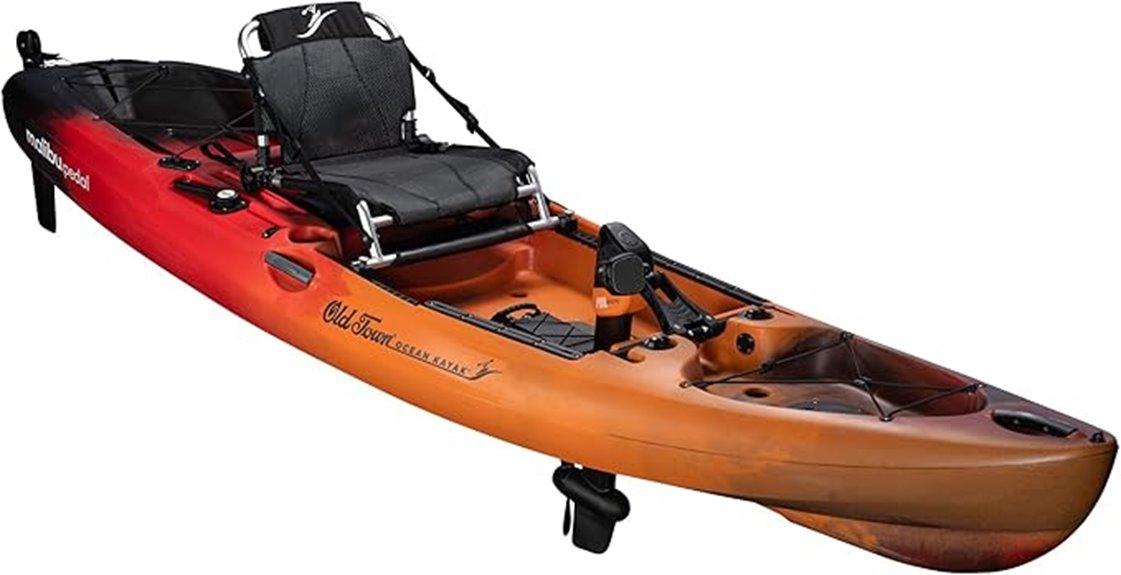
You’ll like the Malibu Pedal if you want a steady, hands‑free 12‑ft cruiser for casual commutes, exploring, or fishing; it pedals smoothly with a direct feel so you can scan the horizon or cast while moving, and the Element Beach seat keeps you comfy on long days with adjustable lumbar and mesh ventilation. The roomy stern tankwell fits a cooler or gear and rod holders simplify fishing, though it’s a bit bulky; keep going and you’ll find more details.
Some Key Points
- Hands-free pedal drive provides efficient, low-effort cruising and lets you scan or fish while moving.
- Element Beach seat delivers long-day comfort with breathable mesh, lumbar support, and adjustable positioning.
- Rudder steering offers predictable tracking and responsive course corrections at modest speeds.
- Large stern tankwell and multiple rod holders/ accessory tracks accommodate coolers, gear, and fishing setups.
- Bulkier hull limits nimbleness and increases upkeep, but overall value and resale are good with proper care.
What the Malibu Pedal Kayak Is and Who It’s For
When you hop into the Old Town Ocean Kayak Malibu Pedal, you’re getting a 12-foot, solo sit-on-top that’s built for easy, hands-free cruising and do-it-all adventures, whether you want a relaxed paddle down a calm bay or a day of light fishing. You’ll feel freedom from the moment you pedal, with a comfy Element Beach seat that adjusts as you move and mesh ventilation to keep you cool. It’s ideal for beginner commuters seeking a steady, low-effort commute, solo explorers, and anglers who value simplicity. Don’t forget sun protection—hat, sunscreen, and sunglasses make days better.
Hands-Free Pedal System: Performance, Efficiency, and Handling
Since you’ve already got a sense of the Malibu Pedal’s comfort and who it suits, let’s look at the pedal drivetrain itself and what it actually feels like on the water. You’ll notice the pedal mechanics are smooth, with a direct feel that turns legs into steady forward motion without fuss, letting you scan horizons or cast lines. Efficiency is solid for cruising and exploring, and you’ll get predictable tracking at modest speeds. Steering responsiveness comes through the rudder controls, so quick corrections are easy and subtle, giving you confidence in waves or tight channels while keeping your hands free.
Comfort, Seating, and On-Water Ergonomics for Long Days
Although you’re out on the water for hours, the Malibu Pedal’s Element Beach seat keeps you feeling fresh instead of fatigued, thanks to its breathable mesh and fully adjustable slide-track that lets you dial in leg position and back support without fuss. You’ll appreciate the thoughtful lumbar support when you change cadence or cruise, it prevents that slow-creep ache so common on long trips. Adjusting footrest adjustability is intuitive, so your knees stay happy and your stroke stays efficient; you can lean back to soak sun or sit upright for power. It’s freedom to roam, comfortably.
Storage, Fishing Features, and Customization Options
You’ll find the Malibu Pedal keeps your kit organized so you can focus on the water and the catch, not a tangle of gear. The redesigned large stern tankwell swallows a cooler, dry bag, or extra lines, so you’ll stash bulkier items and still have room to move. Three flush rod holders sit where you need them, two behind your seat and one forward-facing, letting you troll or set lines hands-free. Two 18" accessory tracks flank the cockpit for fishfinders, camera mounts, or lights, and you’ll enjoy rigging it your way, fast and uncomplicated.
Verdict: Strengths, Weaknesses, and Is It Worth the Price?
When you're weighing the Malibu Pedal, think about what you actually want out on the water: comfortable, hands-free pedaling and lots of room for gear, or the last ounce of speed and nimbleness. You’ll love the Element Beach seat, roomy tankwell and easy accessory compatibility for rods, coolers and cameras, which give you freedom to craft trips. Weaknesses include bulk that costs nimbleness and slightly more upkeep; simple maintenance tips, like rinsing and checking tracks, keep it ready. Warranty coverage is solid, and resale value stays reasonable if you care for it — a fair buy for adventurers.
Some Questions Answered
Does It Fit in a Standard Roof Rack Without Special Carriers?
Yes, it fits on a standard roof rack, but you’ll want stability mounts and proper crossbar spacing to keep it secure. You’ll set the kayak on its hull, align it centered between bars, then use load straps over the cockpit and stern to cinch it down. Check that straps don’t rub the pedal unit, and add bow and stern tie-downs for peace of mind. Drive confidently, but recheck straps after the first mile.
Can One Use a Paddle Instead of Pedals if Needed?
Yes — you can use a paddle instead of pedals if needed; the cockpit supports traditional paddling as an emergency backup, and you'll find the sit-on-top hull handles well. Bring a touring or recreational paddle, keep it accessible in the forward storage, and practice short strokes to maintain direction. It’s freeing to know you’ve got a reliable backup, so you can explore confidently even if the pedal system needs a rest.
What Is the Warranty and Who Handles Repairs?
The manufacturer warranty typically covers defects in materials and workmanship for a set period, and you’ll claim it through the manufacturer or authorized dealer, who’ll guide approved repairs. If you prefer third party repairs, you can use them, but that may void parts of the manufacturer warranty, so check terms first. Bring photos and purchase proof, keep receipts, and ask the maker about authorized shops to preserve coverage while staying free to choose repairs.
How Heavy Is the Kayak for Lifting and Car Loading?
The kayak weighs about 57 pounds, so you’ll handle it solo for short moves but want help for roof loading or long carries. For lifting, use your legs, keep the kayak close, and lift from the molded handles or belly strap to balance the weight specs. A roller or foam blocks on crossbars make car loading easier, and if you’re solo, try a bow-and-stern flip to shoulder carry. You’ll get it steady.
Are Replacement Pedal Parts Readily Available?
Yes — you can usually find replacement cables and aftermarket propellers without much fuss, so you won’t be stranded. Check Old Town dealers, specialty kayak shops, or online retailers for OEM cables, and anglers often swap in aftermarket propellers for better thrust or quieter pedaling. Bring your model info, measure existing parts, and ask sellers about compatibility. You’ll get back on the water fast, with options for upgrades that match your adventurous style.