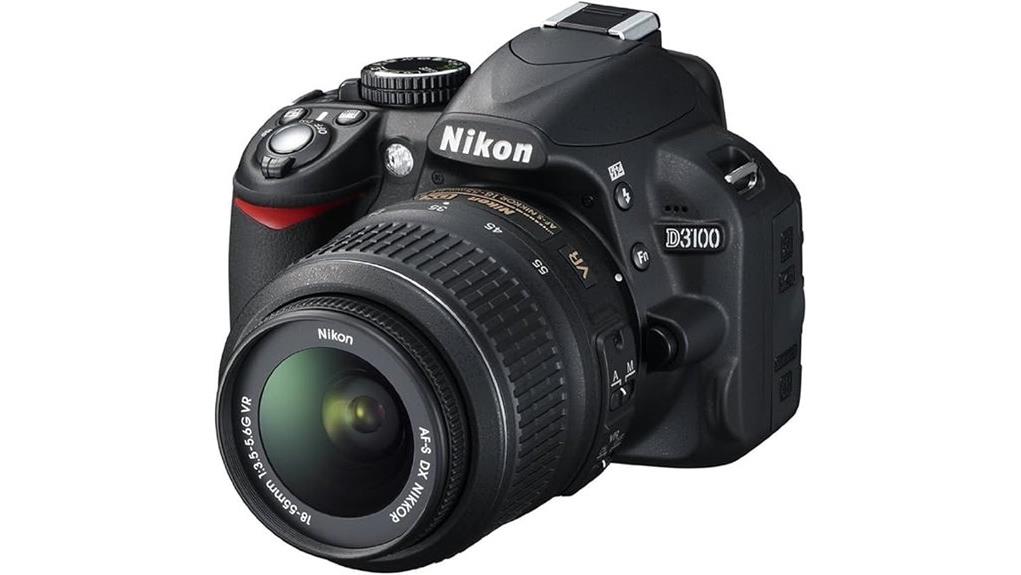
The Nikon D3100 gives you true DSLR image quality with a 14.2MP DX sensor, natural color and good microcontrast up to ISO 800, plus usable 1080p video with continuous AF. Its 11-point AF is solid for stills but can struggle with fast or erratic subjects, and Live View AF is slower. The kit 18–55mm VR lens and spare battery are handy, though you’ll want faster glass for low light and reach—keep going to see specifics and alternatives.
Some Key Takeaways
- 14.2MP DX sensor delivers clean, detailed stills with natural color and good microcontrast up to about ISO 800.
- Usable 1080p video with continuous AF, though rolling shutter and AF hunting occur during fast motion.
- 11-point AF system is reliable for stationary subjects but struggles with erratic or fast-moving targets.
- Included 18–55mm VR kit lens and battery/charger make it a ready, value-packed starter DSLR package.
- Consider newer used D3200/D3300 or mirrorless bodies for better low-light and autofocus performance.
Nikon D3100 at a Glance: Who It’s For and What’s Included
Think of the D3100 as an entry-level DSLR that punches above its class: it’s aimed at enthusiasts and beginners who want DSLR image quality, 1080p video with continuous autofocus, and guidance while they learn. You’ll find features tailored to entry level users—Nikon Guide Mode, straightforward controls, and a compact DX body that lowers the learning curve without limiting capability. Package contents include the 18–55mm VR kit lens, EN-EL14 battery, MH-24 charger, and essentials for immediate shooting. You’ll appreciate the balance of usable features and included gear that lets you start shooting confidently right away. Our shop carries essential mirrorless camera accessories that complement DSLR setups like the D3100.
Image Quality and Video Performance: Sensor, ISO, and 1080p Results
Although the D3100 uses a modest 14.2MP DX-format CMOS sensor, it delivers clean, detailed stills at base and moderate ISOs and surprisingly usable 1080p video with continuous autofocus, making it a versatile tool for beginners and enthusiasts alike. You’ll get natural color and good microcontrast up to ISO 800; noise becomes more pronounced by ISO 1600 but remains manageable with cautious processing. In low light ISO performance, expose carefully to preserve shadow detail. Video quality is sharp with accurate color, though rolling shutter artifacts appear during fast pans. Overall, balance expectations: strong stills and competent 1080p for the class. Consider pairing the D3100 with high-performance memory to ensure smooth recording and reliable storage during extended shooting.
Autofocus, Handling, and Stabilization in Real Shooting Scenarios
When you press the shutter, the D3100’s 11-point AF system locks reliably on stationary subjects and keeps pace in most everyday situations, though it can struggle with erratic or fast-moving targets; continuous AF in video works but hunts more than modern systems. You’ll find low light autofocus adequate down to moderate ISO levels, though contrast-detection in Live View and slower AF motors limit rapid subject acquisition in dim scenes. Grip comfort is surprisingly good for extended handheld shooting, aiding steadiness. VR-equipped lenses compensate camera shake effectively for stills, but panning and fast action demand predictive AF and faster glass than the kit lens. The camera pairs well with purpose-built camera grips to improve handling and shooting endurance.
Lens, Battery, and Accessory Value: What You Get vs. What You Need
Breaking down what’s in the box shows where the D3100’s value lies and where you might want to upgrade: Nikon bundles a competent 18–55mm f/3.5–5.6 VR kit lens, a spare EN-EL14 battery with MH-24 charger, and useful basics, but the slow aperture range, modest reach, and three included identical zooms limit low-light performance and telephoto flexibility for serious shooters. You’ll appreciate the spare battery for longer shoots, though high-use photographers often consider reliable third party batteries to extend runtime affordably. For improved reach and low-light speed, plan on aftermarket lenses—fast primes or longer zooms—rather than relying solely on kit optics. The site also recommends picking up a spare camera battery and compatible accessories to keep you shooting longer and reduce downtime.
Final Verdict and Buying Advice: When to Buy, Alternatives, and Price Ranges
If you’re after a capable entry-level DSLR that covers basic photography and full‑HD video without breaking the bank, the D3100 still makes sense—especially for beginners who value Nikon ergonomics, Guide Mode, and a usable 18–55mm VR kit lens. Buy if you’re new, need reliable image quality, and want low-cost lenses. Consider budget alternatives like used D3200/D3300 models or mirrorless options for better low-light and autofocus. Know when to upgrade: move up when you need faster autofocus, higher ISO performance, or advanced controls. Expect fair used prices; shop bundles with battery, charger, and lens for best value. Gear Guide caters to enthusiast photographers and camera fans, offering curated products and advice for digital cameras and accessories, so check out our product recommendations for related gear.
Some Questions Answered
Does the Camera Include a Memory Card in the Package?
No, a memory card isn't included. You get the listed included accessories—EN-EL14 battery, MH-24 charger and the 18–55mm Zoom-NIKKOR VR lens(es)—but retailers often exclude storage media. As an expert, you should plan to buy a compatible SD/SDHC card separately; choose a Class 10 or higher, preferably a reputable brand, to support full 1080p video and high-resolution stills. That guarantees reliable performance and adequate capacity for shoots.
Can the D3100 Connect Wirelessly or to Smartphones?
No, the D3100 doesn’t have built‑in wireless connectivity, so it won’t pair directly with smartphones. You can add a compatible wireless adapter (sold separately) to enable remote shooting and image transfer, but integration is limited. Nikon’s modern smartphone apps won’t fully support the D3100’s feature set, so you’ll get basic remote control or file transfer only. For seamless app-driven workflows, consider a newer model with native Wi‑Fi.
Is There Built-In Flash Exposure Compensation Control?
Yes — you can apply flash compensation to the D3100’s built-in popup flash. You’ll use the camera’s flash compensation control (accessible via the menu or a dedicated flash button depending on mode) to dial output up or down. That adjusts exposure for the popup flash sync and balances ambient light. Remember TTL metering still governs baseline output, so flash compensation gives you fine-tuned control over final flash contribution.
What File Formats (Raw Options) Does the Camera Record?
You can record RAW only or combine RAW with JPEG variants; the D3100 saves 12-bit NEF RAW files and offers Small/Medium/Large JPEGs and Fine/Normal compression. If you choose RAW+JPEG, the camera writes both NEF and your selected JPEG size/quality simultaneously. You’ll get full uncompressed RAW data (NEF) for post-processing flexibility, while JPEG variants provide ready-to-use files for quick sharing or backups straight out of camera.
Are There Firmware Updates Available and How to Install Them?
Yes — Nikon released firmware updates. You’ll download the correct D3100 firmware from Nikon’s support site, verify model/region, and copy the update to a formatted SD card. Insert it, power on, enter the firmware menu, and follow on-screen prompts. For firmware troubleshooting, make sure full battery, use the exact file, and don’t power off mid-update. Update precautions: back up images, read readme, and confirm compatibility before proceeding.