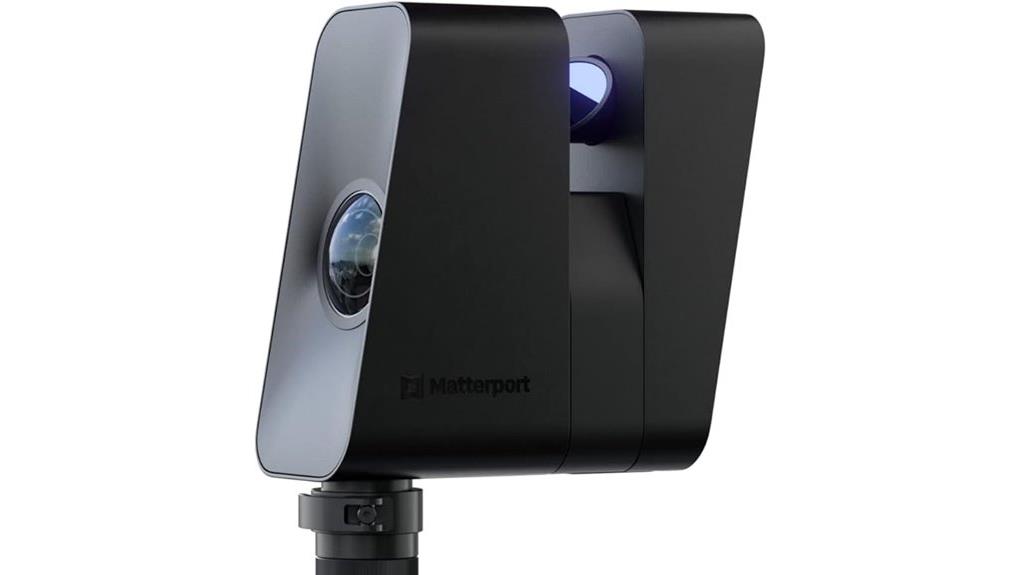
You’ll get a professional-grade, portable LiDAR camera that captures metrologically useful 3D scans with 4K imagery. It’s aimed at pros—photographers, surveyors, AEC—needing ±20 mm precision at 10 m, up to 100 m extended range, ~100k points/sec and sub-20s sweeps. Works indoors and outdoors with stable LiDAR returns in sun; plan overlaps, GNSS lock and spare batteries. It requires a paid Matterport workflow and accessories; keep reading for detailed specs, workflows and buying guidance.
Some Key Takeaways
- Professional-grade 3D LiDAR plus 4K imaging yields metrologically useful, textured scans for real estate, construction, and heritage projects.
- Extended range up to 100 m (20 m typical) with ±20 mm precision at 10 m and ~100,000 points/sec capture rate.
- Fast sweeps under 20 seconds balance throughput and motion artifacts, but plan scan positions for robust registration.
- Requires Matterport subscription and Matterport software; factor recurring costs into total cost of ownership.
- Kit includes removable battery, spare battery, quick-release mount, and carry case; tripod and specialized accessories sold separately.
Matterport Pro3 at a Glance: What It Is and Who It’s For
While compact enough to carry in its included case, the Matterport Pro3 is a professional-grade 3D LiDAR camera designed to capture high-fidelity indoor and outdoor scans with 360° views and 4K imagery. You’ll deploy it to document spaces precisely, combining rapid LiDAR sweeps and high-resolution color for textured models. Use cases include real estate, construction verification, cultural heritage, and outdoor events mapping where environmental robustness matters. You’ll appreciate the removable battery, quick-mount interface, and Matterport workflow integration requiring a professional subscription. The Pro3 suits professionals — especially professional photographers — who need repeatable, metrologically useful capture in varied conditions. Many photographers pair such scanners with external camera monitors to better preview framing and exposure during capture.
Key Specs That Matter: LiDAR Range, Accuracy, Speed, and Imaging
Because accurate spatial capture depends on range, precision, sweep speed, and image quality, you’ll want to evaluate each of the Pro3’s LiDAR and imaging specs against your project tolerances. You’ll get up to 100 m extended range (20 m normal) and ±20 mm precision at 10 m, which informs placement density and expected error. The sensor collects ~100,000 points/sec and completes sweeps under 20 seconds, balancing throughput and motion artifacts. Consider beam divergence for spot size growth at distance and required scan overlap to prevent gaps and make certain reliable registration. Imaging provides 4K color for contextual texture and alignment. Many drone photographers rely on specialized drone camera gear to complement LiDAR for comprehensive aerial surveys.
Real-World Performance: Indoor/Outdoor Scans, Sunlight, and Workflow Notes
When you deploy the Pro3 indoors or outdoors, it reliably captures dense, georeferenced point clouds and 4K imagery even in mixed lighting, so you can maintain consistent registration across adjacent scans. You’ll get rapid, repeatable sweeps (under 20 seconds) that handle sunlight handling effectively; lidar returns remain stable in direct sun while imagery may need exposure adjustments. For exterior workflows, use e57 output for extended-range targets. Workflow tips: plan scan positions to maximize overlap, lock GNSS when available, swap hot batteries to avoid interruptions, and verify registration on-site to catch misalignments before processing. For those concerned with color accuracy, consider adding a color calibration step using a known target like a colorchecker to ensure consistent results across devices and lighting conditions with color calibration.
What You Get and What’s Missing: Battery, Accessories, Software, and File Support
The Pro3’s field performance sets expectations for what the kit includes and what you’ll need to add: Matterport supplies the camera, a removable battery (with a charging kit and a spare battery included), a quick-release tripod mount, and a carry case, plus a one-year warranty. You’ll get reliable core hardware, but battery lifespan under continuous sweeps isn’t specified beyond included units, so plan spares. Tripod sold separately; expect to source third party accessories for specialized mounts or weather rigs. Operation requires Matterport software; evaluate software integrations and available cloud alternatives if you need different processing or file hosting workflows. For photographers managing many large scans, consider using a drive docking station to streamline offloading and archiving workflows.
Buy or Skip? Pricing, Subscription Needs, Use Cases, and Final Recommendation
If you need high-precision, rapid 3D captures for professional real estate, construction, or surveying workflows, the Matterport Pro3 is worth evaluating against total cost of ownership and subscription constraints. You’ll balance a substantial upfront price with recurring subscription costs because Matterport software is required; free plans won’t work. Choose Pro3 if your projects demand ±20 mm accuracy, extended e57 range, and fast sweeps. Consider training resources and workflow integration costs. Resale value is reasonable given brand and physical robustness. Skip it if you can’t justify subscription fees; negotiate enterprise discounts for volume deployments to reduce per-unit TCO. For photographers storing and managing large image libraries, pairing the Pro3 workflow with secure NAS solutions can streamline backup and access while protecting originals.
Some Questions Answered
Does the Pro3 Support Third-Party Mapping or BIM Software Natively?
No — it doesn’t natively support third party integration via native plugins. You’ll export e57 files (extended range) and other outputs from Matterport’s ecosystem, then import those into third‑party mapping or BIM software. Matterport requires its software and a professional/business plan for full export functionality. For direct plugin-style native integrations, you’ll rely on exported data and APIs rather than built‑in third‑party plugin support.
Can Firmware Be Updated Manually Without Matterport Cloud Access?
No — you can’t perform manual updates or offline flashing without Matterport cloud access. Firmware distribution and validation are controlled through Matterport’s cloud services, so updates require authentication and provisioning via their platform. You can prepare devices and batteries offline, but the actual firmware install and signature checks happen through Matterport’s system. For enterprise needs, contact Matterport support for authorized offline or bulk provisioning options and documented procedures.
Are Replacement Parts (Lenses, Housing) Sold Separately?
No — Matterport doesn’t sell replacement lenses or body shells directly to consumers. You’ll need to go through Matterport support or an authorized service center for parts and repairs; they handle replacement lenses and body shells as repair/service items rather than standalone retail components. Contact support with your serial number to arrange service, warranty evaluation, or paid repair. Keep proof of purchase and warranty details handy to streamline the process.
What Is the Device’s Operating Temperature and Storage Range?
The device’s operating limits specify an operating temperature range of 0°C to 40°C and a storage range of -20°C to 60°C. You’ll rely on these thermal performance parameters to plan deployments and transit. Staying within operating limits guarantees sensor accuracy, battery safety, and consistent lidar throughput. Exceeding storage or operating temperatures can degrade components, reduce battery life, and impair measurement precision, so you should follow these thermal performance guidelines strictly.
Is International Voltage/Charger Compatibility Included for Travel?
No — global adapters aren’t included; you’ll need to provide compatible plugs for travel. The Pro3 ships with a battery charging kit and batteries, but the kit assumes country-specific mains; it doesn’t cover all global adapters. You should verify local power regulations and mains voltage before use. For international travel, bring certified global adapters or a suitable charger meeting destination power regulations to guarantee safe charging and compliance with local electrical standards.