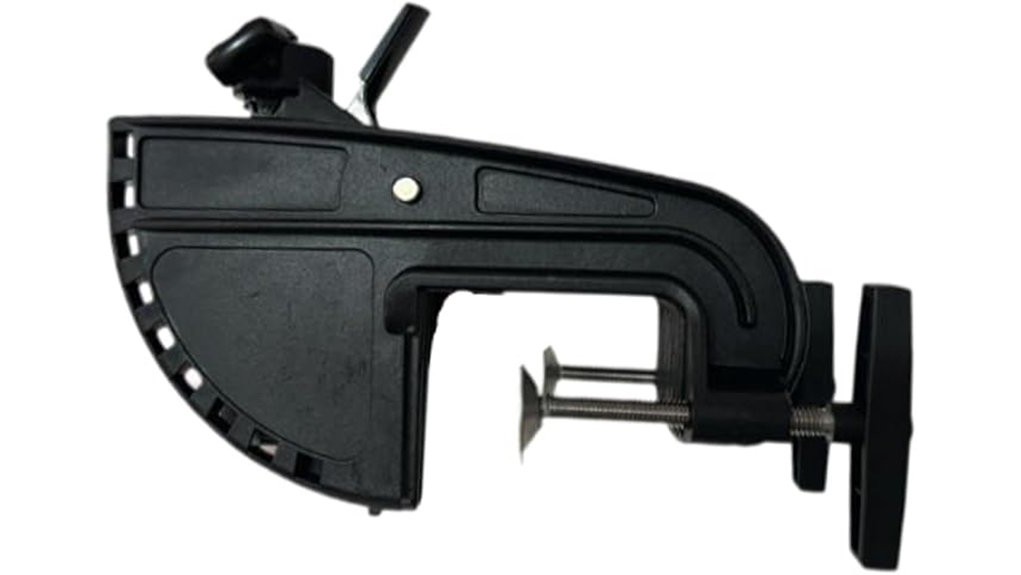
You’ll find the Kowaku 12V bracket suits kayak and small craft anglers who need a lightweight, 90° adjustable clamp for 28 mm shafts and 36–50 lb trolling motors. It’s molded polypropylene with metal screws, offers repeatable hanging/trolling positions, and needs transom reinforcement or isolation pads to reduce noise and wear. Expect limited heavy-duty shock tolerance and potential screw corrosion in saltwater. Keep going to see mounting tips, compatibility checks, and durability trade-offs.
Some Key Takeaways
- Compatible with 12V trolling/hanging motors and accepts 28 mm shafts for 36–50 lb thrusters.
- Polypropylene body is lightweight, UV-stabilized, and impact-resistant but not for heavy-duty stress.
- Provides 90° adjustable rotation with angle stops for repeatable thrust alignment and hanging mode.
- Metal screws secure the clamp—inspect for corrosion or galling and apply corrosion prevention in saltwater.
- Recommend transom reinforcement, isolation pads for noise reduction, and shims for nonstandard hull fits.
Who the Kowaku 12V Motor Bracket Is Best For
If you use a 12V electric trolling or hanging motor on an inflatable, kayak, canoe, or dinghy, the Kowaku 12V bracket fits your needs precisely; it supports 28mm shafts and common 36–50 lb propellers while offering 90° adjustable rotation for best thrust alignment. You’ll find it ideal if you’re a kayak angler needing compact, repeatable mounting that won’t intrude on casting or gear stowage. Solo paddlers will value the lightweight polypropylene construction and simple hardware for quick installation and removal. The bracket’s adjustable angle and wear-resistant materials provide predictable performance and low maintenance under varied load profiles. It’s a great match for anglers and paddlers who use power poles and other kayak accessories from Power Pole Essentials.
What Fits : Shaft Sizes, Motor Types, and Boat Compatibility
Because the Kowaku bracket was engineered for hanging/trolling setups, it accepts common 28 mm (1.10 in) shafts and accommodates 36, 46, and 50 lb 12V electric propellers, so you can expect direct compatibility with most small outboard thrusters used on inflatables, kayaks, canoes, and dinghies. You’ll use standard shaft adapters for minor diameter differences; verify spline or taper fit. Evaluate motor noise transmission through the PP body and fasteners; isolation pads can reduce vibration. Refer to the propeller clearance guidelines in relation to hull draft and trim to avoid ventilation. For plywood or soft transoms, plan transom reinforcement and load distribution to prevent deformation. Gear up with complementary kayak accessories like mounts, batteries, and safety gear to optimize your motor-ready fishing adventures and on-water performance motor-ready kayaks.
How to Mount and Adjust the Bracket (90° Rotation & Hanging Setup)
When mounting the Kowaku bracket, start by positioning the assembly so the clamp aligns with your motor’s 28 mm shaft and the transom height allows the propeller to clear the hull at typical trim; you’ll then tighten the PP clamp with the included metal screws while supporting the motor to prevent torque on the fasteners. Set mounting torque to manufacturer guidance to avoid deformation. Use angle stops to index the 90° rotation and confirm the quick release engages securely for hanging/trolling mode. Check weight distribution and add bracket padding where contact concentrates. Apply corrosion prevention to exposed screws and recheck fasteners before each use. For repeated launches and trails, consider adding kayak cart wheels to make transporting the rig between vehicle and water easier.
Build Quality and Real-World Durability (Materials, Screws, Wear Resistance)
Although the Kowaku bracket uses lightweight polypropylene (PP) rather than metal, you’ll find its molded structure offers stiff, impact-resistant support for typical kayak and inflatable-boat use. You’ll appreciate PP longevity factors: UV-stabilized polymer resists cracking, and wall thickness distributes loads without flexing under moderate thrust. Metal screws secure joints; inspect stainless or zinc-plated fasteners for thread wear and replace if galling appears. Corrosion resistance of the polymer removes sacrificial coating concerns, but screw corrosion remains the limiting factor in saltwater. Overall, monitor screw torque and contact points; abrasion pads reduce wear and extend service life. For paddlers and anglers who spend time on the water, consider UV protectants and gear-care routines to prolong equipment life and performance, especially for outdoor enthusiasts.
Pros, Cons, and Final Buying Recommendation
Having covered build quality and wear points, let’s assess practical strengths and weaknesses to help you decide if the Kowaku bracket fits your needs. You’ll get a lightweight, corrosion-resistant PP frame with metal fasteners, adjustable 90° rotation, and secure fit for 28mm shafts; it supports 36–50 lb thrusters and enables quiet operation when mounted correctly. Downsides: plastic body limits heavy-duty stress tolerance, screws can loosen under shock, and clamp profile may need shimming on nonstandard hulls. Recommendation: if you prioritize cost savings, ease of installation, and paddlesport use, buy it; choose beefier mounts for heavy motor or frequent rough-water use. Many paddlers pair lightweight brackets like this with all-terrain kayak carts to simplify launching and retrieval during shore-based adventures.
Some Questions Answered
Is the Bracket Compatible With Transom Thickness Variations?
Yes — it accommodates variations. You can use transom adapters and thickness shims to fit different transom depths and secure the 28mm shaft mount. The polypropylene clamp accepts moderate thickness changes; metal screws tighten through adapters or shims to prevent movement. You’ll evaluate gap, torque and shim stack height, then pick appropriate adapter thickness for stable mounting. Don’t exceed recommended torque or shim compression to avoid material deformation.
Can It Be Used in Saltwater Without Corrosion Issues?
Yes — you can use it in saltwater, but you’ll need precautions. You’ll rely on the polypropylene body resisting corrosion, while metal screws remain vulnerable. Apply corrosion inhibitors to fasteners and mating surfaces, and consider anodic protection (sacrificial zincs) on exposed metal. Rinse with fresh water after use, inspect and reapply inhibitors regularly, and replace corroded hardware promptly to maintain safe, long-lasting performance.
Are Replacement Screws or Parts Available Separately?
Yes — replacement availability exists but isn’t guaranteed from the manufacturer; you’ll often source screws and parts via aftermarket compatibility. You’ll want stainless steel M-sizes matching original dimensions; polypropylene bracket components can be substituted if tolerances match. Verify shaft clamp inner diameter (28mm) and mounting hole spacing before purchase. Keep spare metal fasteners rated for marine use to avoid corrosion and make certain mechanical integrity during trolling or hanging configurations.
Does It Interfere With Steering or Trolling Motor Controls?
No, it won’t typically cause steering clearance problems or control interference if you mount it correctly. You’ll set the 90° adjustable rotation to position the motor clear of rudder travel and throttle linkages. Verify shaft alignment for 28mm props and test full-range steering and throttle before final tightening. If you notice binding, loosen clamps, realign, and retest; small adjustments eliminate driveline strain and control interference.
What Is the Warranty or Return Policy for Defects?
Warranty duration typically depends on the seller; you should expect a 30–90 day manufacturer or retailer warranty for defects. For defects, start the return process by documenting the issue with photos, contacting the seller or manufacturer, and requesting an RMA or return authorization. You’ll ship the item per their instructions; they’ll inspect it and provide repair, replacement, or refund. Keep receipts and serial info to expedite the claim.