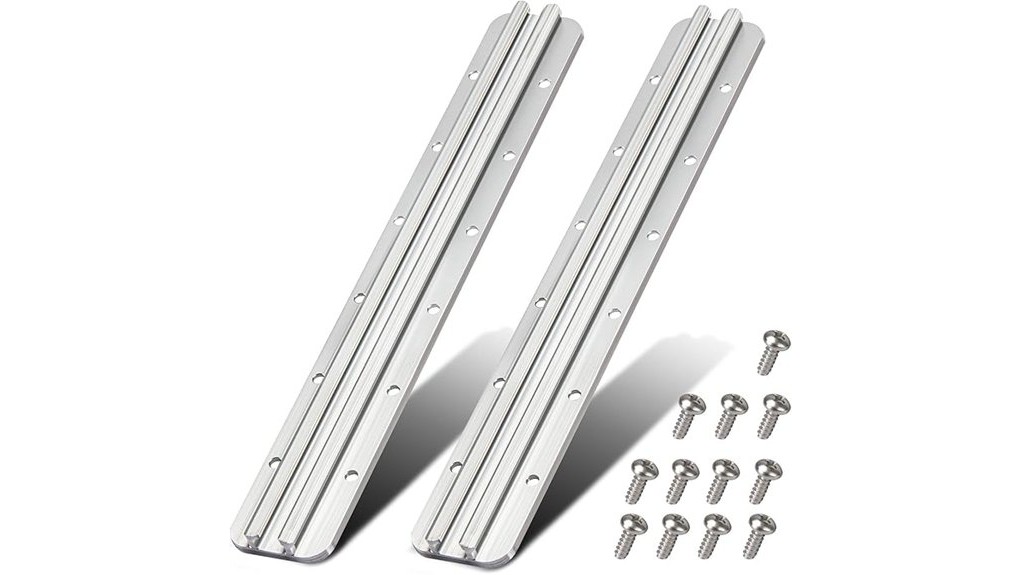
You’ll get a rugged aluminum kayak track that’s more durable and versatile than cheap plastic mounts, and it’s worth the higher upfront cost if you want long-term value. It’s anodized to resist corrosion, uses stainless fasteners, and holds medium to heavy loads without flexing. Installation is straightforward with the supplied hardware and sealant, and it fits common accessories like rod holders and cameras while minimizing lateral play. Keep going to learn specifics on installation, accessories, and alternatives.
Some Key Takeaways
- Aluminum kayak tracks offer superior durability and corrosion resistance versus plastic mounts, making them a better long-term investment.
- Anodized aluminum and stainless fasteners minimize galvanic corrosion and withstand saltwater and heavy-duty use.
- Installation is straightforward: align, drill preset holes, seal, and torque screws; kit includes rail and stainless hardware.
- Open 1/2-inch track profile provides versatile accessory compatibility and secure, adjustable mounting with minimal lateral play.
- Best for anglers and photographers prioritizing stability and flexibility; polymer rails suit budget or lightweight needs.
Quick Verdict: Is the Kayak Track Rail Worth Buying?
While you could get by with cheaper plastic mounts, this aluminum kayak track rail gives a clear upgrade in durability and versatility—it’s worth buying if you want a reliable, low-maintenance way to mount rod holders, fish finders, cup holders, anchors and more. You’ll notice better long-term value in a quick price comparison: initial cost is higher, but replacement frequency drops. Installation is straightforward with supplied stainless hardware and preset holes, so you won’t need special tools. User testimonials emphasize stability and adjustability under real conditions. If you prioritize secure, flexible mounting and lower lifetime cost, this rail is a sensible choice. Our store also offers a range of compatible kayak crate systems for organizing gear on longer trips, including modular crate storage options that integrate with track mounts.
What the Kayak Track Is Made Of and How Durable It Performs
Made from high-strength aluminum, the kayak track gives you a noticeably more durable mounting platform than plastic alternatives. You’ll find it resists impacts, abrasion, and flex under load so rod holders and electronics stay put. The anodized finish improves UV resistance and reduces aluminum corrosion in salt or fresh water, extending service life. Stainless steel fasteners complement the alloy to limit galvanic issues. Surface treatment adds wear and anti-slip properties, keeping gear secure during hull movement. For medium to heavy-duty use, the track delivers stable, long-term performance so you replace mounts far less often. It also integrates well with basic bilge pump setups, providing secure attachment points for bilge pump mounts to keep water removal gear firmly in place.
How to Install the Top-Mounted Rail and Required Hardware
Before you start, gather the included stainless-steel screws, the aluminum rail, a drill with the correct bit, a measuring tape, and a marine sealant; having them at hand speeds the job and prevents mistakes. Position the top-mounted rail on the hull, align with preset holes, and mark drill points. Drill cleanly, then test-fit hardware. Use the recommended bolt size for the kit to guarantee strength and compatibility. Apply sealant choice sparingly into each hole to prevent leaks and corrosion. Fasten rails hand-tight, then torque to spec. Clean excess sealant and inspect mounts for alignment and secure fit before loading gear. Also make sure you have essential deck line replacement gear like cord, shackles, and thimbles on hand for safer installs and repairs, particularly when prepping for extended outings on open water deck line replacements.
Which Accessories Fit and How Stable They Hold During Use
Because the rail’s 1/2-inch accessory compatibility and open-track profile were designed for versatility, you’ll be able to mount everything from rod holders and fish finders to cup and paddle holders with secure, adjustable positioning. You can also fit camera mounts and small navigation units; stainless hardware and a snug track stop lateral play, so accessories don’t twist under load. The aluminum construction and anti-slip surface resist slipping during waves or paddling, keeping gear accessible. Angle and fore/aft adjustments are simple on the open track, letting you optimize reach and balance. For typical fishing and photo rigs, stability is reliable. Many paddlers also pair these rails with horizontal rod holders for streamlined, hands-free fishing setups.
Who Should Buy This Rail and Three Alternative Options to Consider
If you’re outfitting a sit-on-top or touring kayak for fishing, photography, or regular gear mounting, this heavy-duty aluminum rail is a strong choice—especially if you want a durable, adjustable top-mounted track that won’t require rear access. You should buy it if you need reliable Mount compatibility for varied fishing accessories, want corrosion resistance, and prefer easy angle adjustment while underway. Alternatives to take into account: a low-profile extruded aluminum track for minimalist rigs; a polymer rail for budget and lighter loads; and a rail with integrated swivel bases if you need rapid repositioning of rod holders and electronics. Many paddlers also pair rails with perimeter kits to organize and secure gear for extended water adventures.
Some Questions Answered
Can I Cut the Track to Fit Shorter Kayaks?
Yes — you can cut the track to fit shorter kayaks. Use proper cutting techniques (fine-tooth hacksaw or miter saw with aluminum blade), clamp securely, and deburr edges to avoid damage. Keep mounting hardware handy and use the provided preset holes for alignment. Re-measure before trimming, account for end caps or fasteners, and test-fit with accessories so your adjusted track maintains secure, non-slip performance during use.
Is the Rail Compatible With Inflatable or Sit-On-Top Kayaks?
Yes — you can use this rail on many inflatables and sit on top kayaks if the hull is rigid enough for screws and weight. Check inflatable compatibility by confirming a firm mounting area or using backing plates and sealant. The aluminum track’s top-mount design and stainless hardware work well for sit on top decks, offering secure, adjustable attachment; avoid soft, thin material unless you reinforce it first.
Will the Aluminum Corrode With Long-Term Saltwater Exposure?
No, the aluminum won’t rapidly corrode with long-term saltwater exposure if you maintain it properly. You’ll still face galvanic corrosion risk where aluminum meets stainless hardware or other metals, so use insulating washers and compatible fasteners. Protective coatings and regular rinsing with fresh water reduce salt damage and surface pitting. Inspect seals and reapply coatings as needed, and tighten or replace corroded hardware to keep mounts secure and durable.
Can I Paint or Anodize the Track for Color Matching?
Yes — you can paint or anodize the track for color customization. Surface prep matters: clean, sand, and degrease aluminum before painting; use marine-grade primer and topcoat for durability. Anodizing gives a durable, corrosion-resistant finish but usually requires professional service and limited color options. Weigh finish options against wear resistance, saltwater exposure, and accessory fit to keep function and secure mounting intact.
Does the Rail Affect Kayak Warranty or Resale Value?
Usually it won’t void your warranty if you install it properly, but you should check manufacturer terms for warranty transferability. You won’t damage hull integrity with top-mounted stainless hardware and preset holes, so resale impact is minimal if installation’s neat and reversible. Keep original hardware and document the install to reassure buyers. If a maker forbids aftermarket modifications, expect possible warranty or resale complications.