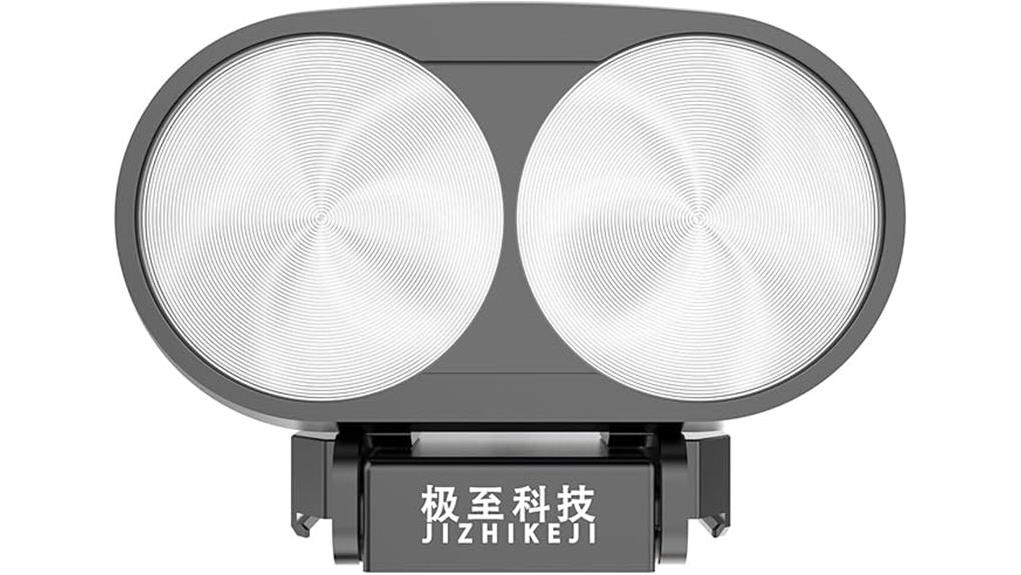
You’ll get a rugged 60W matrix spotlight built for the Matrice 30 that reliably illuminates targets to about 150 m and covers roughly 1,400 m² with good beam uniformity. It mounts via a quick‑release bracket, uses the DJI SDK for control, and offers a 0–85° gimbal with presets, low latency, and manual override. IP4X protection and sealed connectors mean routine checks, and firmware parity is important—keep reading for setup, limitations, and alternatives.
Some Key Takeaways
- Provides reliable illumination to about 150 m with a focused 60W matrix output suitable for long-range tasks.
- Covers roughly 1,400 m² with good beam uniformity and hotspot control for inspection work.
- Purpose-built Matrice 30 compatibility via quick‑release bracket, DJI SDK support, and simple tool‑minimal installation.
- Aimable 0–85° gimbal with presets, low-latency response, and manual override for repeatable targeted illumination.
- Ruggedized IP4X design; avoid heavy rain, check sealed connectors, and perform preflight inspections for field reliability.
Performance and Brightness Tested: Real‑World Nighttime Range and Coverage
How far does the JZ T60 really reach in the field? You’ll observe reliable illumination to about 150 m (492 ft), covering roughly 1,400 m² with a focused 60W matrix output. You evaluate beam uniformity as good for inspection tasks; hotspot control reduces local overexposure but requires active glare management when angling near reflective surfaces. Adjustable 0–85° aim lets you prioritize distance or area without excessive spill. Expect measurable battery drain during sustained high-power use; plan mission profiles to balance runtime and illumination. Overall, the lamp delivers predictable, mission-grade brightness with manageable trade-offs. For photographers, pairing the lamp with continuous LED setups can improve consistency across photo sessions.
Mounting and Compatibility With DJI Matrice 30: Installation, Quick‑Release Bracket, and SDK Integration
Because the JZ T60 is purpose-built for the Matrice 30, you'll get a straightforward, tool‑minimal installation: the lamp secures to the aircraft via a standardized quick‑release bracket that locks into the M30 accessory rail and uses the DJI SDK for recognized attachment and control. You’ll mount it in seconds, verify mechanical lock, and route power/data per supplied harness. Practical installation tips: check bracket latch engagement, test electrical continuity, and confirm SDK handshakes before flight. Firmware integration is reliable but verify firmware parity between lamp and M30; mismatches can prevent remote control or telemetry. Overall, mounting is robust and workflow‑efficient. This setup is particularly attractive for photography enthusiasts who often use GoPro mounts and related accessories when configuring action-camera rigs.
Aim Control and Usability: Using the 0–85° Controllable Gimbal for Targeted Illumination
Having secured the lamp to the M30 and confirmed SDK handshakes, you can precisely aim the JZ T60 using its 0–85° controllable gimbal to target lighting where it's most needed. You’ll set and recall angle presets through the controller or SDK, speeding repeatable tasks and area sweeps. The gimbal response is immediate with minimal jitter; latency stays low under normal telemetry. If automated commands fail or conditions change, engage the manual override for direct control — it’s responsive and intuitive. Overall aim control balances precision and operational simplicity, enabling targeted illumination without complex workflows or calibration. This makes the JZ T60 a great companion for photographers using external camera monitors who need reliable, targeted lighting.
Durability and Field Reliability: IP4X Protection, Environmental Limits, and Operational Precautions
While the JZ T60's IP4X rating gives you solid protection against most airborne debris and casual impacts, it doesn't make the unit fully weatherproof, so you should treat it as ruggedized rather than waterproof. You’ll appreciate decent impact resistance for routine field handling, but avoid heavy rain, immersion, or pressurized washdowns. Check sealed connectors for integrity before each sortie; compromised seals are the likeliest failure point in harsh environments. Operate within specified temperature and vibration limits, and secure the quick‑release bracket per DJI SDK guidance. With prudent handling and preflight inspections, the T60 delivers reliable, mission-ready performance. For shooting in inclement conditions, consider using a dedicated camera rain cover to protect both your light and camera gear.
Who Should Buy the JZ T60 and Alternatives to Consider: Use Cases, Cost‑Value Judgment, and Comparable Options
Knowing the T60’s rugged limits informs who should consider it: operators needing a high‑output, long‑range illumination solution for nighttime drone work. You’ll value its 60W output, 150 m range, adjustable 0–85° aim, and Matrice 30 compatibility for search‑and‑rescue, inspection, and perimeter security use cases. Judge cost‑value by comparing mission needs against price comparison alternatives: lighter, lower‑range lamps or heavier, higher‑spec systems. If you require robust, targeted illumination with quick‑release mounting and DJI SDK integration, the T60 is justified. Otherwise evaluate comparable options for weight, runtime, and lumen distribution before committing. For drone photographers focused on flight time and battery efficiency, consider how additional payload affects battery life.
Some Questions Answered
What Is the Lamp’s Weight and How Does It Affect Drone Flight Time?
The lamp weighs approximately 480 grams, and you’ll see a measurable impact on drone payload and battery drain. Adding this payload increases power consumption during hover and transit, typically reducing flight time by roughly 10–20% depending on mission profile and wind. You’ll need to account for the extra battery drain in flight planning, balancing required illumination range against shorter endurance for safe operation and mission completion.
Does the T60 Support Adjustable Beam Patterns or Diffusion Accessories?
No, it doesn’t natively offer multiple beam shaping modes, but you can use third-party soft diffusion accessories to alter output. You’ll retain 0–85° aim control while modifying beam spread mechanically; this changes irradiance and effective range, so evaluate mission trade-offs. Installations rely on the Matrice 30 quick-release bracket and DJI SDK for secure mounting. For precise beam shaping, test specific diffusers to quantify lumen loss and coverage changes.
Are There Firmware Updates or App Controls for Advanced Light Settings?
Yes — you’ll get firmware updates and app control settings. You can install firmware updates via the drone/software ecosystem to maintain compatibility and add features. The app control settings let you adjust intensity, enable schedules, and set gimbal angle presets (0–85°) for targeted illumination. Updates improve stability, expand control parameters, and resolve bugs; you should verify SDK compatibility and apply updates during maintenance windows to avoid mission interruptions.
What Are the Warranty Terms and Customer Support Options?
You get a limited warranty covering manufacturing defects for 12 months (Warranty duration: 12 months). If failures occur within that period, they'll repair or replace the unit subject to inspection and exclusions for misuse. Support channels include email, phone, and online ticketing via the vendor portal; firmware and SDK issues route through developer support. You'll want to document serial numbers and incident details to expedite claims and technical troubleshooting.
Is the Lamp Compliant With Aviation Lighting Regulations or Restricted Airspace Rules?
You likely won’t find inherent airspace compliance certifications for the lamp itself; manufacturers rarely certify lights for aviation regulation. You’ll need to confirm local aviation interference assessments and make certain operator adherence to restricted airspace rules and NOTAMs. Integrate the lamp via DJI SDK and follow Matrice 30 operational limits, adjust beam to minimize glare, and coordinate with authorities for permission in controlled zones to mitigate aviation interference risks.