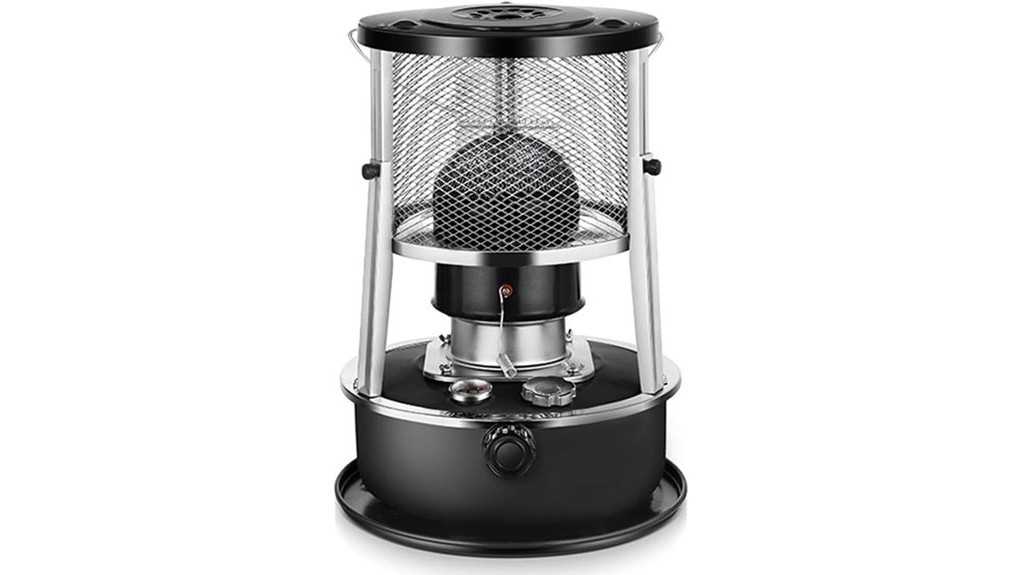
You’ll get a compact LINWIN 2‑in‑1 kerosene heater and stove that puts out 9,000 BTU with a 360° radiant element, runs about 16–20 hours on a 1.2‑gallon tank, and doubles as a basic camp stove. It’s lightweight, portable, and ideal for solo campers, garages, or short outages, though expect some startup odor and routine wick upkeep. It’s a budget, versatile option—keep going to see performance, safety tips, and comparisons.
Some Key Takeaways
- 9,000 BTU radiant output efficiently heats small to medium spaces while remaining compact and portable.
- Dual-function design serves as both a heater and a basic stove for frying, boiling, and simmering.
- 1.2-gallon tank delivers about 16–20 hours runtime, balancing long use with manageable fuel capacity.
- Requires ventilation and carbon monoxide monitoring indoors; expect occasional startup odor and wick maintenance.
- Best for solo campers, budget buyers, garages, and short power outages seeking versatile, no-frills heating.
Quick Verdict: Who Should Buy the LINWIN 2-in-1 and Why
While you want compact, fuel-powered heat and a basic cooking surface, the LINWIN 2-in-1 is worth considering: it delivers 9,000 BTU of 360° radiant heat, runs about 16–20 hours on a 1.2‑gallon tank, and doubles as a stove for camping, garage work, or emergency use. You’ll appreciate it if you’re a solo camper needing lightweight, multiuse gear or a budget buyer wanting reliable warmth without electricity. It’s practical for garages and short power outages, and compares favorably to bulkier heaters. Don’t expect luxury features, but you’ll get straightforward, efficient performance when it counts. It’s a sensible pick for anyone focused on portable kerosene heaters and simple, no-frills warmth outdoors.
What’s in the Box and Key Specs You Need to Know
Now that you know who the LINWIN 2-in-1 suits, let’s look at what you actually get and the specs that matter. You’ll find the heater unit, spare wick, storage bag, funnel, siphon pump, two gloves and a user manual—those included accessories cover setup and basic maintenance. The unit weighs 7.27 pounds, measures 13″ x 13″ x 18.11″, outputs 9,000 BTU and uses kerosene. Note the 1.2 gallon fuel capacity, giving about 16–20 hours per tank. Its 360° radiant element, carry handle, height adjustability and button ignition make it portable and practical compared with bulkier options. It’s a solid pick for campers who value compact, efficient heating and cooking with portable wood-burning gear.
Real-World Performance : Heating, Cooking, Run-Time, and Noise
Dig into everyday use and you’ll find the LINWIN 2-in-1 delivers solid, predictable performance: its 9,000 BTU radiant output warms small to medium spaces effectively (think a garage, tent, or compact room), and the 360° element spreads heat evenly so you won’t get hot spots near the unit. You’ll appreciate consistent heat distribution and steady run times—about 16–20 hours per 1.2 gallon tank depending on output setting. Cooking works well for simple meals; the stove surface holds temperature for frying or boiling and offers basic simmer control. Noise is low—comparable to a small fan—so it’s unobtrusive. Catalytic heaters are a popular choice for campers because they provide efficient, flameless heat with low emissions and improved safety for outdoor use.
Safety, Setup, and Indoor Use Considerations (Ventilation, Wick, Fuel)
Because kerosene heaters add combustion products and moisture to the air, you should plan ventilation and placement before you light the LINWIN unit to keep indoor air safe and comfortable. You’ll follow ventilation requirements: crack a window or use an exterior vent to dilute combustion gases and reduce humidity. Monitor for carbon monoxide; use a detector nearby. Maintain the included spare wick and practice wick maintenance—trim or replace when smoking or odor appears—to keep clean burn and efficient heat. Store kerosene in approved containers, cool and ventilated, following fuel storage rules to prevent spills, fumes, and fire risk. For portable outdoor setups, consider using a camping weather radio to stay informed about changing conditions and safety alerts.
Pros, Cons, and How It Compares to Similar Kerosene Portable Heaters
Having covered ventilation, wick care, and safe fuel handling, let’s look at how the LINWIN 2-in-1 stacks up in real-world use. You’ll like its dual function, 9,000 BTU output, and compact portability test success—light weight and carry handle make transport easy. Pros: cooks and heats, long 16–20 hour run time, button ignition that usually delivers strong ignition reliability. Cons: some users note fuel odor at startup and you’ll need a strict maintenance schedule (wick swaps, cleaning). Compared to rivals, LINWIN trades peak power for versatility and convenience, ideal for camping or emergency kits. This model is especially well-suited for fans of camp stoves who value portable gear designed for outdoor use.
Some Questions Answered
Can This Unit Run on Diesel or Alternative Fuels?
No, it’s not diesel compatible; you shouldn’t run diesel in this kerosene unit. Kerosene burners tolerate some kerosene blends, but diesel can clog wicks and foul combustion. If you’re forced to use alternatives, consult the manual, use approved fuel additives, and make certain proper filtration — but expect reduced performance and higher maintenance. For reliable, safe operation, stick to recommended kerosene and manufacturer guidance rather than experimenting with diesel or unknown fuels.
How Long Is the Manufacturer Warranty Period?
The manufacturer warranty period isn’t specified here, so you’ll need to check LINWIN’s warranty duration and coverage details directly. Compare the provided warranty against similar heaters—many offer 90 days to one year covering defects in materials and workmanship, but not misuse or fuel-related damage. You should register the product, keep your receipt, and contact LINWIN support for exact terms, exclusions, and how to file a claim for service or replacement.
Are Replacement Wicks and Parts Readily Available?
Yes—replacement availability is generally good; you can source wicks and parts from LINWIN, major online retailers, and specialty heater stores. You’ll find wick sourcing easier through the manufacturer or aftermarket sellers; parts like pumps and knobs are commonly stocked. Compare prices and check model LW compatibility before buying, and keep a spare wick on hand for emergencies. That practical approach saves downtime and guarantees reliable long-term use.
Can the Stove Surface Support Heavy Cookware?
Yes — you can use heavy cookware, but you’ll want to be cautious. The stove’s weight capacity isn’t specified, so judge by material durability: the black floor-mount design and carry handle suggest sturdy construction, but it’s lightweight overall (7.27 pounds). Compared to full-size stoves it’s less robust, so avoid oversized cast-iron pots; moderate heavy pans are fine. Support pans near center, lift to move, and inspect stability before cooking.
Is There a Child-Safety Lock or Tip-Over Sensor?
No, it doesn’t include a child lock or tip sensor. You’ll want to supervise use closely and keep children away, since the unit lacks those safety interlocks. Compared with electric heaters that often have automatic tip-over shutoffs and locks, this kerosene model depends on careful placement and manual precautions. For safer use, you should anchor it on stable ground, use barriers, and consider adding external tip switches or a fenced-off zone when kids are present.