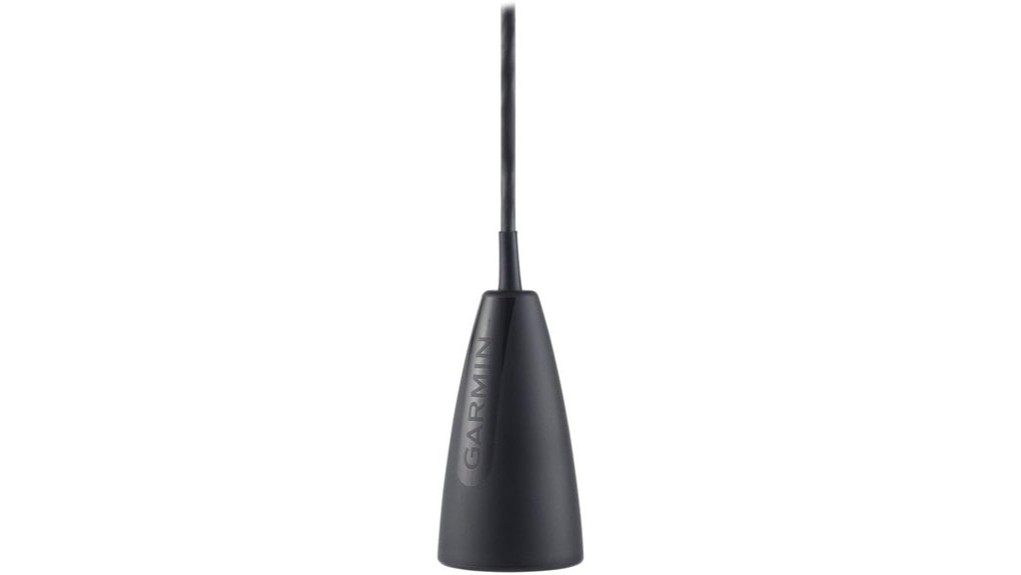
You’ll find the Garmin GT8HW-IF a compact, panel-mount CHIRP transducer built for ice fishing: it gives high-wide, high-frequency returns for precise target separation and layered echoes while drawing modest power for battery setups. The sealed, lightweight housing suits portable shelters and uses a 4-pin Garmin-compatible interface; LEDs can dim in extreme cold and battery warming is advised. Installation needs a vibration-free panel and sealed mounting. Keep going and you’ll learn detailed performance, install tips, and alternatives.
Some Key Takeaways
- Panel-mount GT8HW-IF is optimized for ice fishing, offering a lightweight (~0.75 lb) sealed housing and included mounting hardware.
- High-wide CHIRP beam provides clear target separation, layered echoes, and stable clarity across its frequency band.
- Focused beam geometry and signal processing reduce clutter while accurately revealing thermoclines, structure, and baitfish.
- Low power draw suits battery-powered portable shelters, though cold reduces runtime and LED brightness.
- 4-pin Garmin-compatible interface simplifies installation; follow sealing, strain-relief, and corrosion-prevention best practices.
Quick Verdict: Who Should Buy the Garmin GT8HW-IF and Why
If you ice fish and need a compact, battery-powered CHIRP transducer for a panel-mounted setup, the Garmin GT8HW-IF delivers precise high-wide frequency returns and a simple 4-pin interface that fits most Garmin sonar heads. You’ll want this if you’re an ice angler who prioritizes compact panel integration, low power operation, and reliable CHIRP imaging in confined holes. It’s suited to technical users pairing with Garmincompatible devices and using minimal winter tackle. You won’t get multifunction clutter; you’ll get focused sonar performance. Choose it when you need straightforward, rugged transducer capability for ice-specific deployments. Gear Up for Ice and Water Adventures offers related kayaks and ice picks for outdoor enthusiasts.
What the GT8HW-IF Delivers: Key Specs and Features for Ice Fishing
When you need compact, reliable sonar for winter holes, the Garmin GT8HW-IF delivers a high-wide CHIRP beam in a rugged, panel-mount package that’s optimized for ice fishing. You get a dedicated ice transducer with high resolution imaging across the CHIRP band, a 4-pin interface for straightforward connection, and a lightweight 0.75-pound housing suited to portable shelters. Power demand is modest, supporting low power consumption from battery operation. Specs focus on clarity and durability: sealed construction, LED-compatible display output, and mounting hardware for panel installation. The design prioritizes delivery of clear target separation with minimal setup. It’s an excellent choice for kayak and ice anglers who value reliable sonar and low power consumption when powering gear from portable batteries.
Real-World Performance: Accuracy, CHIRP Clarity, and Battery/Display Behavior
Although built for simplicity, the GT8HW-IF delivers precise target separation and consistent depth readings in typical ice-fishing conditions, thanks to its high-wide CHIRP profile and focused beam geometry. You’ll notice accurate returns on baitfish and structure; signal processing reduces clutter and preserves target fidelity without user tuning. CHIRP clarity remains stable across the band, revealing layered echoes and thermoclines. Battery-powered operation sustains LED display visibility for typical sessions, though cold temperature effects shorten runtime and can dim LEDs; you should mitigate by keeping batteries warm and monitoring voltage to maintain consistent display brightness and sonar performance. The transducer pairs well with float-ready gear used by water adventure enthusiasts for easy transport and protection.
Installation and Use Tips: Mounting, Connections, and Troubleshooting
Because proper mounting and clean connections determine signal quality and reliability, start by choosing a stable, vibration-free panel location that gives the transducer a clear, unobstructed path through the ice hole. Mount flush, torque screws per spec, and apply panel sealing to prevent moisture ingress and thermal cycling. Route the 4-pin cable with gentle bends, secure with clamps, and maintain strain relief; proper cable routing reduces noise and intermittent contact. Use dielectric grease on connectors, inspect pins for corrosion, and verify continuity with a multimeter. If returns are weak, check alignment, ground continuity, and connector integrity before replacing the unit. For water-based adventures, consider storing spare connectors and seals in a dry box to keep them protected and ready.
Buy or Skip? Pricing, Warranty, and Alternatives to Consider
Before you pull the trigger, weigh the GT8HW-IF’s price and warranty against your needs and alternatives: it offers reliable high-wide CHIRP performance for ice fishing, a 4-pin interface compatible with many Garmin units, and a simple 30-day seller support window, but you’ll want to confirm current street price and return policy before buying. Compare street price in a focused price comparison against similar ice-specific CHIRP transducers from Humminbird and Lowrance. Account for warranty limitations—30 days is short versus typical manufacturer coverage. If you need longer support or bundled accessories, consider higher-tier models or third-party options. Also consider kayak-specific mounting and storage solutions for safe transport on Sea Eagle kayaks.
Some Questions Answered
Is This Transducer Compatible With Non-Garmin Fishfinders?
No — you won’t reliably use this transducer with non-Garmin fishfinders. It uses Garmin’s 4-pin interface and proprietary signal protocols, so third party compatibility is limited. You can sometimes adapt via aftermarket adapters or converters, but performance and features (CHIRP processing, depth accuracy) may be degraded or unsupported. If you need broad compatibility, choose transducers explicitly listed as universal or confirm protocol support with both manufacturers before buying.
Can It Be Used for Open-Water Boating as Well?
Yes — you can use it for open water, but it’s optimized for ice adapted use and shallow water boating. You’ll get good high-wide CHIRP returns in shallow lakes and from a kayak, but performance may be limited offshore or at high speeds. Expect narrower beam coverage and mounting constraints versus boat-specific transducers. Verify connector compatibility and power requirements before installing on non-Garmin or deeper-water setups.
What Is the Operating Temperature Range for the Unit?
The operating temperature range is 40°C to 85°C, and the unit offers condensation resistance. You’ll operate it reliably within that span for typical ice-fishing and marine conditions. You shouldn’t expose it to temperatures outside that envelope or sustained thermal shock. Condensation resistance helps prevent internal moisture damage during rapid temperature changes. For extreme environments or prolonged exposure beyond 40°C–85°C, consult the seller or Garmin support for guidance and warranty implications.
Does It Include Mounting Hardware or Screws?
No, it doesn’t include mounting hardware or screws. You’ll need to source appropriate fasteners and follow installation tips: use stainless steel or marine-grade screws, tighten to manufacturer torque, and seal holes with marine sealant. For corrosion prevention, apply anti-corrosion lubricant to threads, use stainless or coated washers, and consider sacrificial anodes in salt environments. Inspect fasteners periodically and replace any showing pitting or looseness to maintain reliable performance.
Is the LED Display Dimmable for Night Fishing?
No — the LED display doesn’t offer a dedicated night mode or direct brightness control on the transducer itself. You’ll control image intensity and contrast from your compatible Garmin head unit, which may provide night mode and brightness control settings. The transducer outputs sonar data; display adjustments occur on the display unit. Check your sonar/display manual for specific night mode and brightness control options and supported settings with this 4-pin transducer.